

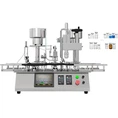
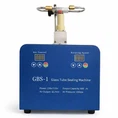
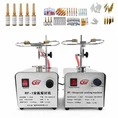
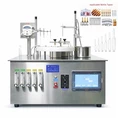

What Is Labeling Machine?
A labeling machine is a device used to apply labels to products, packages, or containers. These machines are commonly used in various industries, including food and beverage, pharmaceuticals, cosmetics, and logistics, to ensure that products are properly labeled for identification, branding, and regulatory compliance.
Advantages of Labeling Machine
Increased production efficiency
Label applicator machines can dramatically boost your production speeds, enabling you to meet higher demands without compromising quality. This increase in efficiency can help your business scale operations and improve overall productivity.
Cost savings
By automating the labeling process, you can reduce labor costs and minimize the need for overtime work. This means fewer employees are required to manage the labeling process, allowing you to allocate resources more effectively.
Enhanced accuracy and consistency
Our machines are equipped with advanced mechanisms that ensure precise label placement every time. This level of accuracy is difficult to achieve manually and can significantly enhance your product presentation.
Reduced downtime and errors
Automation reduces the likelihood of errors and downtime associated with manual labeling. This reliability ensures a smoother production flow and fewer disruptions, ultimately leading to higher output and profitability.
Versatility and flexibility
Label applicator machines can handle a wide range of label types and sizes, from small vials and bottles to large containers and packaging. This versatility makes them suitable for various applications and industries.
Real-time production tracking
With features like speed statistics, you can easily monitor the pace of your production. This data allows you to plan and adjust your operations for maximum efficiency and better decision-making.

Suitable for circular and semi-circular labeling of unstable cylindrical objects, horizontal transmission and horizontal labeling are adopted to increase stability and improve labeling efficiency.

The powder material and adhesive are fully mixed into a wet material by the bottom mixing slurry in a cylindrical container, and then cut into a uniform wet material by a side-mounted high-speed grinding paddle.

GMP requirements, especially suitable for research institutions, hospitals, new small pharmaceutical factory, health products factory.

This machine is suitable for filling several solid preparations in pharmaceutical and food industry. Bottle transfer mechanism The bottle stopper on the bottle delivery track will be transferred from the upper track equipment

The machine adopts anti-high dust computer counting technology, can be used for tablets (including special-shaped tablets), hard capsules, soft capsules (various shapes transparent

The encapsulation of the cap, the body and the filling of the powder are suitable for small and medium batch production of small and medium-sized pharmaceutical factories

KD-88 capsule polishing machine (drug polishing machine) from the base, out Feed port, frame, single phase motor, polishing brush, stainless steel cover

DCX-4 semi-automatic capsule filling machine is a new type of medicine
Packaging machinery, suitable for filling all kinds of domestic and imported capsules.

The equipment is widely used in food, chemical, pharmaceutical, packaging, electronics, medical and other industries, suitable for all kinds of standard round bottle sticker labeling.
Why Choose Us
Quality
Customers want to ensure that they receive excellent quality products or services that meet their expectations and needs.
Reputation
The reputation of a company or brand is essential when it comes to making a decision. Customers tend to choose a company that is well-regarded in the industry.
Customer service
A company with a good reputation for customer service can be a deciding factor for consumers, making them feel valued and satisfied with their experience.
Experience
An established and experienced company has a greater understanding of their products or services, allowing them to provide better quality and support to their customers.
Convenience
Consumers appreciate convenience, they want products or services that make their life easier, faster, and more efficient.
Safety and security
Customers want to feel secure when using a product or service, it is critical to provide safety and security policies and measures.
Top labeling machine, also called (flat surface labeling machine)
It can apply labels on the flat or side of various materials products, such as aluminum foil bags, packaging bags, pouches, paper boxes, plastic boxes, egg cartons, cartons, credit cards, memory cards, color boxes, pharmaceuticals, cosmetics, etc. There are automatic and semi-automatic labelling machines, which can be selected according to the capacity demand.
Top and bottom labelling machine (front and back bottle labeling machine)
It can apply two labels simultaneously. For example, applying labels to the front and back or top and bottom of the container or only side labeling.
Automatic round bottle labeling machine
It applies labels around the round bottles and jars or cylindrical products and is only for products that need round labeling. The labeling machine can apply 1/2, 2/3, or full circle depending on the length of the label. The round bottle labeling machine category include: Automatic bottle labeling machine, semi-automatic round bottle labeling machine (tabletop bottle labeling machine), oval bottle labeling machine, horizontal wrap-around labeling machine.
Special shape labeling machine
C wrap labeller, tamp labeling machine, square bottle labeling machine, three-sided labeling machine, flat bottle labeling machine, tapered bottle labeling machine, syringe labeling machine, tube labeler, cable labeling machine, print and apply labeler, etc. Through different labeling machines to achieve right-angle labeling, angle labeling, square bottle three-sided labeling, multi-angle bottle wrap-around labeling, wire labeling, flat bottle double-sided labeling, curved labeling, bottleneck labeling, or unique parts of the labeling needs of the product.
Installation and Setup of Labeling Machines
Unpacking
Take time with the unpacking process. Manual says, "handle with care!" for machines that are 30kg or more, get another person' s help. This prevents any harm to you or damage to the machine.
Placement
A solid, level surface ensures the machine runs smoothly. Avoid places with direct sunlight, extreme heat, or high humidity. These conditions can cause damage.
Power connection
Check the machine' s voltage, usually 110v or 220v. It' s crucial to use the correct power supply. An incorrect connection might lead to major machine failure.
Loading labels
Correct label loading is key for machine efficiency. Follow the arrow direction in the manual. The label roll should be less than 300mm in diameter and width between 20-110mm.
Setting parameters
Fine-tune machine parameters. Adjust speed, label length, and position. Speeds range between 20-200pcs/min. Label lengths could be between 10-300mm.
Trial run
Perform a trial run. Let the machine run empty for about 15 minutes. Listen for any unusual sounds. It ensures the machine works smoothly before labeling.
Training
Train all operators properly. Informed users can handle the machine better. They can spot issues early, boosting the machine' s lifespan.
Documentation
Keep all machine documents safe. Manuals, guides, warranty papers are crucial. If issues arise, these documents guide your next steps.
Compliance checks
Ensure the machine meets all regulatory standards. Machines must comply with ce or fcc certifications. Safety standards reduce accidents and ensure secure operations.
Software installation
Some machines need special software. Download from manufacturer' s website. Update software regularly for smooth operations and added features.
Network connection
Connect the machine to the network if needed. A stable internet connection helps with remote access and updates. Ensure firewalls and security measures are in place.
Waste management
Handle label waste responsibly. Don' t let waste build up near the machine. Dispose of label waste according to local regulations.
Application of Labeling Machine
Food and beverage industry
In the food and beverage industry, labeling machines play a vital role in labeling products with essential information, such as ingredients, nutritional facts, and expiry dates. These machines ensure compliance with labeling regulations and provide consumers with accurate information to make informed choices.
Cosmetics industry
Cosmetic products often require attractive and visually appealing labels to catch the attention of consumers. Labeling machines enable precise application of labels on cosmetic containers, enhancing product presentation and brand recognition. They ensure consistent labeling across a wide range of cosmetic items, including bottles, tubes, and jars.
Pharmaceutical industry
Pharmaceutical products require precise labeling to ensure patient safety and regulatory compliance. Labeling machines are capable of accurately labeling pharmaceutical containers, such as vials, bottles, and blister packs, with critical information like dosage instructions, warnings, and batch numbers.
Logistics and distribution
Labeling machines are extensively used in logistics and distribution centers to label packages and cartons. These machines streamline the labeling process, improving inventory management, and facilitating accurate tracking and tracing of products throughout the supply chain.
Cleaning
A sparkling machine runs well. Every 50 hours, wipe down. Use a damp cloth. Remove dust and debris. Don't forget label cavities. Cleanliness helps longevity. A clean machine prints clearer labels.
Alignment
Correct alignment assures accuracy. Check horizontal and vertical axes. Precise adjustment is essential. Around 0.01mm precision is standard. Accurate alignment improves labeling speed.
Lubrication
Lubricate parts for smooth functioning. Do this every 100 operating hours. Use high-grade lubricants. Lubrication reduces wear. Proper lubrication increases machine lifespan.
Label roll replacement
Replace label rolls promptly. Monitor label usage. Replenishment every 5000 labels is typical. Swift roll replacement boosts productivity.
Software updates
Install updates for enhanced performance. New features come with updates. Many machines have an update every 6 months. Regular updates increase efficiency.
Sensor calibration
Sensor adjustment is crucial. Aim for 0.001mm sensitivity. Recalibrate sensors every 50 hours. Correct calibration reduces labeling errors.
Motor adjustment
Regulate motor speed. Check this every 100 hours. Around 300 rpm is the average. Proper motor speed helps achieve the best label placement accuracy.
Conveyor belt tension
Adjust tension for smooth transport. Optimum tension is typically 50 n. Regular tension checks can prevent belt-related issues.
Error code reference
Understand common error codes. Error e01 means paper jam. E02 signifies overheating. Quick error resolution reduces downtime.
Scheduled maintenance
Plan maintenance every 200 hours. Planned upkeep reduces sudden malfunctions. Proper maintenance enhances operational efficiency.
Spare parts management
Stock essential spare parts. Parts like sensors, motors, belts are critical. Having spares ready can minimize downtime.
Components Of Labeling Machine
Conveyor belt
A conveyor belt transports the product from the inlet to the labeling station and then to the discharge area. The speed of the conveyor belt can usually be adjusted to meet the desired production speed and ensure proper labeling.
Product sensor
In a labeling machine, a product sensor identifies the presence and specific location of the product when it enters the labeling zone. Depending on your product characteristics, labeling machines can use different types of sensors, such as photoelectric sensors, proximity sensors or vision systems.
Label unwind stand
In addition to feeding the label roll into the labeling machine, the label unwind stand also has a guiding function. During the unwind process, the guiding system of the unwind stand keeps the label rolls centered and aligned. This effectively avoids inaccurate labeling positions or even paper jams due to skewed labels.
Label dispenser
A label dispenser separates individual labels from a continuous roll of labels fed from an unwind rack. It uses tools such as peelers or vacuum systems to carefully separate labels without damaging them. The separated labels are then carried on a conveyor belt and placed exactly where the labeling head is ready to apply them.
Labeling head
The conveyor belt delivers the product to the labeling station. Here, the labeling head grabs the label from the unwind stand via various mechanical devices such as vacuum pads, tamping pads or belt systems.
Label sensor
Similar to the function of a product sensor, the biggest use of a label sensor is to detect the presence of a label at different stages of the labeling process.
Control panel
For an automatic labeling machine, the control panel is of great use. It provides the interface to start, stop and pause the labeling machine. The control panel allows the operator to set key parameters such as labeling speed, product feeding speed, labeling time and temperature settings for different labeling materials.
Printing device
Some labeling machines even have an integrated printing device. This device prints labels directly on the label roll as it passes through the labeler. This allows for variable data printing, and each label can be customized with unique product information, such as product name, batch code, or expiration date.
Rejection system
The rejection system is the gatekeeper on the conveyor belt of a label machine. It comes with a sensor to identify mislabeled and unlabeled products. Once detected, the reject device will remove the faulty product from the labeling line as soon as possible. It ensures only correctly labeled products move forward.
Rewind unit
The rewind unit brings an eco-friendly element to the labeling machine. This device can collect unused labels and effectively manage labeling wastes. This responsible rewind unit creates a cleaner work environment and reduces resource waste. More importantly, it makes the labeling machine become a sustainable labeling solution.
How the Labeling Machine Works
Product feeding
The process begins with the feeding of products into the labelling machine. Products are manually or automatically loaded into the feeding hopper, which then systematically supplies the products into the machine. The hopper ensures that products are correctly oriented and spaced as they move towards the labelling station.
Label dispensing
As products enter the labelling station, the label dispenser activates. This component holds a roll of labels and peels each label from its backing tape. Modern label dispensers are equipped with sensors that detect the edge of each label, ensuring that labels are dispensed at precise intervals. This precision is crucial for aligning the labels with the products.
Label application
At the labelling station, the dispensed label is applied to the product. This can be achieved through various mechanisms, depending on the type of labelling machine.
Label adhesion
After application, the label needs to adhere properly to the product. This is typically achieved through pressure or heat, ensuring the label sticks firmly and smoothly. For self-adhesive labels, pressure from the applicator is sufficient. For labels requiring heat activation (like certain shrink labels), the product may pass through a heat tunnel after label application.
Quality control
Many labelling machines include a quality control mechanism, such as sensors or cameras, to verify the label's position and presence. If a product is incorrectly labelled or misses a label, it can be rejected or removed from the line through a discharge mechanism. This step is crucial for maintaining high standards of product presentation and compliance.
Product discharge
Finally, the labelled products are discharged from the machine and ready for the next step in the production line, whether it be packaging, shipping, or further processing. The discharge mechanism ensures that products are smoothly transitioned out of the labelling machine without damage or disruption to the labels.
Safety and control
Throughout the process, the machine's control system oversees the operation, allowing adjustments to be made for different product types, label sizes, and application speeds. The safety system ensures that the machine operates safely, with emergency stops and protective measures in place to protect both the operator and the machinery.
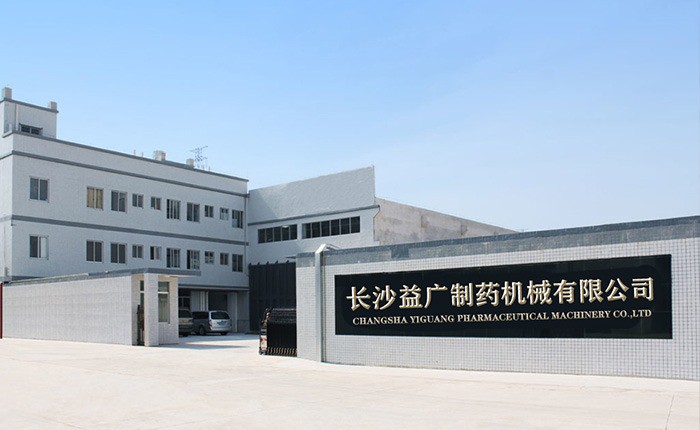
We have rich experience in equipment automation. In addition to the design and manufacture of conventional equipment, we can also customize product design solution according to user needs.
● The company has its own lathes and milling machines, and two senior fitters, who can make samples and processing parts at any time.
● While product quality is guaranteed, it can respond quickly to user needs.
My certificate

FAQ
Hot Tags: labeling machine, China labeling machine manufacturers, suppliers, factory, labeling machine


