

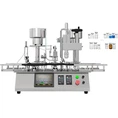
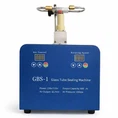
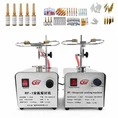
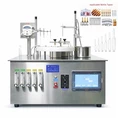
Pharmaceutical Machine
Pharmaceutical manufacturing equipment includes a wide variety of equipment, such as capsule filling machines, x-ray inspection systems, and spray drying accessories. In order to ensure precise manufacturing and formulation development, almost every process can be automated.
Our factory manufactures pharmaceutical equipment, including capsule-making equipment such as capsule fillers and capsule polishers; tablet-making equipment such as crushers, granulators, mixers, dryers, tablet presses, tablet sorters, and coaters; as well as counting machines and packaging machines. We also offer multi-functional bottle washers for cleaning vials and ampoules. Ampoule equipment includes: ampoule sealing machines, ampoule filling machines, and integrated ampoule filling and sealing machines. Vial equipment includes: vial filling machines, integrated vial filling machines, and vial capping machines. We also offer machinery for traditional Chinese medicine production, such as herbal cutting machines and pill-making machines. Additionally, we provide suppository molds.
Benefits of Pharmaceutical Machine
Regulatory compliance
Optimizing production processes makes it easier for pharmaceutical manufacturers to ensure compliance with all relevant regulations.
Increased profits
As productivity improves, the resulting increased scale and product throughput should lead to higher profits. These profits can be used for new product development and growing the company.
Lower costs
Increased productivity can also lead to lower production costs due to economies of scale, further boosting the bottom line.
Competitive advantage
An improved bottom line and increased production also gives a company an advantage over its competitors.


Why Choose Us
One-stop service
We promise to provide you with the fastest reply, the best price, the best quality, and the most complete after-sales service.
Customer Satisfaction
We are committed to delivering high quality services that exceed our clients' expectations. We strive to ensure that our clients are satisfied with our services and work closely with them to ensure their needs are met.
Competitive Pricing
We offer competitive pricing for our services without compromising on quality. Our prices are transparent, and we do not believe in hidden charges or fees.
Quality Assurance
We have a rigorous quality assurance process in place to ensure that all our services meet the highest standards of quality. Our team of quality analysts checks each project thoroughly before it is delivered to the client.
Expertise and Experience
Our team of experts have years of experience in delivering high quality services to our clients. We hire only the best professionals who have a proven track record of delivering exceptional results.
Customer Service
We earn your respect by delivering on time and on budget. We built our reputation on exceptional customer service. Discover the difference it makes.
While different pharma manufacturers have diverse clients that require customized solutions regarding pharmaceutical processing equipment, there are a few generally accepted design and compliance standards for pharmaceutical equipment qualification that manufacturers must adhere to. They may include the following:
Vessel Design
ASME BPE 2016 for vessel and piping manufacturing
ASME Section VIII, Div. 1 for pressure vessel manufacturing
Process Design
US FDA 21 CFR 177.2600 for gaskets and O-rings
ASME BPE 2016 for vessel and piping manufacturing
Electrical Design
IEC 60529 standards for panel enclosure protection
EN/IEC-60204 and UL 508 for electrical work
CE Marking Compliance Testing and Certification
Different Pharmaceutical Processing Equipment for WFI & Other Sterile Products
WFI, or Water for Injection, is one of the purest forms of water that is widely used in pharma operations. The process of obtaining WFI includes distillation which not only gets rid of the pollutants in the water but also eliminates endotoxins, making it safe to be injected directly into the bloodstream of the patients.
Some of the pharma processing equipment needed for WFI or Sterile Injectables include the following
● Manufacturing Vessel: These are the vessels required to charge the water for injection and adding APIs. They are often fitted with nitrogen sparging capabilities with oxygen flushing out to discourage microbial activity. After the process, the product is moved to the holding vessels using nitrogen blanketing and pumps.
● Holding & Storage Vessel: These are used to store sterile water and have a positive nitrogen pressure to prevent microbial growth. They are pre-sterilized with pure steam for sanitation purposes.
Vessels for Bio-Pharma Applications
Bio-pharma applications are designed for manufacturing therapeutic proteins, enzymes, hormones, antibiotics, alcohol, amino acids, and blood substitutes. The equipment used in bio-pharma manufacturing operations may include:
Fermenters and bio-reactors to facilitate the growth of desired microbes and mammalian cells
Process vessels for preparing medium, sterile feed, harvesting, lysing cells, preparing buffers, loading, and eluting chromatography, refolding, purifying, de-filtering, and storing samples.
CIP & SIP Pharmaceutical Process Equipment
Equipment for pharmaceutical manufacturing are cleaned and sanitised using the CIP and SIP processes without being moved from its location. CIP or Cleaning in Place normally includes different chemicals, heated water, and other agents to ensure that the equipment does not carry any contaminants that may interfere with the sanctity of the product being manufactured in them.
While on the other hand, SIP is referred to as Sterilization in Place or Steam in Place. It is an extension of CIP and is defined as the process in which hot steam is used to clean different parts of pharmaceutical manufacturing machinery and paraphernalia.
Some of the common equipment used in CIP and SIP processes include the following:
Dosing systems to add desired substances to the water to remove impurities
Tanks for process facilitation
Pumps for circulation and proper pressure
Recirculation skids
Static or dynamic spray balls for thorough and consistent distribution of the cleaning or sterilizing agent
Heat Exchangers with constant flow-through to meet heating and cooling needs
Treatment Vessels
As effluent water from pharmaceutical manufacturing operations can be a significant source of water pollution, pharma businesses are obligated to treat water in methods that lessen its negative environmental effects.
Numerous procedures that can be used to improve water quality in the pharmaceutical sector have been made possible by modern technological breakthroughs. There are also tried-and-true conventional procedures that are still in use. Different businesses apply various water treatments depending on the end product's use case and the manufacturing facility's capability
The treatment processes can be physical, chemical, or biological in nature and generally require the addition of chemicals or heat to inactivate the biowaste. Some of the most commonly used equipment for this process include bio-kill tank systems with varying degrees of automation.
Piping Networks
Process piping's construction is essential to producing pharmaceuticals and biopharmaceuticals since it comes into contact with raw materials and finished products. In order to prevent cross-contamination from cell debris, media, residue from previous batches, and cleaning agents, the various pipe sizes and numerous bends along the piping path need to be thoroughly cleaned.
With adequate consideration for instruments, valves, and steam traps, CIP/SIP operations, drying, and pressure hold tests are often included into design considerations.

A pharmaceutical machine is basically a device that is used in the production of different kinds of medicines and drugs for the end-users. The machines can be used for the actual making of the medicines or for their packing. The companies belonging to the pharmaceutical sector make use of different kinds of machines that can help in making tablets, capsules, liquids, ointments, powders, and even cosmetics. There is also the need for making liquids that can be used for injections and intravenous applications. If you are looking to launch a pharmaceutical company, then it is of absolute importance that you get in touch with a leading manufacturer of these machines so that you can have top-grade products as and when you need them.
The requirements of the pharmaceutical industry undergo a lot of change and evolution on a continuous basis, just like any other sector. It has therefore made it mandatory for the companies belonging to this sector to constantly upgrade their operations so that they can meet the manufacturing requirements of this industry in an efficient manner. It is essential to note that pharmaceutical companies have extremely precise and definite requirements when it comes to manufacturing medicines and maintaining their level of quality. For this reason, the firms that are involved in the designing and production of pharmaceutical machinery always adhere to the highest manufacturing qualities and best industry practices. If you are keen on getting top-grade machinery that can help you to improve your production margins while at the same time stick to the precision level that is required, you must focus on machines that can help you to do the same.
In the last several decades, a wide range of high-end machinery equipment has been introduced into the pharmaceutical industry, such as spray drying tools, capsule filling machines, tablet press machines, Vibro sifter machines, x-ray inspecting systems, tablet de-dusters, and pulverizers just to name a few. The engineers are responsible for designing them take a meticulous approach to make sure that they have the precise measurements and functional features. This can help to ease the process during the actual production stage of the medicines and drugs. The latest tools can handle large scale production requirements so that the turnover time is taken for making these drugs can be brought down. By improving the functional features of these machines at each and every step, the manufacturing companies associated with the pharmaceutical industry can certainly help clients to meet their production goals.
If you are thinking of getting pharmaceutical machines for your business, it is of utmost importance that you get in touch with a well-known manufacturer of these machines who can help you out. These companies have stringent quality measures in place that can assist in improving the level of output while at the same time maintain optimum performance levels. With these machines, you can not only meet the production goals of your pharmaceutical company but also be a better position to deal with the market competition.
Safety and maintenance are critical aspects of pharmaceutical manufacturing to ensure the well-being of personnel, protect the environment, and maintain the reliability and performance of equipment. Here are key considerations related to safety and maintenance in the pharmaceutical industry:
Safety
● Hazard Identification and Risk Assessment: Manufacturers conduct thorough assessments to identify potential hazards and evaluate associated risks. This includes identifying chemical, biological, physical, and ergonomic hazards in the manufacturing process. Risk assessment helps prioritize safety measures and implement appropriate controls.
● Standard Operating Procedures (SOPs): SOPs provide detailed instructions on safe work practices, equipment operation, handling hazardous materials, and emergency response. Employees must be trained on these procedures, and regular updates and reviews should be conducted to ensure compliance.
● Personal Protective Equipment (PPE): PPE, such as gloves, goggles, masks, and protective clothing, should be provided to employees based on risk assessments. Proper training, maintenance, and monitoring of PPE usage are essential to safeguard personnel from exposure to hazardous substances or processes.
● Engineering Controls: Engineering controls aim to eliminate or minimize risks through equipment design modifications. Examples include fume hoods, ventilation systems, containment devices, and safety interlocks. These controls help reduce exposure to hazardous substances or prevent accidents.
● Emergency Preparedness: Pharmaceutical facilities should have well-defined emergency response plans, including evacuation procedures, fire safety measures, spill response protocols, and communication strategies. Regular drills and training sessions are crucial to ensure employees are prepared for emergencies.
Maintenance
● Preventive Maintenance: Regular preventive maintenance activities are conducted to ensure equipment reliability, minimize downtime, and prevent unexpected failures. This includes routine inspections, calibration, lubrication, cleaning, and replacement of worn-out parts.
● Equipment Qualification and Validation: Equipment qualification ensures that the equipment performs as intended and meets regulatory requirements. Validation involves confirming that the equipment consistently produces desired results within specified parameters. These processes establish the reliability and accuracy of equipment performance.
● Calibration: Calibration involves comparing equipment measurements to a known standard to ensure accuracy. Critical instruments and sensors, such as temperature probes, pressure gauges, and pH meters, should be calibrated regularly to maintain measurement integrity.
● Documentation and Record-Keeping: Accurate documentation of maintenance activities, repairs, equipment history, and compliance records is essential. This documentation aids in tracking maintenance schedules, identifying trends, and demonstrating regulatory compliance during inspections or audits.
● Training and Competency: Adequate training should be provided to maintenance personnel to ensure their competence in handling and maintaining pharmaceutical equipment. Training programs should cover safety protocols, equipment-specific procedures, troubleshooting, and adherence to regulatory requirements.
● Spare Parts Management: Maintaining an inventory of critical spare parts ensures timely repairs and reduces equipment downtime. Spare parts should be properly stored, labelled, and periodically reviewed for obsolescence or expiration.
● Vendor Support and Service Contracts: Collaborating with equipment vendors and maintaining service contracts can provide access to technical support, regular maintenance visits, and prompt repair services. Vendors can also provide updates on equipment upgrades or safety enhancements.
By prioritizing safety and implementing robust maintenance practices, pharmaceutical manufacturers can safeguard their workforce, minimize disruptions, and uphold the integrity and quality of their products. Regular reviews, audits, and continuous improvement initiatives should be conducted to enhance safety protocols and optimize maintenance processes.
Manufacturing equipment plays a vital role in pharmaceutical production
Enabling the efficient and precise manufacturing of pharmaceutical products. Here are some common types of manufacturing equipment used in the pharmaceutical industry:
Mixing and Blending Equipment: These machines are used to mix and blend various ingredients, including active pharmaceutical ingredients (APIs), excipients, and other additives, to ensure uniform distribution and homogeneity of the final product. Examples include high-shear mixers, ribbon blenders, fluidized bed mixers, and tumble blenders.
Milling Equipment: Milling machines are used to reduce the particle size of raw materials, such as APIs and excipients. This helps in achieving uniformity, improving dissolution rates, and enhancing bio availability. Common types of milling equipment include hammer mills, ball mills, jet mills, and colloid mills.
Granulation Equipment: Granulation involves the formation of granules by agglomerating powder particles. Granules facilitate proper flow, compression, and uniform drug distribution in solid dosage forms like tablets. Granulation equipment includes fluid bed granulators, high-shear granulators, and oscillating granulators.
Drying Equipment: Drying is essential to remove moisture from wet granules or solutions, ensuring the stability and quality of the final product. Common drying equipment includes tray dryers, fluid bed dryers, vacuum dryers, and freeze dryers (lyophilizers).
Tablet Presses: Tablet presses are used to compress granulated powders into tablets of specific sizes, shapes, and hardness. These machines apply controlled force to form tablets and often include features for tablet coating or imprinting. Tablet press machines can be single-station or multi-station rotary presses.
Encapsulation Machines: Encapsulation involves filling capsules with powdered or liquid formulations. Encapsulation machines automate the encapsulation process, offering high-speed and accurate filling of capsules. Examples include capsule filling machines like manual, semi-automatic, and fully automatic capsule fillers.
Packaging Equipment: Packaging equipment is used to package and label pharmaceutical products. This includes primary packaging (such as blister packaging, bottles, and vials) and secondary packaging (such as cartoning, labelling, and serialization). Packaging equipment may include blister packaging machines, labelling machines, cartons, and shrink-wrapping machines.
Analytical Instruments: While not strictly manufacturing equipment, analytical instruments play a crucial role in quality control. They are used to analyse the chemical composition, purity, and potency of pharmaceutical products. Examples include high-performance liquid chromatography (HPLC), gas chromatography (GC), UV-Vis spectrophotometers, mass spectrometers, and dissolution testers.
The future of pharma machinery
As with every other industry, the evolution of pharmaceutical machinery is never-ending. From minor advancements to major transformations, change is a constant in pharmaceutical machinery manufacturers' bid to enhance the speed, efficiency, and safety of production lines. This evolution revolves around customization, digitization, automation, design, and engineering.
Modern pharmaceutical machinery is equipped with certain features and integrations which you can't do without to be competitive in today's pharma markets.
Customisation. Your pharma machinery should not just be of good quality, but it should also be perfectly suited to the products and processes specific to your business. A good fit between your requirements and pharmaceutical machinery manufacturers' offerings is critical. The fanciest machine on the market is of no use to you if pharmaceutical machinery manufacturers can't customize them to suit your needs.
Automation. If your systems are not automated in today's fast paced, constantly evolving industry, you will not be able to compete with pharma manufacturers who use the full benefits of process automation. Automation not only minimises your reliance on manual labour, but it also enhances the repeatability, reliability, and consistency of drug production. By reducing human intervention, it also minimises the risk of errors. Finally, automated systems also have the added benefit of ensuring better compliance to sanitary regulations because in situations in which personnel interact with pharma products, the chances of them shedding contaminants from their skin or clothes only increases. It may not be feasible for you to automate all processes, but ask your pharmaceutical machinery manufacturers to help you with automating as many processes as you can within your budget.
Ease of cleaning. Integrated CIP and SIP systems are the backbone of cleaning and sterilisation in modern pharma machinery. They are incredibly time-saving, efficient, and prevent the tedium of manually taking apart machinery, cleaning it, and putting it back together. They also maintain the integrity of the cleaning process. This is easily one of the best improvements in pharmaceutical machinery which can cut maintenance downtime and add to your facility's productive time. Ultimately, you want to rely on a trusted pharmaceutical machinery manufacturer in India so that you don't have to carry the entire burden of managing all this complex machinery all by yourself. TSA has developed a dedicated community of 300+ happy customers over the past two decades. They speak highly of our willingness to take on any high purity and process challenge and have trusted us time and again to be the pharmaceutical machinery manufacturers of their choice.
Agitators: Liquid agitators, chemical reaction catalysts, and heat or cold transfer enhancers.
Blowers: Used in a variety of evaporation applications, including solvent recovery.
Boilers: Equipment for heating water to produce steam.
Capsule Equipment: A variety of tools are available to fill, polish, and organize capsules.
Capsule and tablet printers: For printing information on capsules or tablets, such as drug names or dosages.
Coolers: For rapid temperature reduction.
Coaters: To use films such as sugar film to coat tablets or capsules.
Cooling towers: Used to condense steam or cool liquids.
Mixers: For mixing and particle size reduction.
Ovens: For drying or providing the necessary heat.
Tablet press: For making tablets.
Tablet Dust Remover: Used to clean any dust that may be generated by the tablet press. often the tablet also lights up.
Sieves: Used to sift grains or powders.
Tanks: Used to store liquids.

Say good-bye to pressure and remember these seven highlights to ensure you're purchasing the best pharmaceutical machinery
The reputation of the equipment supplier
With pharmaceutical equipment being a significant speculation, why hazard purchasing your machinery from a non-trustworthy, unheard-of brand equipment provider? Legitimate hardware providers are known for quality — they have the expertise and the experience to guarantee that when you buy your pharmaceutical machinery from them, you're putting resources into excellent machines. Try not to gamble with your capital or your shopfloor line process, trust a trustworthy pharmaceutical machine maker for all of your gear needs.
Yield capacity
Your result still up in the air by the speed of your machine, the quantity of batches your machinery can deliver each hour at that speed, and the quantity of hours you run your machine each day. While you might be enticed to run your machine at its most extreme limit, focusing on maintenance is more significant. On the off chance that something turns out badly in your cycle and your hardware is running too quick, your shop floor employees won’t be able to keep up with it.
Computerized capabilities
Data innovation has been one of the most persuasive variables in the pharmaceutical business. Picking machines with cutting edge advanced capacities builds proficiency and convenience. From contact screens to all-get to control, advanced capacities of pharma machinery can build creation and make your assembling interaction more sensible.
Separation ease
Cleaning is a fundamental part of your assembling interaction, yet it shouldn't take an abundant measure of important time away from your shopfloor line. Whenever you search for apparatus that comes furnished with simple detach highlights, you're making the existences of your administrators a lot more straightforward. Cleaning is quicker and will remove less time from production.
Production scale
Assuming you're in the innovation business, your necessities will be vastly different from those in the business area. Thus, essential to observe pharma equipment is more qualified for your sort of pilot processes. There are both lab-scale and business scale drug machines accessible to you. Figuring out what sort of gear you really want early will make your quest for the right drug hardware more powerful.
What your product might mean your choice
It's vital to constantly remember how your item might impact your buying choice. For instance, on the off chance that you are not creating an oil-based delicate gelatin case, an in-line drying framework won't actually dry your item. To ensure you're purchasing the right machinery for your manufacturing cycle contact your machinery supplier who can direct you through the best machine choices for you.
Convenience
Utilizing your pharmaceutical machinery ought not be advanced science. With the legitimate hardware preparing, your administrators ought to have the option to work your machines productively. Assuming the machines are too convoluted to even think about utilizing, this could prompt significant blunders in your creation interaction.
Despite the fact that you don't believe your machinery should be too basic, missing imaginative parts that could help your production interaction, you additionally don't believe that it should be too challenging to even think about utilizing. Observing a harmony between the two is the most effective way to guarantee your machines are making top notch drugs and your representatives are fit for overseeing everyday activities.
Our Factory
We have rich experience in equipment automation. In addition to the design and manufacture of conventional equipment, we can also customize product design solution according to user needs. The company has its own lathes and milling machines, and two senior fitters, who can make samples and processing parts at any time. While product quality is guaranteed, it can respond quickly to user needs. We have an excellent sales team who have a good understanding of the product performance, can understand customer needs in a timely manner, and can fully display the advantages of the product. We have 3 after-sales person. Whenever we receive user appeals, we will respond immediately within 24 hours, Come up with a solution. with a aim to create more value to our visionary customers and grow big together.

FAQ
Q: What is pharmaceutical equipment?
Q: What is a pharmaceutical instrument?
Q: What does a pharmaceutical manufacturing do?
Q: Is a medical device a pharmaceutical?
Q: What is a pharmaceutical in simple terms?
Q: What is the difference between pharmaceuticals and medical devices?
Q: What is equipment vs instrument in pharma?
Q: What equipment is used in a pharmaceutical lab?
Q: Do pharmaceutical companies make medical devices?
Q: What are examples of medical devices?
Q: Is pharmaceutical manufacturing a good job?
Q: Is pharmaceutical a good industry?
Q: How are pharmaceuticals manufactured?
Q: What is classified as a medical device?
Q: What is the most used medical devices?
Q: What are the three medical devices?
Class II devices are intermediate-risk devices. ...
Class III devices are high-risk devices that are very important to health or sustaining life.
Q: What degree do you need for pharmaceutical industry?
Q: Why is it so hard to get into pharmaceutical industry?
Q: What does a pharmaceutical engineer do?
Q: What is pharmaceutical manufacturing unit?
As one of the most professional pharmaceutical machine manufacturers and suppliers in China, we're featured by quality products and good price. Please rest assured to buy automatic pharmaceutical machine for sale here from our factory.
jet milling machine pharmaceutical, wholesale capsule filling machine, rotary tablet press machine price