

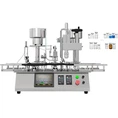
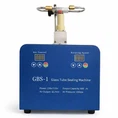
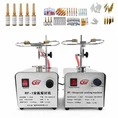
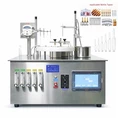

A machine called a blister packaging machine is used to create blister packets for various items. The device is a quick, totally automatic device. It may produce up to 70 strokes per minute for blister packs that are oblong and spherical.
Benefits of Blister Packing Machine
Protection
Blister packs not only protect the product against light, oxygen, humidity & contaminants, it provides protection against mishandling and tampering. Since the product stays securely sealed from the external environment, shelf life in extended, making it safe and suitable for long-term storage and display.
Marketing
Blister packaging offers a range of colours and finishes. The card option also allows manufacturers clean space to include branding, instructions, product information, etc. in an attractive, easy-to-follow way. All this helps the product to stand out in retail outlets, build brand and increase customer loyalty.
Cost-effective
Higher packaging speeds and reduced costs make blister packaging a more cost-effective solution. Blister packs eliminate the need for additional cartons, thereby reducing the cost of packaging. There are several different types of blister packaging – Face Seal, Trap, Mock, Slide and Interactive. Each one has its unique qualities and price points, from entry level to high end.
Visibility
With a see-through plastic front, these containers make the encased product perfectly visible to the consumer. Doing so provides reassurance that the amount of product contained is as advertised and that all pieces are accounted for. Visibility promotes retail display, and since customers can view the item but not touch it, is safeguarded against thieves and tampering.
Tamper-resistant
The product units are individually sealed and therefore individually protected from tampering. Any form of tampering is immediately visible.
Customization
All plastic blisters are thermoformed, so manufacturers can customise every design to the product. Regardless of the size, shape or number of items contained in the blister pack, it can be customized to fit the needs of the product.


Why Choose Us
One-stop service
We promise to provide you with the fastest reply, the best price, the best quality, and the most complete after-sales service.
Customer Satisfaction
We are committed to delivering high quality services that exceed our clients' expectations. We strive to ensure that our clients are satisfied with our services and work closely with them to ensure their needs are met.
Competitive Pricing
We offer competitive pricing for our services without compromising on quality. Our prices are transparent, and we do not believe in hidden charges or fees.
Quality Assurance
We have a rigorous quality assurance process in place to ensure that all our services meet the highest standards of quality. Our team of quality analysts checks each project thoroughly before it is delivered to the client.
Expertise and Experience
Our team of experts have years of experience in delivering high quality services to our clients. We hire only the best professionals who have a proven track record of delivering exceptional results.
Customer Service
We earn your respect by delivering on time and on budget. We built our reputation on exceptional customer service. Discover the difference it makes.
1) Packaging Film
A plastic film can be used for blister packaging because of its sufficient barrier performance to carbon dioxide, oxygen, water vapor, high mechanical strength, and high transparency for not easy to crack.
Besides, rigid plastic films like cellulose, vinyl resin, polystyrene, polyvinylidene chloride, polyvinyl chloride, and polystyrene, etc, can be used for blister packaging. Currently, the most widely used pharmaceutical blister packaging material is PVC plastic sheet because of its good barrier performance against the light, water vapor, and the unusual smell of plastic sheet. But, since PVC is not ideal for moisture resistance, it's advisable to use polyvinylidene chloride (PVDC) or its composite materials for future use.
2) Substrate
White cardboard is usually used for blister packaging. It's made of bleached kraft wood pulp, or can be made with the recycled board covering the base layer with white paper.
The size, shape, and quality of the cardboard are considered when using the white cardboard. The thickness range of the whiteboard substrate is 0.35-0.75mm, while it is 0.45-0.60mm for the normally used board. Also, make sure that the substrate surface is white and glossy, with good quality printability, and the heat sealing coating could be firmly coated. Make sure that the substrate and blister are combined closely after the heat seating coating is melted, to prevent the contents from falling out.
3) Coating Material
The coating material should be compatible with the substrate and the blister. Besides, the temperature should be relatively low so that it can be sealed quickly without damaging the blister film. As the soluble vinyl-resin and water-resistant acrylic resin have good transparency, good luster, and heat sealing capacity, they can generally be used.
Types of Blister Sealing Machine
Based on the operation procedure The automated Blister Pack Machine is classified into three distinct categories.
These are
Roller type blister packaging machine
Roller plate blister packaging machine
Flat plate blister packaging machine
Let's take a quick look of these machines for packaging blisters:
Roller type blister machine
The process of working of rolling blister packing machines is very easy. The film used to form the blister is heated and then softened via the heater. The blister is then pulled by the vacuum pressure applied to the rolling molding roller. Therefore, the filling device is able to fill the packaging object with blister and then it passes through the type of roller.
A heat sealer is used to seal the single-sided, adhesive-coated cover film on the outer surface of the material in the blister at an the right temperature and pressure. It seals the item inside the blister.
Roller plate blister sealing machine
The type of roller plate blister packaging machine was developed using the same foundation as the roller type and flat kind of blister packing machine. This is the flat type of molding device is used to blow mold (positive pressure making) and an adsorbent device of the type roll is sealed. Its the working principle of a blister packaging machine is similar to that of a flat type.
Flat blister sealing machine
The basic principle behind the machine for forming flat blisters The film that is formed is heated and then softened by the heating device that is flat. The softened film then is blown into a bubble using compressed gas inside the device for flat forming, and the filling device is used to fill the package with blister.
Then, it is delivered to the flat sealing device, where the film covering is sealed using the film formed at a suitable pressure and temperature, after which it's printed with the number of batches and that broken line gets then pressed by the imprinting device for typing. Then, the punching device is punched to a specified dimensions product piece.
How to choose the suitable Blister Packaging Machine for your production
When choosing a blister machine, finding one that fits your needs is essential. There are two types of blister machines: platen style and rotary style. Platen-style machines have a consistent speed at each station, making them slower than rotary-style machines. However, they have a more flexible mold exchange, which is better for producing medicines with various shapes like complex shapes, ampoules, vials, injections, and more. These machines are also easier to process.
On the other hand, rotary-style machines have different speeds at each station. For example, the punching station is usually several times faster than the forming station. As a result, adjusting the speed ratio when changing the mold is necessary, which can increase adjustment time (of course, the extensive use of servos has dramatically improved the adjustment flexibility). While these machines are difficult to process because their sealing mold is a roller, they are faster than platen-style machines.
If you have a lot of products, produce small batch volumes, and need to change molds often, then a platen-style machine is more suitable for you. If you don't have a wide variety of products, need to mass-produce, and don't need to change molds frequently, then a rotary-style machine will be a better fit.
There are four main components involved in blister packaging. These are the forming film, lidding, heat-seal coating, and prints. The forming film and lidding are the main structural components that account for almost the total weight of the packaging. The heat seal layer creates a bond between the two structures. Lastly, the labels, batch numbers, codes, and other important information are added by printing.
Forming Film in Blister Packaging
The forming film creates the cavity. The forming film's selection depends its properties, grade, and thickness. The cavity has the contour of the product with a slight clearance, to allow for small deformations that could potentially damage the product. For the filming fim to have the correct rigidity, it must be the right grade, have the proper thickness, and allow for convenient and easy opening. The film must have the right grade and thickness to provide sufficient rigidity into the whole packaging while at the same time allow convenient and easy opening. If it is too rigid, the product will be hard to remove. If it is too flexible and soft, the product could be damaged.
Backing Material or Lidding
The lidding secures the product into the cavity. Classifications of lidding structures are divided into Push-Through-Packs (PTP), peelable lids, or a combination of both. PTPs are designed to be broken or torn while pressing into the pocket, as seen in typical medicine packaging. Lidding can also be made peelable without deforming the pocket, as seen in most consumer goods packaging. Push-peel lidding types are specially designed to be opened by performing a sequence of actions. These proprietary lid types are used for medicines for seniors and children known as child-resistant blister lidding.
Common lidding materials can be aluminum foil, PET, paper, or a combination of these materials. Aluminum foil is characterized by its temper, which can be soft or hard. Soft-tempered aluminum foil is more malleable and is suitable for packaging hard materials such as tablets and lozenges. Their malleability allows some amount of deformation before breaking. Because of this characteristic, soft aluminum lids are used for child-resistant blister packaging which helps prevent children from pushing tablets out of it. Soft aluminum foils used in blister lidding typically have 1.0 mil thickness(1/1000th of an inch).
Hard-tempered aluminum foils do not allow any elongation and can be torn easily with sufficient force. They are used for lids that are designed to be pushed through or peeled off. For a single layer, hard aluminum lid structure, the foil thickness is around 0.8 mils. This type of structure is used for push-through-packs.
Hard aluminum foils can also be combined with paper and PET to be used for child-resistant packages that can be pushed through, peeled off, or a combination of both. A common design features the paper and PET layers to be first peeled off from the aluminum. The tablet is then pushed through, which tears the aluminum foil.
Heat-seal Coating
Heat-seal coatings bind the plastic blister pack and the lidding together. They are molten or liquid polymer resins applied on the lidding material's surface using roll coaters, knives, gravure, brushes, or sprays. The right amount must be applied to create an air-tight sealing. After application, the resin is allowed to dry on the surface of the foil. This resin will be reactivated once the bonded foil-seal coat film is used for packaging.
Conventional characteristics of heat-seal coating resins used for blister packaging are low-temperature activation, low coefficient of friction, high gloss, and high transparency. The FDA must approve the polymer resin for direct food contact compliance for pharmaceutical and food packaging. General types of heat seal coatings are solvent and water-based. Examples are polyvinylidene chloride (PVDC), acrylic, and ethylene acrylic acid (EAA). Other types are extrusion-coated and co-extruded polyolefin films. These types of films can be low-density polyethylene (LDPE), linear low-density polyethylene (LLDPE), and ethylene-vinyl acetate (EVA).
Prints in Blister Packaging
Prints are added to the lidding structure to provice product information and attract buyers' attention. They are usually applied by flexographic printing. Since these are applied before the heat-sealing process, they must withstand the heat-sealing temperatures of about 572 ° F (300°C).

Blister packaging equipment should be checked periodically to ensure no dirt or debris is interfering with its ability to correctly seal the product, minimizing moisture ingress from the sides of the seal.
Watch for dirty or worn-downed sealing die surfaces on machinery that can absorb heat, distort the knurl pattern and lend to an uneven seal that weakens and breaks quickly.
To avoid weak seals, have a good knurl. A knurl is basically a small metal object that creates ridge patterns on the thermoformed package seal edge. It is the metal mechanism by which the heat seal is completed between the plastic and cardboard, paper, or aluminum back.
Monitor the machine's settings carefully. Too much pressure or line speed from the device, and you'll end up with cracked lidding foil or an otherwise compromised seal.
Worst case scenario Breaks in the plastic seal could be microscopic - that is, too small to notice. This is the result of poorly-done heat sealing, which negatively impacts a product's shelf life, particularly dangerous for pharmaceutical items that ruin due to oxidation.
A procedure used to seal a product inside a package is called blister packaging. It entails a number of actions. The substrate needs to be cut first. Inserting the product is the next step. Applying a sealer is required as a last step. A blister packing machine is necessary for this.
Both food and solid medications can be packaged in blisters. Numerous options, such as automatic printing and manual loading, are available on these devices. They are affordable and meet health standards. The aluminum plastic blister packaging machine is another sort of device. It is especially made for food and drug manufacturing facilities.
Plastic is typically used to make blister packaging sheets. They are transparent, long-lasting, and effective against moisture and oxygen. They also enable viewing of the item while it is being transported. The products are kept secure in the packaging by using heat-sealing equipment to seal the containers.
Human machine interfaces for blister packing machines contain touchscreens that let humans manage various operations. This makes it simple to enter production requirements and switch out components as needed. The materials are also pushed to a platform by a roller. In order to guarantee that the materials are correctly sealed, this roller rotates continuously and cooperates with other components of the machine.
Machines for blister wrapping are perfect for mass production. They are suitable for a wide range of items and operate at high speeds. They are also appropriate for a variety of pharmaceutical goods. The pharmaceutical sector needs blister packaging machinery. Tablets, capsules, and ampoules are just a few of the pharmaceutical goods that can be packaged using these devices. For further security, they can mark individual doses and create tamper-proof packaging.
For many organizations, blister packaging equipment is a great investment. They can be used to safely package medications, spice mixtures, and other sophisticated goods. They can also be used to package food goods and other things that need to be protected from the environment. They can be used to safeguard meals, cosmetics, and toys in addition to medicines.
How to clean a blister packaging machine
Make careful to use a detergent solution without any additional lint when cleaning a blister packaging machine. Before cleaning the equipment, you should also turn off the electricity and air supply to it. After that, use a dry cloth to clean away any leftover residue from the machine. The hopper and bowl of the machine, as well as the other components, should all be cleaned next.
Your blister packaging machine could need to have a few different parts cleaned depending on the model. Make careful to read the SOP that comes with the unit before cleaning it. Make sure that all dust and dirt are thoroughly removed from the components. Cover any leftover components or scraps with plastic bags before moving them to a general wash area.
Mild steel or SS 304 frames make up the basic machine body. Numerous cables flow underneath the balcony-style mounting of the numerous modular components. Servo motors are used to control the indexing and feeding systems. Additionally, bearing seats and cam casings contribute to the warmth-fixing system.
Blister packing machines are extremely adaptable and useful for a variety of items. They are incredibly practical and simple to distribute in huge quantities. They are helpful in the cosmetics sector because they can shield products from gas and moisture, extending their shelf life. They are safe to use and can be used with chemicals and food goods.
The machine features a number of sensors that enable it to have a steady production cycle. Cameras, open rankle chambers, temperature, and movement sensors are some of them. These sensors support the machine's efficient operation. Additionally simple to use and maintain, blister packing machines. You'll spend less on repairs thanks to this.
The components of a blister packaging machine vary depending on the model. But combined, they all contribute to the final hollow shape. Make that the machine can easily change its parts and is working at the proper temperature. Additionally, it's critical to confirm that the machine can work with a variety of materials. For all the many types, you ought to be able to purchase replacement parts.
Remove the changing part assembly and wipe it with purified water and a lint-free towel before cleaning the MMI. Additionally, you must clean the perforation, sealing, and embossing tools. The acrylic guards can easily be cleaned with water and Teapot. Never forget to dry them off with a spotless, lint-free cloth. Make careful to mark them as clean before returning them to the machine.
The blister packaging machine is a crucial piece of equipment in the medical industry. Injections, capsules, and pills can all benefit from safe packaging. You may produce appealing packaging for your items using this equipment.
Our Factory
We have rich experience in equipment automation. In addition to the design and manufacture of conventional equipment, we can also customize product design solution according to user needs. The company has its own lathes and milling machines, and two senior fitters, who can make samples and processing parts at any time. While product quality is guaranteed, it can respond quickly to user needs. We have an excellent sales team who have a good understanding of the product performance, can understand customer needs in a timely manner, and can fully display the advantages of the product. We have 3 after-sales person. Whenever we receive user appeals, we will respond immediately within 24 hours, Come up with a solution. with a aim to create more value to our visionary customers and grow big together.

FAQ
Q: What is blister packaging used for?
Q: What does blister mean packing?
Q: What is the purpose of packing machine?
Q: What is the problem with blister packaging?
Q: Is blister packaging good?
Q: Why is blister packaging better than skin packaging?
Q: How does a pouch packing machine work?
Q: Are blister packs being phased out?
Q: Why are pills sealed in foil?
Q: Do blister packs cost money?
Q: Is it worth recycling blister packs?
Q: What is a blister pack made of?
Q: What is the difference between clamshell and blister packaging?
Q: Is blister packaging bad for the environment?
Q: What can I do with empty blister packs?
Q: How big is the blister packaging market?
Q: What is the shelf life of blister packs?
Q: What are the indicators of poor packaging?
Q: What makes bad packaging?
Q: What are the three most important functions of packaging?
Hot Tags: blister packing machine, China blister packing machine manufacturers, suppliers, factory, labeling machine


