



What Is Granulators?
Granulator is a processing equipment which is used to make different materials into a specific shape, this machine is widely applied in various industries which include chemical, food, pharmaceutical, construction, mineral, ceramic, plastic and so on. It can form powders or fine granules into larger granules, or grind solid materials into small granules.
Advantages of Granulators
Increase in productivity:Granulators significantly increase the speed of processing raw materials, which affects the growth of production capacity.
Saving resources:The compaction of materials allows to reduce the costs of their storage and transportation.
Product quality improvement:Granulation ensures homogeneity and standardization of finished products.
Environmental friendliness:Reducing waste and reusing materials helps reduce the environmental impact of production.
Universality of application:Granulators can process a wide range of materials, making them suitable for many industries.
Why Choose Us
Quality
Customers want to ensure that they receive excellent quality products or services that meet their expectations and needs.
Reputation
The reputation of a company or brand is essential when it comes to making a decision. Customers tend to choose a company that is well-regarded in the industry.
Customer service
A company with a good reputation for customer service can be a deciding factor for consumers, making them feel valued and satisfied with their experience.
Experience
An established and experienced company has a greater understanding of their products or services, allowing them to provide better quality and support to their customers.
Convenience
Consumers appreciate convenience, they want products or services that make their life easier, faster, and more efficient.
Safety and security
Customers want to feel secure when using a product or service, it is critical to provide safety and security policies and measures.
Vibrating granulator
This machine has an oscillating rotor that moves back and forth. The powder needs to pass through an oscillating sieve or mesh. It then produces granules of the desired size. The size of the granules depends on the size of the holes on the sieve. You can customize the sieve hole size to suit your needs. In addition, the rotation speed can be adjusted according to your material characteristics. After that, the granular material is collected at the output of the machine.
Roller granulator
This machine uses dry granulation technology, so it is also called a dry granulator. It is designed to convert powder into granules without the use of liquid. The machine is equipped with two counter-rotating rollers. When the powder is poured, it is compressed between the two rollers to form a dense flake or ribbon. Subsequently, this compacted flake is broken down into uniform granules by a grinding mechanism. Finally, the granules pass through a screen to obtain a consistent particle size.
High shear granulator
This machine is also called a high-speed granulator. It forms granules by mixing powders at high speed. This type is known for its high efficiency. The machine is equipped with a high-speed impeller. It can generate strong mechanical force to ensure thorough mixing and granule formation. And the granules produced are of consistent size and density.
Vibration granulator
In this machine, the vibration mechanism plays a vital role. This machine mainly uses it to complete granulation. Its working principle is similar to that of an oscillating granulator. But instead of breaking up the granules by rotation, it does so by vibration. The vibration combined with mechanical force causes the material to aggregate into granules of the desired size. The intensity of the vibration can be adjusted to suit different granulation materials.
Fluidized bed granulator
The working principle of this machine is completely different from the others. It suspends the powder in an upward-flowing air stream. Then it creates a fluidized state. In this state, the granules behave like a fluid. This helps to evenly distribute heat and moisture during the granulation process. The granulation liquid is then sprayed onto the fluidized granules. It is usually a binder solution. Next, the fluidized granules interact with the binder. This makes them stick together and form granules. When the granules are formed, they need to be dried for further processing.
Food industry
In the food industry, granulators are often used in food processing. They are used to produce granular materials of foods such as beans and grains. Granular food materials are easy to store and process, which improves production efficiency.
Pharmaceutical industry
Granulators are ideal equipment for the pharmaceutical industry. They can make drugs into granules and then press them into tablets or granules for use. Granular drugs are easy to dissolve, easy to be absorbed by the human body, and have high stability.
Chemical industry
In the chemical industry, chemical raw materials are processed into granules by granulators, making them more stable, which can be stored for a long time and convenient for transportation, thus improving the quality of chemical products.
Plastic industry
In the plastic industry, granulators are used for the recycling of plastics. They can process various waste plastics into plastic granules, thereby achieving the purpose of plastic recycling.
Metallurgical industry
Granulators play a vital role in metallurgical production. They turn metals and minerals into granules for easy smelting. Why does the metallurgical industry need to use granulators? The reason is that granular materials are easier to burn, thereby improving production efficiency and safety.

Components of Granulators
Feed hopper
The feed hopper is used to load the materials to be granulated. Since the oscillating granulator can be used for wet granulation, the hopper is designed to hold pre-wetting materials. So, this component is typically constructed from stainless steel to prevent corrosion.
Oscillating rotor
The oscillating rotor comes in a stainless-steel construction. It is mounted at the bottom of the feed hopper. This component features multiple arms that are arranged in a cylindrical fashion. These rotor arms with sharp edges function as blades to break down the large agglomerates.
The rotor works by oscillating and rotating on a horizontal axis. It rotates from side to side to crush the oversized product to be granulated. Both the rotational speed and time of the oscillating rotor are adjustable depending on the properties of raw materials.
Sieve
The sieve comes in a perforated metal sheet. It functions as a mesh screen and half wraps around the oscillating rotor from the bottom. With a stainless-steel construction, the sieve works to grade and screen the particles crushed by the oscillating rotor.
The oscillating granulator sieve is available in various sizes and perforated types. The screening is a key step in the oscillating granulator working principle. It helps achieve the desired particle sizes depending on your production needs.
Hand wheels
The oscillating granulator generally has a pair of hand wheels. They come with removable bars to secure the sieve and adjust its tension. When the mesh screen needs to be replaced, you can unscrew the retaining nuts to pull out the adjustment bars without tools.
Discharge chute
The discharge chute is crafted from fully welded, mirror-polished stainless steel. The construction allows the granular materials to leave the device smoothly and completely.
Control panel
Since the oscillating granulator is an easy-to-operate device, its control panel doesn't come in a complex design. Typically, the control panel is composed of a start button, a stop button, an emergency stop button, and power indicators.
Motor and gearbox
The electric motor and gearbox are enclosed in the machine base. The rotor is driven by the motor and gearbox to deliver oscillating and rotating motions for the granulation process.
How to Maintain Granulators
Check blades regularly
Check the wear of the blades and replace blunt blades in a timely manner.Ensure the blades are securely installed and the screws are tightened.Avoid feeding any foreign objects such as metal.
Lubrication system maintenance
Regularly inspect and replace lubricating oil to ensure all moving parts are well-lubricated.Check to see if the oil circuit is unobstructed to avoid equipment overheating.Clean and inspect the crushing chamberregularly clean and remove the residual materials and fragments in the crushing chamber to avoid blockage.Check the wear of the crushing chamber and repair or replace it if necessary.
Check the motor and transmission system
Regularly inspect the motor and transmission system to ensure normal operation.Check the tension and wear of the belt, and adjust or replace it if necessary.
Check safety devices
Regularly check the safety devices of the equipment, such as emergency stop buttons, and overload protection to ensure a safe operation.
Regular calibration and adjustment
Regularly calibrate and adjust equipment parameters based on equipment usage and changes in processed materials to ensure optimal performance.
Maintenance history
Keep a record of maintenance and inspection. Record the detailed situation of each maintenance and upkeep, including the replaced parts, maintenance time, and discovered problems so that can help predict future maintenance needs and preventive maintenance.
Granulator maintenance secret
By following these maintenance recommendations, the service life of industrial granulators can be maximized and their continuous and efficient operation can be ensured. If you need more specific maintenance suggestions, feel free to contact us at any time. It is also equally important to invest in quality and reliable granulators. We have been serving the plastics industry for more than thirty years. We offer robust and long-lasting granulators, including beside-the-press granulators, film granulators, central granulators, and soundproofed granulators.
How to Choose a Granulators
Understanding the processing needs can help in selecting a granulator. Granulation can be divided into two types in terms of processing: Wet and dry.
A granulator is a machine that incorporates liquids during operation. The process typically involves large amounts of water and detergents. These liquids serve two main purposes: They help clean contaminated materials and they also help cool the machine.
In contrast, dry granulators operate without the use of liquids. These machines are often used in plastic molding, thermoforming, and extrusion plants. In these environments, granulators operate without the introduction of water or other liquids, relying on a dry process to achieve the desired granulation results.
Material quality affects the choice of granulator. Tough engineering polymers such as nylon and polycarbonate require granulators with high cutting forces and wear-resistant blades. Softer polymers can be processed with lighter machines, including polyethylene. Consider fillers, reinforcements, and other additives in plastics, which may change their wear resistance and cutting resistance. It affects the construction of the granulator and the blade material.
Choosing a granulator depends on its capacity and intended use. Large-scale recycling processes require high-capacity pelletizers to increase production. Recycling plants that process several tons of plastics per day need a pelletizer with high horsepower and a large feed opening to handle bulky materials. Smaller, more energy-efficient models may be suitable for on-demand recycling work, including processing industrial waste in a plant environment. It balances productivity and environmental concerns.
The blades or knives in a pelletizer determine its efficiency and durability. Hardened tool steel or carbide blades handle abrasive or hard materials because they last longer. The cutting chamber and rotor type (including open, closed and staggered) also affect the cut quality and the pelletizer's ability to handle materials of different shapes and sizes. Maintenance and blade alignment are essential to maintain a constant pellet size and machine durability.
First, the plastic waste is fed into the pelletizer through the hopper. The hopper is designed to hold plastic waste of all shapes and sizes.
Then, as the motor powers the rotating blades, they spin at high speed inside the cutting chamber. The plastic material is pressed towards the stationary blade, creating a shearing action that cuts the plastic into small pieces. The continuous cutting and shearing action between the rotary and stationary blades cuts the plastic waste into pellets. The size of the particles is determined by the screen. Only fragments that are small enough to pass through the screen can leave the cutting chamber.
Finally, the screen only allows particles of a certain size to pass through, thus ensuring that the particles are uniform in size. Larger particles that cannot pass through the screen are left in the cutting chamber for further granulation. The granular plastic is collected in the discharge zone or in a container. These particles can then be further processed, melted, or used to produce new plastic products.

Safety Precautions When Using the Granulators
Workers wear tight overalls, cuffs do not open, do not wear gloves, wearing protective caps and dust masks, the operation must focus on energy.
Check the reducer oil level, particle machine spindle bearings and roller bearing oil level.
Familiar with the working principle of the machine and the structure and function of each part.
Check if there is any debris in the machine and if the screws are loose, tighten the spindle nut with a wrench.
The motor must be started without load before it can work, it is strictly prohibited to invert the direction.
It is forbidden to open the cover of the machine at will during the production process. Do not reach into the granulation room. After the work, the machine will produce high temperature. The body should not be in contact with the machine to prevent accidents.
The machine must be grounded safely. When checking the machine, disconnect the main power supply first.
Check and remove the metal on the magnetic separator at the entrance at any time during work, pay close attention to the work situation, and find that the abnormality is shut down in time.
Spindle bearings should be filled with at least one high-temperature grease per shift, and the pressure roller bearings should be added with at least two high-temperature greases per day.
When the machine is not in use for a long time, the material inside the mold should be thrown out, rubbed with anti-rust oil.
Installation Instructions for Granulators
Operation method for first startup
Preheat for about 45 minutes before starting the machine, so that the electric v-belt can be heated to a free state; pull it continuously for eight to ten times according to the normal working speed, and then continue to heat for about ten minutes, and then start the machine, but keep heating, because normal production requires continuous heat replenishment; adjust different temperatures according to different properties of plastics.
When the pelletizer is working normally, the machine temperature should be stable and should not fluctuate. Close to the exhaust hole until the head temperature is about 200℃ (referring to propylene, material).
The feed should be uniform and the amount should be sufficient. The machine feed speed and feed speed should be appropriate. Otherwise, it will affect the quality and output of the pellets.
When the pelletizer is stopped, the main machine should be completely cut off from the power supply. The head plug (with the wrench part) must be removed. Preheat separately before the next use.
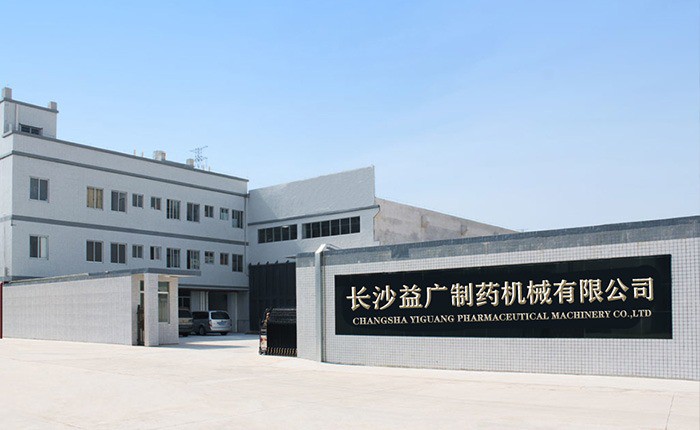
We have rich experience in equipment automation. In addition to the design and manufacture of conventional equipment, we can also customize product design solution according to user needs.
● The company has its own lathes and milling machines, and two senior fitters, who can make samples and processing parts at any time.
● While product quality is guaranteed, it can respond quickly to user needs.
My certificate

FAQ
Hot Tags: granulators, China granulators manufacturers, suppliers, factory


