
What Is Capsule Filler Machine?
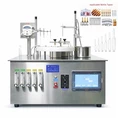
The capsule filling machine, simply called the capsule filler, is equipment utilized to fill empty capsules with pharmaceutical ingredients. These capsule-filling machines can be classified into two categories according to their uses and functions: professional capsule-filling machines and personal capsule-filling machine.
The professional capsule-filling machine is used in the pharmaceutical industry for large-scale production and higher efficiency. These are primarily automatic filler machines that fill a set amount of medication or pharmaceutical ingredients into the capsule.
Whereas the personal capsule filling machine is utilized for small-scale capsule production. Such capsule fillers allow the individual or a small business to fill the capsule with the necessary prescribed medication when required.
High filling accuracy
The right dosage matters when it comes to the efficacy and safety of the medications. So, achieving a high filling accuracy is essential. Automatic encapsulation machines are more advanced than manual and semi-automatic equipment. This allows them to fill capsules accurately and consistently at high speed.
High production output
Manual capsule filling is a time-consuming process. It can take several hours to fill the required number of capsules. Semi-automatic machines can fill as many capsules as some automated ones. Yet, the need for manual intervention limits the production output.
Consistent quality
Consistent quality is crucial to the safety of oral dosage forms. Automatic capsule filling machines can ensure that each capsule is filled with the same amount of active ingredients.
Easy operation
Automatic encapsulation machines can simplify the production process. They are engineered with user-friendly interfaces. Most interfaces come in plc-based touchscreens, providing clear instructions and feedback. This allows operators to use the machine in a simpler way.
Time saving
Automatic encapsulation machines are designed to handle the entire production process. Automation reduces the need for manual intervention, thereby saving time on production.
Improved safety
Automatic encapsulation machines have come a long way in terms of safety. Compared to manual and semi-automatic equipment, these automated machines have an enclosed design. This minimizes the operator's exposure to the filling process.
Versatility
As for the applications of automatic capsule fillers, they are widely used in many industries. The versatile machinery can handle a wide range of capsule sizes, fill weights, material types, and production speeds.Moreover, automatic encapsulation machines can handle different amounts of material. All you need to do is to tweak the dosing system. This system precisely controls the fill weight for each capsule.
Upgradability
Automatic capsule filling machines are highly upgradable compared to manual and semi-automatic machinery. This allows your business to adapt to changing market demands while staying ahead of the industry competition.

GMP requirements, especially suitable for research institutions, hospitals, new small pharmaceutical factory, health products factory.

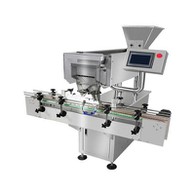
This machine is suitable for filling several solid preparations in pharmaceutical and food industry. Bottle transfer mechanism The bottle stopper on the bottle delivery track will be transferred from the upper track equipment

The machine adopts anti-high dust computer counting technology, can be used for tablets (including special-shaped tablets), hard capsules, soft capsules (various shapes transparent

The encapsulation of the cap, the body and the filling of the powder are suitable for small and medium batch production of small and medium-sized pharmaceutical factories

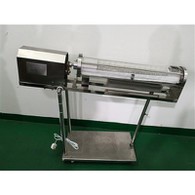
KD-88 capsule polishing machine (drug polishing machine) from the base, out Feed port, frame, single phase motor, polishing brush, stainless steel cover

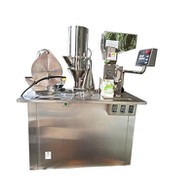
DCX-4 semi-automatic capsule filling machine is a new type of medicine
Packaging machinery, suitable for filling all kinds of domestic and imported capsules.
Why Choose Us
Quality
Customers want to ensure that they receive excellent quality products or services that meet their expectations and needs.
Reputation
The reputation of a company or brand is essential when it comes to making a decision. Customers tend to choose a company that is well-regarded in the industry.
Customer service
A company with a good reputation for customer service can be a deciding factor for consumers, making them feel valued and satisfied with their experience.
Experience
An established and experienced company has a greater understanding of their products or services, allowing them to provide better quality and support to their customers.
Convenience
Consumers appreciate convenience, they want products or services that make their life easier, faster, and more efficient.
Safety and security
Customers want to feel secure when using a product or service, it is critical to provide safety and security policies and measures.
Types of Capsule Filler Machine
Automatic capsule fill machine
Automatic capsule filling machine automatically fills the capsule by the dry forms of powders. It is used in the industries for a large number of production of the capsules. They are extremely durable in nature.
Semi-automatic capsule fill machine
The semi-automatic capsule fill name itself says that it is partially working both automatic and manual both. Their equipment is very simple in design and very easy to operate. It's very hygiene in use.
Manual capsule fill machine
Manual capsule machines are mostly used for the small-scale pharma industries as they produce less amount of capsules so it can be done manually. It requires no power and it is operated by hand.
Application of Capsule Filler Machine
Filling powders
Capsules with powder is the most common type of solid dosage form. It is the fine, dry particles produced by grinding, pounding or crushing solid substances.Generally, filling powders is the most common application of capsule filling machines. It can be achieved by manual encapsulators - though the manual type is not as efficient and accurate as the automatic capsule filler.This results in the simpler structure design of powder capsule fillers, as well as their hoppers and dosing systems.
Filling tablets
Compared with other fill materials, tablets tend to be larger in size. A capsule can only contain one or several tablets. And the number of tablets is determined by the size of the capsule.
Filling granules
Like powders, granules are also the most commonly used solid dosage form in the pharmaceutical industry. They are typically larger particles created by gathering together powder particles. The process of creating granules by aggregating powder particles is known as granulation.
Filling granules
Like powders, granules are also the most commonly used solid dosage form in the pharmaceutical industry. They are typically larger particles created by gathering together powder particles. The process of creating granules by aggregating powder particles is known as granulation.
Filling liquids
Filling liquids into the capsules consists of two steps: Liquid filling and capsule sealing.
For the liquid filling, the automatic capsule fillers should be equipped with liquid filling stations. Typically, they adopt servo-controlled liquid pumps, which are precise enough to fill liquids of 100 mg to 1.5 grams. On top of that, the capsule filler can fill liquids in a wide range of viscosity spectrum.
Filling combinations
Sometimes, a combination of products, such as liquids and semi-solid substances, needs to be filled into capsules. At these times, you really want to customize your capsule filling machines from a reliable supplier. Because they are capable of providing tailor-made machines to meet your specific filling needs.
Components of Capsule Filler Machine


Powder hopper
The powder hopper is used to store the filling material. It is designed with a side entry for the operator to easily refill the powder. In addition, it is equipped with a spiral powder feeder. The spiral system can keep the filling material inside the hopper loose enough for reliable and consistent feeding.
Capsule hopper
Like the powder hopper, this hopper is designed to hold empty capsules. It is equipped with a sight glass that allows the operator to visually monitor the material level inside the hopper. You can customize the hopper capacity according to the required output.
Capsule seeding mechanism
It consists of a complete magazine, a sorting block, and horizontal sorting fingers. It is worth mentioning that some machine models are equipped with a safety guard at the capsule seeding mechanism to protect the operator from mechanical injuries.
This part locates the empty capsule and aligns it with the hole of the filling ring. Then, it places each capsule into the hole to prepare for separation and filling.
Filling ring
The filling ring is a key tool of the capsule filling machine. It consists of two discs to hold the empty capsules as well as the capsule cover and capsule body during separation.
Capsule closing mechanism
As the name suggests, this part plays the role of closing the filled capsules. The pin ring is the core tool of this mechanism. It is in the shape of a disc and equipped with a custom ejector pin. After the filling process is over, the operator puts the two halves of the filling ring back together and places them on top of the pin ring. Then, the pin ring is pushed against the filling ring to close the filled capsule and push it out of the ring.
Rotary table
The rotary table is installed in front of the powder hopper of the capsule filling machine. It provides support and rotation for the filling ring that holds the empty capsule body.
Plc and hmi
Now that you know that the operation of the capsule filling machine includes manual and automatic processes, it is definitely driven by a plc system. In addition, it is also equipped with an hmi touch screen, allowing operators to easily adjust parameters according to specific production needs.
Vacuum system
The vacuum pump is designed to remove air from a sealed space to achieve a pressure difference. Depending on the specific application, a variety of technologies are used in vacuum pumps.
Electrical enclosure
Since this capsule filling machine has a certain degree of automation, it is equipped with a series of electrical components. In order to minimize the risk of component damage and protect the operator from electric shock, we need an electrical enclosure. This key part of the machine provides a secure space for important components such as variable frequency drives and plcs, while also preventing unauthorized access.
Frame
The workbench is designed with redundant powder collectors to ensure the operating area remains clean and tidy. In addition, swivel casters make it easy to move heavy machinery anywhere in the workshop.
Step-by-Step Process of Capsule Filling
Preparing the capsules
The first step is to prepare the empty capsules by separating the caps from the bodies using a capsule sorting machine. This ensures that all capsules are oriented correctly for filling.
Filling station setup
Once the capsules are ready, they are loaded into the feeding system of the capsule filling machine. The machine is then set up with specifications such as fill weight, speed, and other parameters according to product requirements.
Powder dispensing
The next stage involves dispensing precise amounts of powder or granules into each capsule body. This can be done either manually or automatically through a dosator or tamping pin mechanism.
Tamping and compression
After powder dispensing, a tamping pin compresses the filled powder inside each capsule body to achieve uniformity and eliminate any air pockets.
Cap placement
In this step, filled capsule bodies move towards another section where their caps are placed on top using a mechanical system or vacuum technology.
Cleaning and polishing
Once caps are placed, excess powder around the edges is removed using vacuum suction systems or brushes. Furthermore, some machines incorporate polishing stations to give finished capsules a smooth appearance.
Ejection and collection
Fully assembled capsules undergo quality checks before being ejected from the machine onto an output conveyor belt for collection in containers or packaging materials.
Regular cleaning
Clean the machine thoroughly after each use to remove any residue or contaminants that could affect the quality of filled capsules. Use appropriate cleaning agents recommended by the manufacturer and ensure all components are properly dried before reassembling.
Lubrication
Follow the manufacturer's guidelines on lubricating the moving parts of the machine. Proper lubrication will reduce friction and prevent wear, enhancing the machine's efficiency.
Calibration
Check and calibrate the machine regularly to ensure accurate dosing and consistent capsule filling. Refer to the manufacturer's instructions or seek professional assistance for this process.
Inspection
Regularly inspect the machine for any signs of damage, loose bolts, or worn-out parts. Replace or repair any faulty components promptly to avoid any disruptions during operation.
Training
Provide proper training to operators to ensure they understand the machine's functionality and can identify potential issues. This will empower them to troubleshoot minor problems and prevent major breakdowns.
Capsule size
Ensure the machine can handle the size capsules you plan to use. Capsule sizes range from 000 (largest) to 5 (smallest). Leadlife offers a wide variety of empty capsule sizes to suit your needs.
Filling accuracy
Consistent and accurate filling is crucial for product quality and dosage control. Look for machines with features like dosing systems and weight control mechanisms.
Ease of use and maintenance
Consider how user-friendly the machine is and how easy it is to clean and maintain.
Safety features
Look for machines that have safety features such as emergency stop buttons and overload protection.
Scalability
If you anticipate future growth, consider a machine that can be easily scaled up to meet your increasing production demands.
Additional considerations
After-sales service
Reliable after-sales service is essential for ensuring the smooth operation of your machine. Choose a supplier who offers training, spare parts, and technical support.
Reputation of the manufacturer
Research the reputation of the capsule-filling machine manufacturer. Look for companies with a proven record of producing high-quality, reliable machines.
Capsule rectification
A majority of the new capsules are joined, wherein, the bodes and caps are joined. Therefore, these joined capsules have to be rectified first for the filling process to begin. Capsules get randomly poured onto the capsule delivery plate with multiple inward circular channels through which the capsules go through into the machine. The lower portion of every channel is equipped with spring pieces. The capsule plate reciprocates up and down during operation, which makes the capsules enter into the inward channels and get stuck in the spring pieces. The delivery plate then moves down to cause the spring pieces to release the capsules allowing a systematic fall of the capsule into the machine. As the capsules require further rectification, it falls into the front end of the horizontal fork. The specific structure of the fork allows it to act on the middle part of the capsule body with a smaller diameter. The difference in the centre of gravity will cause the capsule to move into the position of the body forwards and cap backwards. Then the direction of the capsule gets adjusted with the help of the vertical fork. This allows the capsule to enter the next segment as the capsule body downwards. This completes the capsule rectification process.
Capsule cap separation from the body
The capsule tray is then transferred to the capsule separation section. The vacuum diver then rises to make the upper surface of the tray as close to the lower segment surface without any gaps. The capsule cap gets separated from the body due to the vacuum. The capsule cap gets stuck on the upper section of the capsule tray while the capsule body goes downwards.
After capsule cape separation, the lower and upper sections of the capsule tray are separated and transferred into their respective positions.
Waste capsule rejection
A few empty capsules don't get separated due for various reasons. There are pins positioned close to the capsules. If the capsule caps have yet to separate from the capsule body during the separation process, the pin pulls out the capsule from the mould, and the capsule is blown to the capsule colling bags. The separated capsule bodies and caps are then transferred to the next station for further processing.
Filling medications
The capsule body then gets transferred via the conveyor belt to the filling station. There are various ways to fill the medication, such as intermittent dose filling, tamping filling, vacuum filling and dodge cylinder filling.
Capsule locking
At the locking station, the lower and upper capsule trays rotate simultaneously, which causes the axis lines of the lower and upper capsule trays to overlap. The pin plate below the capsule tray and the baffle plate above the capsule tray begins to move, which causes the capsule caps and bodies to get locked into position.
Capsule ejection
The capsule ejection component is the same as the capsule rejection component. The pin placed in the station pushes out the locked capsules into the capsule tray. The compressed air then blows the ejected locked capsules into the capsule outlet.
Cleaning
The capsule tray moves back to the capsule rectification station after the completion of the entire filling process. However, there could be waste capsules or powder leftovers in the capsule tray. These need to be cleaned before the operation restarts again. Compressed air is directed to the capsule tray to blow away the leftover powder and waste capsules into the dust collection station located at the bottom.
This is how an automatic capsule filling machine works. Each step happens so swiftly and simultaneously that the machine can fill about 13k to 460k capsules per hour. This makes an automatic filling machine the best choice for large scale capsule production.
We have rich experience in equipment automation. In addition to the design and manufacture of conventional equipment, we can also customize product design solution according to user needs.
● The company has its own lathes and milling machines, and two senior fitters, who can make samples and processing parts at any time.
● While product quality is guaranteed, it can respond quickly to user needs.
My certificate

FAQ
Hot Tags: capsule filler machine, China capsule filler machine manufacturers, suppliers, factory, capsule machine, capsule filler