

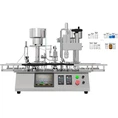
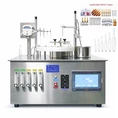

What Is Tablet Making Machine?
A tablet press, also known as a tablet compressing machine or tableting machine, is used to compress pharmaceutical powder formulations into tablet form, creating tablets of uniform size, shape and weight. The tablet press may also be used for the manufacture of products in the form of tablets for other sectors such cosmetics, cleaning products and catalysts for the petrochemical industry.
Advantages of Tablet Making Machine
Efficiency and productivity
Rotary tablet presses are designed for high-volume production and can produce more than one million tablets per hour. This high yield is essential for industries that require large quantities of tablets, such as pharmaceuticals and nutraceuticals. The efficiency of these machines is enhanced by their ability to precisely control the filling of the mold cavity, ensuring minimal waste and optimal use of material.
Precision and control
Modern tablet presses are equipped with advanced features that allow the operator to independently adjust the weight, thickness, and hardness of the tablets. This level of control is critical to meeting specific product requirements and regulatory standards. In the pharmaceutical industry, for example, tablets must meet precise dosage and uniformity standards, which can be achieved with high precision by these machines.
Versatility
Tablet presses are not limited to pharmaceutical use; They are also used in nutraceuticals, cosmetics, and other industries. This versatility stems from their ability to produce tablets in a variety of sizes, shapes, and compositions. The machine can be adjusted to accommodate different materials, from powdered metals to herbal supplements, making it a versatile tool in a variety of manufacturing environments.
Durability and low maintenance
Electric tablet presses are especially known for their durability and low maintenance requirements. These machines are built with advanced materials and manufacturing techniques that ensure a long service life and reliability. While manual tablet presses are also relatively low maintenance costs, electric tablet presses have the added advantage of reducing wear and tear and extending the life of the equipment.
Ease of operation
Single-stamping and manual presses are designed with simplicity in mind, making them easy to use and suitable for small-scale production or laboratory use. These machines do not require extensive training to operate, which is a significant advantage for environments with limited skilled labor or where production processes require quick adjustments.

Purely manual single-punch tablet press machine, without motor, can only be hand-cranked, easy to operate, small in size, light in weight, and can be lifted with one hand.

Small electric tablet pressing machine will press powder granular raw materials into 5-10mm diameter round sheet, cylindrical tablets, can also press tablets with text, trademarks, patterns.

The small electric tablet press machine can press powder and granular raw materials into round and cylindrical tablets with a diameter of 5-10mm, and can also press tablets with text, trademarks and patterns.
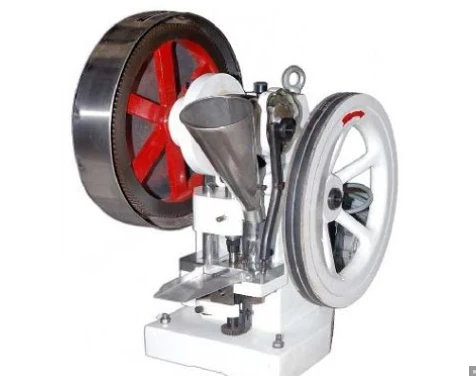
Because the machine can press round tablets, shaped tablets, tablets with words, very suitable for the laboratory for the development of new products.
Why Choose Us
Quality
Customers want to ensure that they receive excellent quality products or services that meet their expectations and needs.
Reputation
The reputation of a company or brand is essential when it comes to making a decision. Customers tend to choose a company that is well-regarded in the industry.
Customer service
A company with a good reputation for customer service can be a deciding factor for consumers, making them feel valued and satisfied with their experience.
Experience
An established and experienced company has a greater understanding of their products or services, allowing them to provide better quality and support to their customers.
Convenience
Consumers appreciate convenience, they want products or services that make their life easier, faster, and more efficient.
Safety and security
Customers want to feel secure when using a product or service, it is critical to provide safety and security policies and measures.
Pharmaceutical tablets
A pharmaceutical tablet is one way to take solid medicine orally. It is also called a pill. Standard pharmaceutical tablets may be antibiotics, anti-allergens, etc.
A pharmaceutical tablet includes the active ingredient and some other ingredients that stabilize the active ingredient. These ingredients are called excipients. For example, stearic acid is added as a lubricant in such tablets as the mixture is too dry to be pressed without it.
Nutraceutical tablets
You can use a pill press machine to make nutraceutical tablets too. These are food products that you can use for health benefits.
Cosmetics tablets
You can use a tablet press to make cosmetic tablets. These tablets are used for cosmetic purposes; for example, vitamin c tablets can clear skin, and collagen tablets can improve hair integrity and remove wrinkles.
Industrial tablets
Tablets are commonly used in other industries. For instance, fertilizer tablets in the agricultural industry contain nitrogen and phosphorus. You can also make detergent tablets containing enzymes, bleach, and surfactant that are more effective at cleaning clothes.
Types of Tablet Making Machine
Single-station tablet press
Also known as single-punch tablet press, it is the simplest and oldest type of tablet press. It produces one tablet at a time and is commonly used for small-scale production, research and development, and compounding pharmacies.
Rotary tablet press
Rotary tablet presses are widely used in the pharmaceutical industry for large-scale production. They have multiple stations arranged in a rotary turret that compresses multiple tablets simultaneously. Rotary tablet presses offer higher production speeds and efficiency compared to single-station presses.
High-speed tablet press
High-speed tablet presses are designed for extremely efficient and high-volume tablet production. They have advanced features such as faster turret rotation speed, enhanced compression force, and improved automation capabilities. These presses can produce a large number of tablets per minute.
Multi-layer tablet press
Multi-layer tablet presses are specialized presses used for producing layered tablets. These tablets have different layers or zones containing different active ingredients or formulations. Multi-layer presses have separate feeders and compression systems to handle the different layers and ensure accurate layering during compression.
Bilayer and trilayer tablet press
These presses are specifically designed for manufacturing tablets with two or three layers. They have multiple feeding systems and compression zones to create tablets with distinct layers. Bilayer and trilayer tablets are often used for controlled-release or combination drug formulations.
Specialty tablet presses
In addition to the above types, there are specialty tablet presses designed for specific applications. This includes presses for producing chewable tablets, effervescent tablets, sublingual tablets, and other specialized dosage forms. These presses may have unique features or modifications to accommodate the specific requirements of the tablet formulation.
Header frame
The machine's main frame gives it stability and support. To enhance longevity and reduce vibrations during compression, it is typically built of premium stainless steel or other robust materials.
Hopper
The powdered ingredients are fed into the hopper. By supplying the material to the feeder system, a constant flow of powder is made available to the compression zone.
Booster system
The quantity of powder supplied into the compression zone is controlled by the feeder system. It guarantees a steady and uniform flow of powder, preventing the dies from being overfilled or underfilled.


Punches and dies
The powder is formed and compressed into tablets using dies and punches. Punches apply pressure to produce the tablet, while dies decide its size and shape. For the purpose of withstanding significant compression forces, these components are often composed of hardened steel.
Contractor system
The necessary force is applied by the compression system to create tablets. To compress the powder in the dies, it consists of upper and lower punches that move vertically. In accordance with the required tablet hardness, the compression force can be changed.
Panel of control
The control panel enables users to keep an eye on and manage a number of tablet press machine settings, including production speed, tablet thickness, and compression force. It offers an intuitive user interface for effective operation and problem-solving.
How to Keep Your Tablet Press Clean
Clean the exterior
Wipe away all visible dirt on the exterior of the press and vacuum off any excess formulation. Do not use compressed air to blow off excess powders. Compressed air can trap powders in hidden housings, crevices and pockets causing problems down the line.
Visual inspection
Examine the press to assess the condition of the parts. Look for signs of wear or damage on tablet punches and punch heads, and earmark any parts that need repair or replacement.
Prepare the press for cleaning
Carefully dismantle removable machine parts for thorough cleaning. Tooling, punch heads, feed frames, guards and plates can often be removed for cleaning purposes.
Use the proper equipment
Stiff nylon punch guide brushes and die seat cleaning tools help to access hidden areas of the press that might contain traces of debris. It's important not to use any unnecessary force, since tablet presses are delicate and can be easily damaged if not carefully handled.
Choose the right cleaner
Your choice of cleaner will depend largely upon the soils that are on your press. Are you removing oils? Gels? Starches? Enzymes? You'll also want to consider the surface you are cleaning to be sure you are choosing a compatible cleaner.
Set up a proper cleaning method
In addition to using the right cleaning product, it's also important to consider other variables to establish your cleaning protocol. All of the following should be considered:
A. Amount of detergent
B. Temperature
C. Dwell time
D. Cleaning method
E. Type of water
Rinse
Thorough rinsing should follow the cleaning. Rinsing removes any excess detergent left on the item. For critical cleaning applications it is best to use deionized or distilled water, as rinsing with ordinary water may introduce new contaminates.
Validation
Cleaning validation helps identify if there is any remaining residue from soils and cleaners, and helps prevent contamination. Quantitative validation methods, available from most manufacturers, should be used for critical cleaning applications.
Disinfect
If required, disinfection should be done after the press is cleaned and soils are removed.
Dry parts thoroughly
Parts should be completely dried to prevent rusting, corrosion or discoloration.
How to Choose the Right Tablet Press Machine for Your Pharmaceutical Needs
Production volume
The first step in selecting a tablet press machine is understanding your production volume. If you need to produce large quantities of tablets, a high-speed rotary tablet press may be the best option. For smaller batches or r&d purposes, a single punch tablet press might be more suitable.
Tablet size and shape
Different machines are designed to handle various tablet sizes and shapes. Ensure that the machine you choose can accommodate the specific dimensions and forms of the tablets you plan to produce.
Material characteristics
Consider the properties of the materials you will be compressing. Some materials may require higher compression forces or specific handling features to ensure consistent tablet quality.
Single punch tablet press
Single punch tablet presses, also known as eccentric presses, are ideal for small-scale production and r&d. They are compact, easy to operate, and suitable for producing tablets in small quantities.
Rotary tablet press
Rotary tablet presses are designed for large-scale production. They have multiple stations that allow for continuous tablet production, making them efficient and suitable for high-volume manufacturing.
Double rotary tablet press
Double rotary tablet presses offer even higher production capacities and are capable of producing tablets with consistent quality. They are ideal for large pharmaceutical companies with extensive production needs.
Automation and control systems
Modern tablet presses come with advanced automation and control systems. Look for machines with features such as programmable logic controllers (plcs), touch screen interfaces, and real-time monitoring to enhance efficiency and ease of use.
Compression force
Ensure that the machine provides the necessary compression force for your specific tablet formulation. Some materials may require higher compression to achieve the desired hardness and quality.
Versatility
A versatile machine can handle a wide range of tablet sizes, shapes, and formulations. This flexibility is particularly important if you plan to produce multiple types of tablets.
Maintenance and ease of cleaning
Choose a machine that is easy to maintain and clean. Features such as removable parts, stainless steel construction, and automated cleaning systems can significantly reduce downtime and improve operational efficiency.
Gmp compliance
Ensure that the tablet press machine complies with good manufacturing practice (gmp) standards. This compliance is crucial for maintaining product quality and meeting regulatory requirements.
Build quality
The build quality of the machine affects its durability and performance. Look for machines made from high-quality materials, such as stainless steel, which offer resistance to corrosion and wear.
Reputation and experience
Choose a supplier or manufacturer with a strong reputation and extensive experience in the pharmaceutical industry. Established companies are more likely to provide reliable machines and excellent customer support.
After-sales support
Good after-sales support is essential for maintaining your tablet press machine. Ensure that the supplier offers comprehensive support, including maintenance services, spare parts availability, and technical assistance.
Customer reviews and testimonials
Check customer reviews and testimonials to gauge the reliability and performance of the machine and the supplier's customer service. Positive feedback from other pharmaceutical companies can provide valuable insights.
Initial investment
Consider your budget and the initial investment required for the machine. While high-quality machines may have a higher upfront cost, they often offer better performance and longer lifespans.
Operating costs
Factor in the operating costs, including energy consumption, maintenance, and labor. Machines with advanced automation features may have higher initial costs but lower operating expenses in the long run.
Return on investment (roi)
Evaluate the potential roi by considering the machine's production capacity, efficiency, and impact on product quality. A higher initial investment may be justified by significant long-term savings and improved productivity.
How the Tablet Making Machine Works
Putting material in the hopper
After preparing your material with the right composition, pour itinto your hopper. Remember, the hopper must meet hygienic and safety standards.
Filling material in tooling system
Material from the hopper will flow to the single station tablet press die and punch system. As the cam system moves the upper punch, material flows into the die cavity.
Next, the bottom punch system will move upwards to ensure the exact quantity of material fills your machine's die cavity. This ensures only the recommended material volume fills the die cavity for the next step. It is also an important quality control mechanism.

Compression process
Using the die and punch mechanism, the upper punch applies a predetermined force on material already in the die cavity. As a result, it compresses material to make tablets or pills.
Pill or tablet ejection
The upper campushes the upper punch system upwards. At the same time, lower punch systems move upwards thereby ejecting the compressed tablet from the die system.
From here, you can take the tablets through other processes.
As you can see, single-press tableting machines are slow. At times, the process can be tiresome since the operator handles most operations.
Safety Precautions When Using the Tablet Making Machine
Use safety equipment
Make sure all persons in the vicinity of the press are wearing safety glasses or goggles. This protects their eyes from any potential hazards.
Material inspection
Before using the press, make sure the specimen, item or material being pressed is of the appropriate thickness and can be safely used on the equipment. This helps prevent accidents or machine damage.
Avoid using faulty equipment
Do not use the press if it is faulty or malfunctioning. Any suspected mechanical defect should be reported immediately to the appropriate personnel.
Regular maintenance
Inspect the press regularly for leaking hoses and seals, cracks, and excessive vibration. Keep the working parts clean and free of dirt and any leaking oils or fluids. Proper lubrication is necessary and the hydraulic oil may need to be changed over time.
Protection from high pressure and high temperatures
Laboratory presses generate high clamping pressures and heat. Keep fingers and hands away from the platens during the pressing process. If the press malfunctions, wear hand protection and goggles to protect against high temperatures and flying debris.
Training and safety procedures
Establish an effective training program to educate new users on how to operate the press safely. This ensures that all personnel operating the equipment are aware of safety precautions and procedures.
Clear the area
Before commencing any operation, ensure that the area surrounding the press is clean. This prevents any potential accidents or obstructions during the press process.
Follow safety instructions
Always follow the safety instructions provided when working with hydraulic machinery. This includes adhering to weight limits, avoiding exceeding maximum eccentricity limits, and returning the slide to its lowest position at the end of an operation.
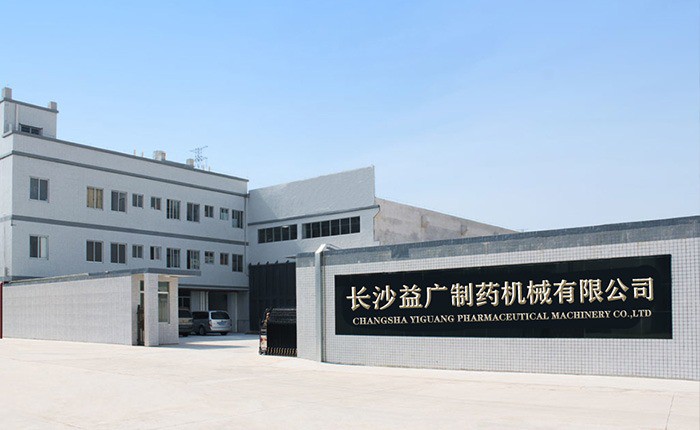
We have rich experience in equipment automation. In addition to the design and manufacture of conventional equipment, we can also customize product design solution according to user needs.
● The company has its own lathes and milling machines, and two senior fitters, who can make samples and processing parts at any time.
● While product quality is guaranteed, it can respond quickly to user needs.
My certificate

FAQ
Hot Tags: tablet making machine, China tablet making machine manufacturers, suppliers, factory, tablet bottling machine, used tablet press for sale, hydraulic tablet press machine, stokes dd2 tablet press, tab isomac, stokes b2 tablet press


