


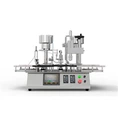
Hey there! As a supplier of filling machines, I often get asked about the filling speed of these machines. So, I thought I'd take a few minutes to break it down for you.
Let's start with the basics. The filling speed of a filling machine refers to how quickly it can fill containers with a specific product. This speed is usually measured in terms of the number of containers filled per minute (CPM). But the actual speed can vary a whole lot depending on several factors.
Factors Affecting Filling Speed
1. Type of Product
The nature of the product you're filling plays a huge role. For instance, if you're filling a thin liquid like water or juice, the filling machine can work at a much higher speed compared to filling a thick, viscous product like honey or yogurt. Thin liquids flow easily through the filling nozzles, allowing for a faster filling process. On the other hand, thick products require more time to flow and may need special pumps or filling mechanisms to ensure accurate filling.

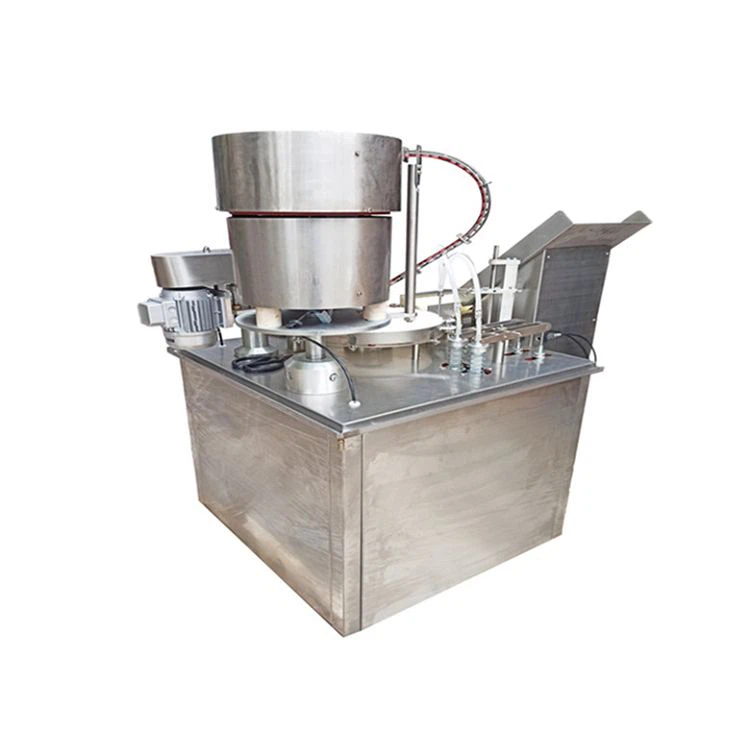
2. Container Size and Shape
The size and shape of the containers also matter. Smaller containers generally take less time to fill than larger ones. And oddly - shaped containers can slow down the filling process as the machine might need to adjust its filling head or mechanism to fit the container properly. For example, filling a standard cylindrical bottle is usually quicker than filling a uniquely - shaped flask.
3. Filling Machine Design
There are different types of filling machines, such as gravity filling machines, piston filling machines, and pump filling machines. Each type has its own typical filling speed range. Gravity filling machines are relatively simple and are often used for thin liquids. They rely on gravity to fill the containers, and their filling speed can be decent but may be limited compared to more advanced machines. Piston filling machines, on the other hand, are great for both thin and thick products. They can provide a more precise fill, but the speed can be affected by the piston's stroke and the time it takes to draw in and dispense the product. Pump filling machines use pumps to transfer the product, and their speed can be adjusted based on the pump's capacity and the settings of the machine.
4. Accuracy Requirements
If you need a very high level of filling accuracy, the filling speed will likely be slower. This is because the machine has to take more time to measure and dispense the exact amount of product into each container. For industries where product quantity is strictly regulated, like the pharmaceutical or chemical industries, the machines are set up to prioritize accuracy over speed.
Real - World Filling Speeds
Let's look at some real - world examples to get a better idea. For a basic Liquid Filling Machine used for filling small bottles of water, it can fill anywhere from 30 to 100 bottles per minute. These are often entry - level machines suitable for small - scale operations.
Medium - sized businesses that use more advanced Liquid Filling Machine can achieve filling speeds of 100 to 300 bottles per minute. These machines are designed to handle higher volumes and may have features like multiple filling heads to increase the speed.
For large - scale industrial production, high - speed filling machines can fill up to 1000 bottles or more per minute. These are the heavy - hitters used in big beverage or food manufacturing plants.
When it comes to Bottle Filling Machine for thicker products like shampoo or sauce, the speeds are generally lower. A typical machine might fill 20 to 80 bottles per minute, depending on the product's viscosity and the container size.
How to Improve Filling Speed
If you're looking to increase the filling speed of your machine, here are a few tips. First, make sure your product is in the right condition. For thick products, you might be able to heat them slightly to reduce their viscosity, which will allow for faster filling. Second, optimize the machine settings. Adjust the filling time, pump speed, or piston stroke to find the sweet spot between speed and accuracy. Third, consider upgrading your machine. Newer models often come with improved technology that can significantly boost the filling speed.
Why Filling Speed Matters
Filling speed is a crucial factor for businesses. A faster filling machine means you can produce more products in less time, which directly translates to higher productivity and potentially more profit. It also allows you to meet larger orders and keep up with market demand. On the other hand, if your filling speed is too slow, you might face production bottlenecks, miss deadlines, and lose out on business opportunities.
Conclusion
So, there you have it! The filling speed of a filling machine is a complex concept influenced by multiple factors like the product type, container characteristics, machine design, and accuracy requirements. As a filling machine supplier, I understand that every business has different needs when it comes to filling speed. Whether you're a small startup or a large - scale manufacturer, we can help you find the right filling machine that balances speed, accuracy, and cost - effectiveness.
If you're interested in learning more about our filling machines or have specific requirements for your business, don't hesitate to reach out. We're here to assist you in making the best choice for your production line. Let's start a conversation and see how we can optimize your filling process together!
References
- Filling Machine Handbook, Industry Press
- Studies on Filling Machine Efficiency, Manufacturing Research Institute