


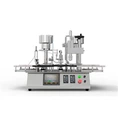
In the dynamic landscape of manufacturing, the capping process stands as a crucial step in ensuring product integrity and market - readiness. As a seasoned capping machine supplier, I've witnessed firsthand the pivotal role that capping flexibility plays in meeting diverse production needs. This blog aims to delve deep into what capping flexibility truly means for a capping machine and how it can transform your production line.
Understanding Capping Flexibility
Capping flexibility refers to the ability of a capping machine to adapt to a wide range of container types, cap styles, and production requirements. In today's market, products come in various shapes and sizes, from small vials to large bottles, and each may require a different type of cap, such as screw caps, snap - on caps, or corks. A flexible capping machine is designed to handle this diversity without significant retooling or downtime.
Container Compatibility
One of the primary aspects of capping flexibility is the machine's ability to work with different container materials and geometries. Glass, plastic, and metal containers all have unique properties that can affect the capping process. For example, glass vials are more fragile and may require a gentler capping force, while plastic bottles can withstand higher pressures. A flexible capping machine can adjust its capping parameters, such as torque and pressure, to accommodate these differences.
Moreover, containers come in various shapes, including round, square, and oval. The capping machine should be able to hold and cap these containers securely, regardless of their shape. This requires well - designed gripping mechanisms and adjustable capping heads that can conform to the container's contours.
Cap Variety
Caps also come in a multitude of styles and sizes. Screw caps are the most common type, used in a wide range of industries, from pharmaceuticals to food and beverage. Snap - on caps are popular for their ease of use and quick application, while corks are often used for wine and other premium products. A flexible capping machine can handle all these cap types, as well as different cap sizes. It can adjust the capping speed, torque, and application method according to the specific requirements of each cap.
For instance, when capping screw caps, the machine needs to apply the correct amount of torque to ensure a tight seal without over - tightening. With snap - on caps, the machine must have the right mechanism to snap the cap onto the container securely. And for corks, it may require a specialized insertion system to ensure proper sealing.
Production Volume and Speed
Capping flexibility also extends to production volume and speed. Different manufacturers have different production requirements, ranging from small - batch production for niche products to high - volume production for mass - market items. A flexible capping machine can be adjusted to operate at different speeds, depending on the production volume.
In low - volume production, the machine can be set to a slower speed to ensure precise capping and quality control. This allows for more attention to detail and reduces the risk of errors. On the other hand, in high - volume production, the machine can be ramped up to a faster speed to meet the demand. It should also be able to handle intermittent production runs without significant setup time between batches.
Benefits of Capping Flexibility
Cost - Efficiency
Investing in a flexible capping machine can lead to significant cost savings in the long run. Instead of purchasing multiple machines for different container and cap types, a single flexible machine can handle a wide range of products. This reduces the initial capital investment and the cost of maintenance and storage.
Moreover, the ability to quickly switch between different production runs without extensive retooling or downtime means increased productivity and reduced labor costs. Manufacturers can respond more quickly to market demands and produce a wider variety of products with the same machine.
Product Innovation
Capping flexibility also enables product innovation. As companies strive to differentiate their products in the market, they often introduce new container designs and cap styles. A flexible capping machine allows manufacturers to experiment with these new concepts without having to invest in new equipment. This encourages creativity and helps companies stay ahead of the competition.
Quality Assurance
Flexible capping machines offer better quality assurance. By being able to adjust the capping parameters according to the specific requirements of each container and cap, the machine can ensure a consistent and reliable seal. This reduces the risk of product leakage, contamination, and spoilage, which can lead to customer dissatisfaction and costly recalls.


Our Capping Machine Solutions
As a leading Capping Machine supplier, we understand the importance of capping flexibility. Our capping machines are designed with state - of - the - art technology to provide maximum flexibility and performance.
Our machines are equipped with adjustable capping heads that can be easily configured to handle different container shapes and sizes. The torque control system allows for precise adjustment of the capping force, ensuring a perfect seal for every product. Whether you are capping small vials or large bottles, our machines can adapt to your needs.
In addition to capping machines, we also offer Vial Filling Machine and Stoppering Machine solutions. Our integrated systems can be customized to create a seamless production line, from filling to capping. This not only improves efficiency but also ensures the highest level of product quality.
Contact Us for Your Capping Needs
If you are looking for a capping machine that offers unparalleled flexibility and performance, look no further. Our team of experts is ready to assist you in finding the right solution for your production requirements. Whether you are a small - scale manufacturer or a large - scale enterprise, we have the experience and expertise to meet your needs.
Contact us today to discuss your capping requirements and explore how our machines can enhance your production line. We are committed to providing you with the best products and services, and we look forward to partnering with you to achieve your manufacturing goals.
References
- Smith, J. (2020). "Advances in Capping Technology." Journal of Manufacturing Technology, 15(3), 45 - 52.
- Johnson, M. (2019). "The Importance of Capping Flexibility in Modern Manufacturing." Manufacturing Review, 22(2), 67 - 74.
- Brown, A. (2018). "Capping Machines: A Comprehensive Guide." Industrial Machinery Magazine, 30(4), 89 - 96.