


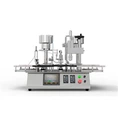
Hey there! As a supplier of vial fillers, I often get asked about the sealing options for vials filled by our machines. It's a crucial topic, so let's dive right in and explore the various ways you can seal vials after filling them with our Vial Filler.
1. Stoppering
Stoppering is one of the most common sealing methods for vials. A Stoppering Machine is used to insert rubber stoppers into the open vials. This method is great for pharmaceutical and biotech products because it provides a tight seal that helps maintain the sterility and integrity of the contents.
The process is pretty straightforward. First, the vials are filled with the product using our vial filler. Then, they're transferred to the stoppering machine. The machine picks up the rubber stoppers from a hopper and precisely places them on top of the vials. After that, a plunger presses the stopper down into the vial neck, creating a secure seal.
One of the advantages of stoppering is its flexibility. You can choose different types of rubber stoppers depending on your product requirements. For example, some stoppers are designed to be pierceable for easy access, which is ideal for injectable medications. Others are made to be more airtight, which is important for products that are sensitive to oxygen.
2. Capping
Capping is another popular sealing option. With a Capping Machine, you can apply different types of caps to your vials, such as screw caps, snap caps, or crimp caps.
Screw Caps
Screw caps are easy to use and provide a reliable seal. The capping machine grips the cap and screws it onto the vial neck. This type of cap is often used for consumer products like vitamins and supplements because it's convenient for end-users to open and close.
Snap Caps
Snap caps are a bit different. They're designed to snap onto the vial neck with a simple press. This makes them a fast and efficient sealing option. Snap caps are commonly used for products that don't require a high level of tamper resistance, like some cosmetics or over - the - counter drugs.


Crimp Caps
Crimp caps are typically used in the pharmaceutical industry. They provide a very secure and tamper - evident seal. The capping machine uses a crimping tool to deform the cap around the vial neck, creating a tight fit. Once a crimp cap is applied, it's difficult to remove without leaving obvious signs of tampering. You can find more about capping machines at Capping Machine.
3. Sealing with a Vial Sealing Machine
A Vial Sealing Machine can use different techniques, such as heat sealing or induction sealing.
Heat Sealing
Heat sealing involves applying heat to a sealing material, like a foil or plastic film, to bond it to the vial opening. This method creates an airtight and moisture - resistant seal. It's often used for food and beverage products, as well as some pharmaceutical items. The vial sealing machine heats the sealing material until it melts and adheres to the vial, forming a strong bond.
Induction Sealing
Induction sealing is a non - contact method that uses electromagnetic induction to heat a foil liner inside the cap. When the cap is placed on the vial and passed under an induction coil, the foil liner heats up and seals to the vial opening. This type of sealing is great for products that need to be protected from contamination and leakage. It's commonly used in the pharmaceutical, food, and cosmetic industries.
Factors to Consider When Choosing a Sealing Option
When deciding which sealing option is best for your vials, there are several factors you need to take into account.
Product Compatibility
The type of product you're filling in the vials plays a big role. For example, if you're filling a liquid that's sensitive to oxygen, you'll want a sealing method that provides an airtight seal, like crimp capping or induction sealing. On the other hand, if your product is a dry powder, a screw cap might be sufficient.
Production Volume
If you're producing a large number of vials, you'll need a sealing method that's fast and efficient. Machines like high - speed capping machines or automated stoppering machines are designed for high - volume production. For smaller batches, a more manual or semi - automated sealing process might be more cost - effective.
Cost
The cost of the sealing equipment, as well as the cost of the sealing materials, is an important consideration. Some sealing methods, like using high - end crimp caps, can be more expensive than others. You'll need to balance the cost with the quality and functionality of the seal.
Regulatory Requirements
In industries like pharmaceuticals and food, there are strict regulatory requirements for product packaging and sealing. You need to make sure that the sealing method you choose complies with all relevant regulations. For example, pharmaceutical products often require tamper - evident seals to ensure patient safety.
Conclusion
As you can see, there are several sealing options available for vials filled by our vial filler. Whether you choose stoppering, capping, or a vial sealing machine with heat or induction sealing, each method has its own advantages and is suitable for different types of products and production needs.
If you're in the process of setting up a vial filling and sealing line, or if you're looking to upgrade your existing equipment, I'd love to have a chat with you. We can discuss your specific requirements and find the best sealing solution for your products. Don't hesitate to reach out and start the conversation about your vial filling and sealing needs.
References
- Pharmaceutical Packaging Handbook, Second Edition. Edited by David J. Pitt and Andrew J. Jenkins.
- Handbook of Food Packaging Technology. Edited by Y. H. Hui.