


How to Program a Vial Filling Machine for Different Filling Requirements
In pharmaceutical production, correctly programming a vial filling machine is essential to ensure filling accuracy, operational efficiency, and product consistency-especially in freeze-drying (lyophilization) applications, where process control must be highly flexible.
As a professional supplier of automatic vial filling, stoppering, and capping machines, we frequently support customers in configuring equipment for different products, vial formats, and production workflows.
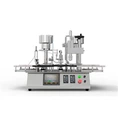
In this guide, we explain how to program a vial filling system effectively, with a focus on freeze-dried vial processing using advanced equipment such as the YHGZ-20 vial filling stoppering and capping machine.
Understanding the Basics of a Vial Filling Machine
A modern vial filling machine typically integrates:
- Liquid filling system (peristaltic pump or ceramic pump)
- Stoppering station (including full and partial stoppering)
- Aluminum cap placing and crimping unit
- PLC control system with touchscreen (HMI)
- Automatic vial feeding and turntable system
- Compact systems such as a benchtop vial filling and capping machine are widely used in pharmaceutical R&D, biotech labs, and small batch production due to their flexibility and high level of automation.

Key Filling Parameters and Programming Strategy
Filling Volume Control
Accurate filling volume is critical in any pharmaceutical vial filling process. Depending on the pump configuration, machines typically support a range of 1–20 mL with high precision.
Operators can directly set the filling volume through the touchscreen interface, and calibration can be performed using volumetric measurement methods. Fine adjustments ensure the system matches the characteristics of different liquids, improving consistency in high-precision vial filling applications.
Filling Accuracy and Stability
For industries such as pharmaceuticals and biotechnology, consistent filling accuracy is essential.
Using a ceramic pump system, combined with stable PLC control, enables repeatable and precise filling cycles. This is particularly important for injectable products and high-value formulations, where even minor deviations can impact quality.
Freeze-Drying (Lyophilization) Workflow Programming
One of the key advantages of advanced systems like the YHGZ-20 vial filling machine is their ability to support freeze-drying workflows through segmented programmable control.
Standard Freeze-Drying Process:
Step 1: Automatic vial feeding
The system automatically arranges and feeds vials into the machine via the bottle unscrambling and turntable system.
Step 2: Automatic filling
The machine performs precise liquid filling with a no-bottle-no-fill function to prevent waste.
Step 3: Stoppering (including half stoppering)
Rubber stoppers are inserted automatically. For freeze-drying applications, partial stoppering (half stoppering) can be selected to allow sublimation during lyophilization.
Step 4: Process pause and transfer
After stoppering, the machine can stop automatically. Vials are then removed and transferred to the freeze dryer.
Step 5: Final capping after lyophilization
After the freeze-drying process, vials are returned to the machine for aluminum cap crimping and final sealing.
Core Advantage: Fully Independent Station Control
The system is designed with fully independent station control, allowing operators to freely configure the production process via the touchscreen.
Each function can be independently started or stopped, including:
- Vial feeding and unscrambling
- Turntable operation
- Filling process
- Stoppering and half stoppering
- Aluminum cap placement
- Stopper pressing
- Cap crimping
Operators can enable only the required stations directly on the HMI, making the machine highly adaptable to different workflows such as filling-only, stoppering-only, or post-lyophilization capping.
In addition, key parameters such as stoppering time and capping (crimping) time can be precisely adjusted to match different materials and packaging requirements.
Flexible HMI System with Multi-Language Support
The machine is equipped with a customizable touchscreen interface that supports multiple languages.
For example, for one of our Mexican customers, we configured the system with Chinese, English, and Spanish interfaces, allowing operators to switch languages easily and reducing training time.
This feature is especially valuable for international pharmaceutical and biotech companies managing global teams.
Adjusting for Different Vial Sizes and Formats
Different vial sizes and shapes require flexible mechanical and programming adjustments.
Operators can easily adapt the system by:
- Adjusting filling nozzle height
- Modifying turntable indexing timing
- Optimizing feeding speed
This flexibility makes the system suitable for multi-size vial filling production and rapid changeover between different formats.
Step-by-Step Programming Process
Programming a vial filling machine typically involves:
- Powering on and initializing the system
- Selecting the required operation mode (filling, stoppering, capping, or combined process)
- Setting filling volume, speed, and production parameters
- Enabling or disabling specific stations depending on the process (especially for freeze-drying workflows)
- Adjusting mechanical components such as nozzles and feeding systems
- Running a test batch
- Fine-tuning parameters to achieve optimal performance
Integration with Production Lines
In a complete pharmaceutical production setup, vial filling machines are often integrated with:
- Freeze dryers (lyophilizers)
- Capping systems
- Labeling machines
A fully integrated automatic vial filling, stoppering, and capping system improves production efficiency, ensures process consistency, and reduces manual intervention.
Troubleshooting and Maintenance
To maintain stable performance:
- Regularly clean filling nozzles to prevent blockage
- Check pump tubing and seals for wear
- Inspect sensors and PLC signals
- Perform periodic calibration of filling volume
Routine maintenance ensures long-term reliability and consistent results in vial filling and lyophilization processes.
Conclusion
Programming a vial filling machine for different filling requirements, particularly for freeze-drying applications, requires flexible control, precise parameter adjustment, and a well-designed workflow.
With advanced solutions like the YHGZ-20 vial filling stoppering and capping machine, users can achieve:
- High-precision filling
- Full compatibility with lyophilization processes
- Independent control of each station
- Efficient and flexible small-batch production
Suitable for pharmaceutical applications, laboratory R&D, and small to pilot-scale production, this machine is also widely used in the cosmetic industry for filling peptides, serums, essences, and other high-value liquids.
Call to Action
If you are looking for a freeze-drying compatible vial filling machine or need support in configuring your system for specific pharmaceutical applications, feel free to contact us.
We provide complete solutions including equipment selection, technical guidance, and after-sales support to help optimize your vial filling and lyophilization process.
📧 Email: vivian@csygyj.com
📱 WhatsApp: +86 191 7668 4522
Product link: https://www.machinepharmaceutical.com/vial-filling-and-capping-machine/automatic-vial-filling-stoppering-and-capping.html