


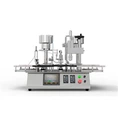
As a reputable supplier of Ampoule filling and sealing machines, I've witnessed firsthand the transformative role that sensors play in these sophisticated pieces of equipment. In this blog, I'll delve into the functions of sensors in an Ampoule filling and sealing machine, highlighting their importance in ensuring efficiency, accuracy, and product quality.
1. Liquid Level Sensing
One of the primary functions of sensors in an Ampoule filling and sealing machine is to monitor the liquid level in the ampoules. Liquid level sensors are crucial for ensuring that each ampoule is filled with the correct volume of liquid. This is essential for maintaining product consistency and meeting regulatory requirements.
There are several types of liquid level sensors used in Ampoule filling machines, including capacitive sensors, ultrasonic sensors, and optical sensors. Capacitive sensors work by detecting changes in capacitance as the liquid level rises or falls. Ultrasonic sensors use sound waves to measure the distance between the sensor and the liquid surface. Optical sensors, on the other hand, rely on light reflection to detect the presence of liquid.
By accurately monitoring the liquid level, these sensors help prevent overfilling or underfilling of ampoules, which can lead to product waste, inconsistent dosing, and potential safety hazards. For example, if an ampoule is overfilled, it may cause spillage during the sealing process, leading to contamination and product loss. Conversely, underfilled ampoules may not contain the required dosage of medication, which can affect the efficacy of the treatment.
2. Ampoule Presence Detection
Another important function of sensors in an Ampoule filling and sealing machine is to detect the presence of ampoules on the conveyor belt. Ampoule presence sensors are used to ensure that each ampoule is properly positioned for filling and sealing. This helps prevent errors and ensures that the machine operates smoothly and efficiently.
There are several types of ampoule presence sensors, including photoelectric sensors, inductive sensors, and mechanical sensors. Photoelectric sensors use light beams to detect the presence of ampoules. Inductive sensors detect the presence of metal objects, such as ampoules, by generating an electromagnetic field. Mechanical sensors, on the other hand, use physical contact to detect the presence of ampoules.
By detecting the presence of ampoules, these sensors help prevent the filling and sealing of empty or misaligned ampoules. This helps reduce product waste and ensures that only properly filled and sealed ampoules are released from the machine.
3. Sealing Quality Monitoring
Sensors also play a crucial role in monitoring the quality of the sealing process in an Ampoule filling and sealing machine. Sealing quality sensors are used to detect any defects or inconsistencies in the sealing of ampoules. This helps ensure that the ampoules are properly sealed, preventing leakage and contamination.
There are several types of sealing quality sensors, including vision sensors, pressure sensors, and temperature sensors. Vision sensors use cameras to inspect the sealing area of the ampoules for any defects, such as cracks or gaps. Pressure sensors are used to monitor the pressure applied during the sealing process, ensuring that the seal is tight and secure. Temperature sensors are used to monitor the temperature of the sealing area, ensuring that the sealing process is carried out at the correct temperature.
By monitoring the sealing quality, these sensors help prevent the release of defective ampoules, which can lead to product recalls and potential safety hazards. This helps ensure the safety and efficacy of the products being filled and sealed.
4. Speed and Position Control
Sensors are also used to control the speed and position of the Ampoule filling and sealing machine. Speed sensors are used to monitor the speed of the conveyor belt, ensuring that the ampoules are transported at a consistent speed. Position sensors are used to detect the position of the ampoules on the conveyor belt, ensuring that they are properly aligned for filling and sealing.
By controlling the speed and position of the machine, these sensors help ensure that the filling and sealing process is carried out accurately and efficiently. This helps reduce the risk of errors and ensures that the machine operates at optimal performance.
5. Safety Monitoring
In addition to their role in ensuring product quality and efficiency, sensors also play a crucial role in ensuring the safety of the operators and the machine. Safety sensors are used to detect any potential hazards or malfunctions in the machine, such as overheating, jams, or leaks.
There are several types of safety sensors, including temperature sensors, pressure sensors, and proximity sensors. Temperature sensors are used to monitor the temperature of the machine, ensuring that it does not overheat. Pressure sensors are used to monitor the pressure in the machine, ensuring that it does not exceed the safe operating limits. Proximity sensors are used to detect the presence of operators or other objects near the machine, ensuring that they do not come into contact with moving parts.
By monitoring the safety of the machine, these sensors help prevent accidents and injuries, ensuring the well-being of the operators and the longevity of the machine.
Conclusion
In conclusion, sensors play a vital role in the operation of an Ampoule filling and sealing machine. From monitoring the liquid level and ampoule presence to ensuring the quality of the sealing process and controlling the speed and position of the machine, sensors are essential for ensuring efficiency, accuracy, and product quality.
As a supplier of Ampoule filling and sealing machines, we understand the importance of using high-quality sensors in our products. That's why we use only the latest sensor technology in our machines, ensuring that they are reliable, accurate, and easy to use.
If you're in the market for an Ampoule filling and sealing machine, we invite you to explore our range of products. Our Ampoule Filler, Ampoule Filling Machine, and Ampoule Sealer are designed to meet the highest standards of quality and performance. Contact us today to learn more about our products and how we can help you meet your production needs.

References
- Smith, J. (2020). Sensors in Pharmaceutical Packaging Machines. Journal of Pharmaceutical Sciences, 109(3), 1023-1031.
- Johnson, A. (2019). The Role of Sensors in Ensuring Product Quality in Ampoule Filling and Sealing Machines. Pharmaceutical Technology, 43(6), 45-52.
- Brown, C. (2018). Advances in Sensor Technology for Ampoule Filling and Sealing Machines. International Journal of Pharmaceutical Engineering and Technology, 10(2), 78-85.