


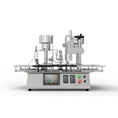
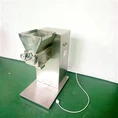
Hey there! As a supplier of mixing equipment, I often get asked about how to measure the performance of these machines. It's a crucial aspect, whether you're in the pharmaceutical, food, or chemical industry. In this blog, I'll share some key points on how to assess the performance of mixing equipment, which will help you make informed decisions when it comes to purchasing.


1. Homogeneity of the Mixture
One of the most important indicators of mixing equipment performance is the homogeneity of the mixture it produces. Homogeneity refers to how evenly the different components are distributed throughout the mixture. To measure this, you can take multiple samples from different parts of the mixture at the end of the mixing process.
There are several methods to analyze the samples. For example, if you're mixing powders, you can use sieve analysis to check the particle size distribution in each sample. If it's a liquid mixture, you might use chemical analysis to determine the concentration of different substances. A high - degree of similarity in the results from all samples indicates good homogeneity.
Let's say you're using our Industrial Mixers for a pharmaceutical product. The active ingredients need to be evenly distributed in the final product. By measuring the homogeneity, you can ensure that each tablet or capsule has the right amount of the active ingredient, which is crucial for the effectiveness of the medicine.
2. Mixing Time
Mixing time is another vital factor. It's the time it takes for the equipment to achieve a satisfactory level of homogeneity. A shorter mixing time is generally better, as it means higher productivity. You can start by setting a target level of homogeneity and then record the time it takes for the mixer to reach that level.
However, keep in mind that different materials and recipes may require different mixing times. For instance, if you're mixing a thick paste, it might take longer compared to a thin liquid. Our mixing equipment is designed to optimize the mixing time while still ensuring high - quality mixing. You can adjust the speed and other parameters to find the most efficient mixing time for your specific application.
3. Power Consumption
Power consumption is a significant consideration, especially for large - scale industrial operations. High power consumption means higher operating costs. You can measure the power consumption of the mixing equipment using a power meter.
Compare the power consumption of different models or brands. Our company focuses on developing energy - efficient mixing equipment. For example, our Granulators are engineered to use less power while still delivering excellent mixing performance. This not only saves you money in the long run but also makes your operations more environmentally friendly.
4. Wear and Tear
The durability of the mixing equipment is also related to its performance. Over time, parts of the mixer may wear out, which can affect the mixing quality and efficiency. You can measure wear and tear by regularly inspecting the equipment. Look for signs of abrasion, corrosion, or mechanical damage.
For example, the blades or paddles in a mixer may wear down due to the friction with the materials being mixed. If you notice excessive wear, it's a sign that the equipment may need maintenance or replacement of parts. Our mixing equipment is made from high - quality materials to minimize wear and tear, ensuring a longer service life.
5. Throughput
Throughput refers to the amount of material that the mixing equipment can process in a given time. It's an important metric for industries with high - volume production requirements. To measure throughput, you need to know the capacity of the mixer and the time it takes to complete a mixing cycle.
For example, if a mixer has a capacity of 100 liters and it takes 10 minutes to complete a mixing cycle, the throughput is 600 liters per hour. Our Pulverizer Machine is designed to have a high throughput, allowing you to process large amounts of materials quickly. This is especially useful for industries like food processing, where large quantities of ingredients need to be mixed.
6. Ease of Cleaning
Cleaning is an often - overlooked aspect of mixing equipment performance. If the equipment is difficult to clean, it can lead to cross - contamination between different batches. You can evaluate the ease of cleaning by considering factors such as the accessibility of the internal parts, the design of the mixer, and the type of materials used.
Our mixing equipment is designed with easy - to - clean features. For example, some of our models have removable parts that can be easily disassembled and washed. This ensures that you can maintain high - quality mixing and prevent any contamination issues.
7. Noise and Vibration
Noise and vibration can be indicators of the mechanical condition of the mixing equipment. Excessive noise and vibration may suggest that there are problems with the bearings, motors, or other components. You can use a sound level meter to measure the noise level and vibration sensors to detect any abnormal vibrations.
If you notice high levels of noise or vibration, it's important to check the equipment for any loose parts or mechanical failures. Our mixing equipment is engineered to operate quietly and with minimal vibration, providing a more comfortable working environment and reducing the risk of mechanical damage.
In conclusion, measuring the performance of mixing equipment involves considering multiple factors such as homogeneity, mixing time, power consumption, wear and tear, throughput, ease of cleaning, and noise and vibration. By carefully evaluating these aspects, you can choose the right mixing equipment for your needs.
If you're in the market for high - quality mixing equipment, we'd love to have a chat with you. Whether you have questions about our products or need help in selecting the most suitable equipment for your specific application, feel free to reach out. We're here to assist you in making the best decision for your business.
References
- Perry, R. H., & Green, D. W. (Eds.). (2007). Perry's Chemical Engineers' Handbook. McGraw - Hill.
- McCabe, W. L., Smith, J. C., & Harriott, P. (2005). Unit Operations of Chemical Engineering. McGraw - Hill.