


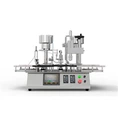
In the pharmaceutical, cosmetics, and food industries, vial filling is a critical process that demands precision and reliability. As a vial filler supplier deeply entrenched in these sectors, we are constantly exploring ways to enhance the performance and functionality of our equipment. One question that often arises is whether a vial filler can be equipped with a level sensor. This blog post will delve into this topic, exploring the feasibility, benefits, and considerations of integrating level sensors into vial fillers.
The Feasibility of Equipping a Vial Filler with a Level Sensor
The short answer is yes; a vial filler can indeed be equipped with a level sensor. Modern technology has made it possible to seamlessly integrate various types of sensors into vial filling machines. Level sensors are devices designed to detect the level of a liquid or solid within a container. They can be based on different principles, such as ultrasonic, capacitive, optical, or float-based mechanisms.
When it comes to vial fillers, the choice of level sensor depends on several factors, including the type of product being filled, the filler's design, and the required level of accuracy. For example, ultrasonic level sensors are excellent for non-contact measurement and can work well with a variety of liquids, including those with high viscosity. Capacitive sensors, on the other hand, are sensitive to changes in the dielectric constant and can be used to detect the presence or absence of a liquid at a specific level.
Benefits of Using a Level Sensor in a Vial Filler
1. Precision Filling
One of the primary benefits of equipping a vial filler with a level sensor is the ability to achieve precise filling levels. In industries where product dosage is critical, such as pharmaceuticals, even a slight deviation in the fill volume can have significant consequences. A level sensor can continuously monitor the level of the liquid in the vial during the filling process and send signals to the filler's control system. This allows for real - time adjustments, ensuring that each vial is filled to the exact specified level.
2. Quality Control
Level sensors play a crucial role in quality control. They can detect any abnormal filling levels, such as over - filling or under - filling. If an irregularity is detected, the filler can automatically reject the faulty vial, preventing sub - standard products from entering the market. This not only improves the overall quality of the product but also reduces waste and the risk of regulatory issues.
3. Improved Efficiency
By providing accurate filling levels, level sensors can help optimize the filling process. They can reduce the time and resources spent on manual inspection and adjustment of fill volumes. Additionally, they can work in conjunction with other components of the Vial Filling Machine to ensure a smooth and continuous filling operation, increasing the overall throughput of the production line.
4. Compatibility with Different Products
Level sensors can be used with a wide range of products, from low - viscosity liquids like water and alcohol to high - viscosity substances like creams and gels. This makes them a versatile addition to vial fillers, allowing manufacturers to use the same equipment for different types of products with minimal modifications.
Considerations When Equipping a Vial Filler with a Level Sensor
1. Sensor Selection
As mentioned earlier, choosing the right level sensor is crucial. Factors such as the properties of the product (e.g., viscosity, conductivity, transparency), the size and shape of the vials, and the operating environment (e.g., temperature, humidity) need to be taken into account. For example, if the product is opaque, an ultrasonic or float - based sensor might be more appropriate than an optical sensor.
2. Integration with the Filler
Integrating a level sensor into an existing vial filler can be a complex process. It requires careful planning and coordination to ensure that the sensor works seamlessly with the filler's control system. Compatibility issues may arise, such as differences in communication protocols or electrical interfaces. Therefore, it is essential to work with a knowledgeable supplier who can provide expertise in the integration process.
3. Calibration and Maintenance
Level sensors need to be calibrated regularly to maintain their accuracy. Over time, factors such as wear and tear, changes in the product properties, or environmental conditions can affect the sensor's performance. Additionally, proper maintenance is required to ensure the long - term reliability of the sensor. This includes cleaning, inspecting for damage, and replacing worn - out parts as needed.
Applications of Vial Fillers with Level Sensors
1. Pharmaceutical Industry
In the pharmaceutical industry, vial fillers with level sensors are widely used for filling medications, vaccines, and other injectable products. The high precision and quality control offered by level sensors are essential for ensuring the safety and efficacy of these products. For example, in the production of insulin vials, exact dosing is crucial for patient health, and a level sensor can help achieve this level of accuracy.
2. Cosmetics Industry
Cosmetics manufacturers use vial fillers with level sensors to fill products such as serums, essential oils, and lotions. The ability to control the fill volume precisely is important for product consistency and customer satisfaction. Level sensors can also help reduce waste during the filling process, improving the overall cost - effectiveness of production.
3. Food Industry
In the food industry, vial fillers with level sensors are used for filling small - volume food products such as flavorings, extracts, and syrups. The sensors can ensure that each vial contains the correct amount of product, meeting regulatory requirements and maintaining product quality.
Complementary Equipment in the Vial Filling Process
In addition to vial fillers, other equipment plays important roles in the vial filling process. After the filling is completed, the vials need to be stoppered and capped. Our Stoppering Machine is designed to efficiently insert stoppers into the vials, providing a secure seal. The Capping Machine then applies caps to the vials, ensuring the product's long - term integrity.
For a fully automated solution, our Automatic Vial Filling Stoppering and Capping Machine integrates the filling, stoppering, and capping processes into one seamless operation. This not only saves time and labor but also improves the overall efficiency and accuracy of the production line.
After the capping process, the Vial Sealing Machine can be used to provide an additional layer of protection, ensuring that the vials are properly sealed and ready for distribution.
Conclusion
In conclusion, equipping a vial filler with a level sensor is not only feasible but also offers numerous benefits, including precision filling, quality control, improved efficiency, and compatibility with different products. However, careful consideration needs to be given to sensor selection, integration, calibration, and maintenance.
As a vial filler supplier, we are committed to providing our customers with the latest technology and solutions to meet their production needs. Our range of vial filling and related equipment, including those with level sensors, is designed to offer high performance, reliability, and ease of use.


If you are interested in learning more about our vial fillers or other equipment, or if you have specific requirements for your production line, we encourage you to contact us for a detailed discussion. Our team of experts is ready to assist you in finding the best solutions for your business.
References
- [Author's Last Name, First Initial. (Year). Title of Book. Publisher.]
- [Author's Last Name, First Initial. (Year). Title of Article. Journal Name, Volume(Issue), Page Numbers.]