


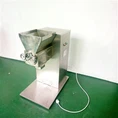
In the fast - paced world of packaging and manufacturing, the efficiency and precision of labeling machines are crucial. As a leading labeling machine supplier, we understand the significance of every aspect of these machines, and one key factor that often goes under the radar is the response time of a labeling machine's control system.
Understanding the Basics of a Labeling Machine's Control System
Before delving into the response time, it's essential to understand what a labeling machine's control system is. A control system in a labeling machine is the brain that coordinates all the operations. It manages the movement of labels, the speed of the conveyor belt, and the synchronization between different components of the machine. It receives input from various sensors, such as those detecting the presence of a product, the position of labels, and the speed of the production line. Based on these inputs, it makes decisions and sends out signals to actuators, which then perform the actual labeling tasks.
The control system typically consists of a programmable logic controller (PLC), sensors, actuators, and a human - machine interface (HMI). The PLC is the central processing unit that executes pre - programmed instructions. Sensors provide real - time data about the machine's operating conditions, while actuators carry out actions like label dispensing and applying. The HMI allows operators to monitor and adjust the machine's settings.
What is Response Time?
Response time in the context of a labeling machine's control system refers to the time it takes for the system to detect a change in input (such as a product arriving at the labeling station) and generate an appropriate output (like starting the label dispensing process). It is a critical metric because it directly impacts the machine's accuracy and speed.


A short response time means that the machine can quickly react to changes in the production environment. For example, if a product moves along the conveyor belt at a high speed, a control system with a fast response time can accurately dispense and apply the label at the right moment. On the other hand, a long response time can lead to misaligned labels, wasted labels, and overall inefficiencies in the production process.
Factors Affecting the Response Time
1. Hardware Limitations
The quality and performance of the hardware components in the control system play a significant role in determining the response time. For instance, a low - end PLC may have a slower processing speed, which can delay the analysis of sensor data and the generation of output signals. Similarly, sensors with a long response time themselves can contribute to the overall delay. If a sensor takes too long to detect the presence of a product, the control system won't be able to start the labeling process in a timely manner.
2. Software Complexity
The software running on the control system can also affect the response time. Complex control algorithms that involve multiple calculations and decision - making steps may take longer to execute. For example, if the control system needs to adjust the label position based on the product's size and shape, a more complex algorithm will be required. This can slow down the response time as the PLC has to perform more operations before sending out the appropriate signals.
3. Communication Delays
In modern labeling machines, different components often communicate with each other over a network. Communication delays can occur due to issues such as network congestion, interference, or slow data transfer rates. For example, if the sensors are connected to the PLC via a wireless network, signal interference can cause delays in data transmission, thereby increasing the overall response time.
Measuring the Response Time
Measuring the response time of a labeling machine's control system is not a straightforward task. It requires specialized equipment and techniques. One common method is to use high - speed cameras to record the machine's operation. By analyzing the video footage, it is possible to determine the exact time when a change in input occurs (e.g., a product enters the labeling area) and when the corresponding output is generated (e.g., the label starts to move).
Another approach is to use data logging devices that can record the input and output signals of the control system. These devices can provide a detailed timeline of the events, allowing for accurate measurement of the response time.
Importance of a Short Response Time
1. High - Speed Production
In today's manufacturing environment, high - speed production is the norm. Labeling machines need to keep up with the fast - paced production lines. A short response time enables the machine to label products at high speeds without sacrificing accuracy. This is especially important in industries such as food and beverage, where large volumes of products need to be labeled quickly.
2. Precision Labeling
Accurate label placement is crucial for product branding and compliance. A control system with a short response time can ensure that labels are applied precisely in the right position on the product. This is particularly important for products with small or irregular shapes, where even a slight misalignment can affect the product's appearance and functionality.
3. Reduced Waste
A long response time can lead to wasted labels. If the machine dispenses a label too early or too late, the label may not be applied correctly and will have to be discarded. By reducing the response time, the machine can minimize label waste, which in turn reduces costs for the manufacturer.
Our Solutions as a Labeling Machine Supplier
As a labeling machine supplier, we are committed to providing machines with optimal response times. We use high - quality hardware components, including advanced PLCs and fast - responding sensors, to ensure quick data processing and accurate input detection. Our control system software is carefully designed to be efficient, with streamlined algorithms that minimize processing time.
We also offer customized solutions to meet the specific needs of our customers. For example, if a customer requires a labeling machine for a high - speed production line, we can optimize the control system to achieve an even shorter response time.
In addition to our standard labeling machines, we also offer related products such as Blister Packing Machine. Our Labeling Machine and Labeling Machine are designed with the latest technology to ensure high performance and reliability.
Conclusion
The response time of a labeling machine's control system is a critical factor that affects the machine's performance, accuracy, and efficiency. As a labeling machine supplier, we understand the importance of this metric and strive to provide our customers with machines that have optimal response times. Whether you are in the food, beverage, pharmaceutical, or any other industry that requires labeling, our machines can meet your needs.
If you are interested in our labeling machines or would like to discuss your specific requirements, we encourage you to contact us for a procurement negotiation. We are ready to work with you to find the best solution for your business.
References
- Smith, J. (2018). "Advanced Control Systems for Packaging Machines". Packaging Technology Press.
- Johnson, A. (2019). "Optimizing Labeling Machine Performance". Manufacturing Insights Journal.