


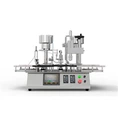
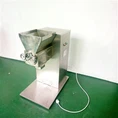
Hey there! As a supplier of China granulators, I often get asked about the power consumption of these machines. It's a crucial question, especially for businesses looking to optimize their energy use and cut down on costs. So, let's dive right into it and explore what the power consumption of China granulators is all about.
Understanding Granulators and Their Role
First off, let's quickly go over what granulators are. Granulators are machines used in various industries, like plastics, pharmaceuticals, and food processing. They're designed to break down large materials into smaller, more manageable granules. This process is super important for recycling, manufacturing, and a whole bunch of other applications.
In the pharmaceutical industry, for example, granulators are used to make sure that the active ingredients in medications are evenly distributed. They help in creating granules of the right size and consistency, which is key for the effectiveness of the drugs. You can check out more about granulators here.
Factors Affecting Power Consumption
Now, the power consumption of a granulator isn't a one - size - fits - all thing. There are several factors that come into play:
1. Machine Size and Capacity
Bigger granulators with higher capacities generally consume more power. Think about it – a large - scale industrial granulator that can handle tons of material per hour needs a lot more energy to operate compared to a small, table - top model used in a lab or a small workshop.
2. Type of Material
The type of material being granulated also matters. Some materials are harder and more difficult to break down, like certain plastics or metals. These require more force from the granulator, which in turn means more power consumption. Softer materials, on the other hand, are easier to process and use less energy.
3. Cutting Mechanism
Granulators can have different cutting mechanisms, such as rotary blades or fixed blades. The design and efficiency of these mechanisms can affect power consumption. A well - designed cutting mechanism will use less power to achieve the same level of granulation compared to an inefficient one.
4. Operating Speed
The speed at which the granulator runs is another factor. Higher operating speeds usually mean more power consumption. However, running at a faster speed might also increase the production rate, so it's a trade - off that businesses need to consider based on their specific needs.
Average Power Consumption Ranges
It's tough to give an exact figure for the power consumption of China granulators because of all these variables. But I can give you a rough idea of the average ranges.
For small - scale granulators, like those used in research labs or small businesses, the power consumption can be anywhere from 1 - 5 kilowatts (kW). These machines are designed for low - volume production and are relatively energy - efficient.
Medium - sized granulators, which are commonly used in medium - sized manufacturing plants, usually consume between 5 - 20 kW. They can handle a decent amount of material and are suitable for a wide range of applications.
Large - scale industrial granulators, used in big factories and recycling facilities, can have power consumption upwards of 20 kW. These machines are built to process large quantities of material continuously and need a significant amount of power to do so.
Energy - Saving Tips
If you're using a granulator and want to reduce power consumption, here are some tips:
1. Optimize Machine Settings
Make sure the granulator is set up to run at the most efficient speed and capacity for your specific material. Running it at a higher speed than necessary will just waste energy.
2. Regular Maintenance
Keep the granulator well - maintained. Sharp blades and properly lubricated parts will reduce the amount of force needed to operate the machine, which in turn lowers power consumption.
3. Use Energy - Efficient Models
When buying a new granulator, look for models that are designed to be energy - efficient. Many modern China granulators come with features like variable frequency drives (VFDs) that can adjust the power consumption based on the load.
Related Machines and Their Power Consumption
Granulators often work in conjunction with other machines in a production line. Let's take a quick look at the power consumption of some related machines:
Pulverizer
A pulverizer is used to further reduce the size of the granules produced by a granulator. The power consumption of a pulverizer can vary widely depending on its size and the material it's processing. Small pulverizers might use around 2 - 10 kW, while large industrial ones can consume 10 - 50 kW or more. You can learn more about pulverizers here.
Mixing Machine
Mixing machines are used to blend the granules with other ingredients. The power consumption of a mixing machine depends on its size and the type of mixing action. Small table - top mixing machines can use as little as 0.5 - 2 kW, while large industrial mixing machines can consume 5 - 20 kW. Check out more about mixing machines here.
Why Choose China Granulators
China is known for manufacturing high - quality granulators at competitive prices. Chinese granulator manufacturers invest a lot in research and development to improve the efficiency and performance of their machines. They also offer a wide range of models to suit different needs and budgets.
In addition to that, many China granulators are designed with energy - saving features in mind. This means that you can get a machine that not only meets your production requirements but also helps you save on energy costs in the long run.


Let's Talk Business
If you're in the market for a granulator and want to know more about our products, their power consumption, or how they can fit into your production line, don't hesitate to reach out. We're here to answer all your questions and help you find the best solution for your business. Whether you're a small startup or a large corporation, we've got the right granulator for you.
References
- Industry reports on granulator technology and power consumption
- Internal data from granulator production and testing
So, that's a wrap on the power consumption of China granulators. I hope this blog has been helpful to you. If you have any more questions, feel free to drop them in the comments or contact us directly. Looking forward to hearing from you!