


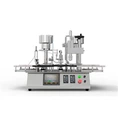
A filling machine for jars plays a crucial role in various industries, from food and beverage to cosmetics and pharmaceuticals. Understanding the filling process of such a machine is essential for businesses looking to optimize their production lines. As a leading filling machine supplier, we are committed to providing in - depth knowledge about our products. In this blog, we will explore the detailed filling process of a jar filling machine.
1. Preparation Stage
Before the actual filling begins, several key steps are taken to ensure a smooth and efficient process.
- Jar Loading: Empty jars are first loaded onto the conveyor system of the filling machine. This can be done manually or automatically using a depalletizer or unscrambler. The jars are then transported to the filling station in an orderly manner, ensuring proper alignment for accurate filling.
- Machine Setup: The filling machine needs to be configured according to the specific requirements of the product to be filled. This includes adjusting the filling volume, filling speed, and nozzle height. Different products may require different settings. For instance, a thick lotion will need a slower filling speed compared to a thin liquid. Additionally, the nozzles need to be cleaned and sterilized to prevent any contamination.
- Product Supply: The product to be filled into the jars is stored in a holding tank. This tank is connected to the filling machine through a piping system. The product level in the tank is monitored to ensure a continuous supply during the filling process. If the product is sensitive to temperature or light, appropriate measures such as temperature - controlled tanks or opaque containers are used.
2. Cleaning and Sterilization
Maintaining a high level of hygiene is of utmost importance, especially in industries like food and pharmaceuticals.
- Pre - cleaning: The jars are usually passed through a cleaning station where they are rinsed with clean water or a suitable cleaning solution to remove any dust, debris, or contaminants. This step helps to ensure a clean surface for filling.
- Sterilization: Depending on the product requirements, the jars may undergo a sterilization process. Common sterilization methods include steam sterilization, chemical sterilization, or UV sterilization. Sterilization ensures that the product remains safe and has a longer shelf - life. The filling machine components that come into contact with the product, such as the nozzles and pipes, are also sterilized regularly to prevent microbial growth.
3. Filling Stage
The filling stage is the core of the entire process. There are different types of filling methods used in jar filling machines, and the choice depends on the nature of the product.


- Gravity Filling: This is a simple and cost - effective method suitable for free - flowing liquids such as water, juices, and oils. In gravity filling, the liquid is fed from the holding tank to the nozzles through gravity. The filling volume is controlled by the height of the liquid column or by a timed valve. As the jars are positioned under the nozzles, the liquid flows into them until the desired volume is reached.
- Piston Filling: Ideal for thick and viscous products like creams, gels, and pastes, piston filling uses a piston to draw the product from the tank and then inject it into the jars. The piston moves up and down in a cylinder, sucking in the product when it moves up and pushing it out through the nozzle when it moves down. The filling volume can be accurately controlled by adjusting the piston stroke.
- Overflow Filling: This method is commonly used for products where a consistent fill level is required, such as beer and some chemicals. The liquid is filled into the jar until it overflows from a filler tube. The excess liquid is then removed, leaving behind a precise fill level.
4. Capping and Sealing
After the jars are filled, they need to be capped or sealed to protect the product and maintain its integrity.
- Capping Machine: Once the filled jars reach the capping station, caps are placed on top of the jars. The capping machine then tightens the caps to a specific torque value. Different types of caps, such as screw caps, snap - on caps, and corks, can be used depending on the product requirements.
- Sealing Methods: In addition to capping, some products may require further sealing. For example, foil sealing is commonly used for food products. A foil seal is placed on top of the jar opening and then heated to bond it to the jar. This provides an air - tight and tamper - evident seal.
5. Labeling and Packaging
The final steps in the process are labeling and packaging.
- Labeling: The filled and capped jars are then passed through a labeling machine. Labels can be applied to the jars using different methods, such as pressure - sensitive labeling or hot - melt adhesive labeling. The labels provide important information about the product, including its name, ingredients, usage instructions, and expiration date.
- Packaging: Finally, the labeled jars are packaged into cases or cartons. This can be done manually or automatically using a packaging machine. The packaged products are then ready for storage or distribution.
Advantages of Our Filling Machines
As a reliable filling machine supplier, our machines offer several advantages:
- High Precision: Our machines are designed to provide accurate filling volumes, ensuring consistency in product quality. With advanced sensors and control systems, we can achieve a high level of precision even for small - volume fills.
- Versatility: Our filling machines can handle a wide range of products, from thin liquids to thick pastes. They can also accommodate different jar sizes and shapes, making them suitable for various production needs.
- Easy Operation and Maintenance: We prioritize user - friendliness in our machine design. Our filling machines are equipped with intuitive control panels that allow operators to easily adjust settings. Additionally, they are designed for easy cleaning and maintenance, reducing downtime and increasing productivity.
Links to Relevant Products
If you are interested in our filling machines, you can explore the following product pages:
Conclusion
Understanding the filling process of a jar filling machine is essential for businesses aiming to enhance their production efficiency and product quality. As a trusted filling machine supplier, we have in - depth knowledge of the process and offer high - quality machines tailored to different industry needs. If you are considering investing in a filling machine or looking to upgrade your existing equipment, we encourage you to get in touch with us. Our team of experts is ready to assist you in choosing the most suitable solution for your business. Let's start a discussion to optimize your production line and achieve your business goals.
References
- "Packaging Machinery Handbook" by Thomas A. Lydon
- "Food Processing Technology: Principles and Practice" by P. Fellows
- Industry reports on filling machine technology and applications.