


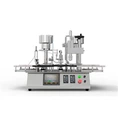
Hey there! As a supplier of China vial fillers, I've been getting a lot of questions lately about how to improve the filling accuracy of these machines. So, I thought I'd share some insights and methods that we've found to be effective over the years.
First off, let's understand why filling accuracy is such a big deal. In industries like pharmaceuticals, cosmetics, and food and beverage, getting the right amount of product into each vial is crucial. It affects product quality, compliance with regulations, and ultimately, customer satisfaction. A small error in filling can lead to a whole batch being rejected, which is a huge loss in terms of time and money.
1. Calibration and Maintenance
One of the most basic yet important steps in improving filling accuracy is regular calibration and maintenance of the vial filler. Just like your car needs a tune - up every now and then, these machines need to be checked and adjusted to ensure they're working at their best.
Calibration involves setting the machine to dispense the exact amount of product. This can be done using precision measuring tools. For example, we use high - precision volumetric flasks to measure the amount of liquid dispensed by the filling nozzles. If the measured amount is off, we can adjust the settings on the machine accordingly.
Maintenance is also key. Over time, parts of the vial filler can wear out or get clogged. For instance, the filling nozzles can get blocked with debris or product residue, which can affect the flow rate and, in turn, the filling accuracy. Regular cleaning of the nozzles, pumps, and other components can prevent these issues. We recommend a daily cleaning routine for the parts that come into contact with the product and a more thorough maintenance check every few weeks.
2. Using High - Quality Components
The quality of the components used in the vial filler can have a significant impact on filling accuracy. Cheaper components may seem like a good cost - saving measure in the short term, but they can lead to more problems down the line.
For example, the pumps in the vial filler play a crucial role in controlling the flow of the product. A high - quality pump will be more precise in delivering the right amount of product with each stroke. It will also be more durable and less likely to break down.
Similarly, the filling nozzles need to be of good quality. They should be designed to dispense the product evenly and without any splashing or dripping. We use nozzles made from high - grade stainless steel, which are resistant to corrosion and can maintain their shape and performance over time. You can find more about different types of vial filling equipment on our Vial Filling Machine page.
3. Advanced Control Systems
Modern vial fillers are equipped with advanced control systems that can greatly improve filling accuracy. These systems use sensors and software to monitor and adjust the filling process in real - time.
For example, some vial fillers have level sensors that can detect the amount of product in the vial. If the level is too low or too high, the system can automatically adjust the filling time or the flow rate to ensure the correct amount is dispensed.
Another type of control system uses flow meters to measure the volume of product passing through the filling nozzles. This data is then used to make precise adjustments to the filling process. These advanced control systems can also store data about each filling cycle, which can be useful for quality control and troubleshooting.
4. Operator Training
Even the best vial filler with the most advanced features won't perform well if the operator doesn't know how to use it properly. That's why operator training is so important.
We provide comprehensive training to our customers' operators. This includes both theoretical and practical training. In the theoretical part, we teach them about the working principles of the vial filler, the different components, and how the control systems work. In the practical part, they get hands - on experience in operating the machine, performing calibration, and carrying out maintenance tasks.


A well - trained operator will be able to spot any potential issues early on and take corrective action. They'll also know how to optimize the settings of the machine for different types of products and vial sizes.
5. Product Characteristics
The characteristics of the product being filled also play a role in filling accuracy. Different products have different viscosities, densities, and surface tensions, which can affect the way they flow through the filling system.
For example, a highly viscous product like honey will flow more slowly than a low - viscosity product like water. This means that the filling time and the pressure settings on the vial filler need to be adjusted accordingly. We have a team of experts who can help our customers determine the best settings for their specific products.
In addition, some products may be sensitive to air bubbles. If air bubbles are present in the filling system, they can cause inaccurate filling. To prevent this, we use degassing techniques to remove air from the product before filling.
6. Integration with Other Equipment
In many production lines, the vial filler is just one part of the process. It's often integrated with other equipment such as Vial Capping Machine and Vial Sealing Machine. The seamless integration of these machines can improve the overall efficiency and filling accuracy.
For example, if the vial capping machine is not properly synchronized with the vial filler, it can cause problems. If the capping process starts too early or too late, it can affect the filling accuracy or even damage the vial. We ensure that our vial fillers can be easily integrated with other equipment and that the control systems are designed to work together smoothly.
Conclusion
Improving the filling accuracy of China vial fillers is a multi - faceted process. It involves calibration and maintenance, using high - quality components, advanced control systems, operator training, considering product characteristics, and integrating with other equipment. By implementing these methods, you can ensure that your vial filling process is accurate, efficient, and compliant with industry standards.
If you're in the market for a vial filler or want to improve the filling accuracy of your existing machine, don't hesitate to reach out. We're here to help you find the best solution for your needs. Contact us for more information and to start a purchase negotiation.
References
- "Principles of Pharmaceutical Manufacturing" by S. C. Gad
- "Food and Beverage Packaging Technology" by Owen R. Mittal