


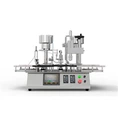
In the pharmaceutical, cosmetic, and chemical industries, ampoules are widely used to store liquid or powder substances due to their ability to provide a hermetic seal that protects the contents from contamination and degradation. An ampoule sealer plays a crucial role in ensuring the integrity of these small, sealed vials. As a trusted ampoule sealer supplier, I understand the importance of reliability in this equipment. Here are some key aspects to consider when aiming to ensure the reliability of an ampoule sealer.
1. Quality of Materials and Components
The foundation of a reliable ampoule sealer lies in the quality of its materials and components. High - grade metals, such as stainless steel, are commonly used for the body of the sealer. Stainless steel offers excellent corrosion resistance, which is essential as the sealer may come into contact with various chemicals and cleaning agents during its operation.
For the heating elements, they should be made from materials that can withstand high temperatures and provide consistent heat distribution. For example, nichrome wire is a popular choice for its high melting point and stable electrical resistance. Using sub - standard heating elements can lead to uneven sealing, where some ampoules may be under - sealed, leaving them vulnerable to leakage, while others may be over - sealed, causing the glass to crack.
The moving parts of the ampoule sealer, such as the conveyor belts and clamping mechanisms, should be made from durable plastics or high - strength alloys. These parts need to operate smoothly and precisely to ensure that the ampoules are properly positioned for sealing. Any wear and tear on these components can result in misalignment of the ampoules, leading to defective seals.
2. Precision Engineering and Design
Precision engineering is vital for the reliable operation of an ampoule sealer. The design of the sealer should be optimized to accommodate different sizes and shapes of ampoules. A well - designed sealer will have adjustable settings for the sealing temperature, time, and pressure, allowing it to be customized for various types of ampoules and sealing requirements.
The alignment system of the sealer is another critical aspect. It should be able to accurately position the ampoules under the sealing head. This can be achieved through the use of sensors and guides. For instance, optical sensors can detect the position of the ampoules and adjust the conveyor belt speed accordingly to ensure proper alignment.
The sealing head design also matters. It should be able to apply uniform pressure around the neck of the ampoule during the sealing process. A poorly designed sealing head may apply uneven pressure, resulting in a weak or inconsistent seal. Some advanced ampoule sealers use a multi - point pressure system to ensure that the seal is strong and reliable across the entire circumference of the ampoule neck.
3. Regular Maintenance and Calibration
Regular maintenance is essential to keep an ampoule sealer in reliable working condition. This includes cleaning the sealer after each use to remove any debris or residue that may accumulate on the heating elements, conveyor belts, or other components. Over time, these deposits can affect the performance of the sealer and lead to sealing problems.
Lubrication of the moving parts is also necessary. Proper lubrication reduces friction and wear, extending the lifespan of the components. However, it is important to use the correct type of lubricant that is compatible with the materials used in the sealer.
Calibration is another crucial part of maintenance. The temperature, pressure, and time settings of the sealer need to be calibrated regularly to ensure that they are accurate. This can be done using calibration tools and following the manufacturer's guidelines. Incorrect settings can result in poor sealing quality, so it is important to perform calibration at regular intervals, especially after any major repairs or component replacements.
4. Operator Training
Even the most reliable ampoule sealer can malfunction if it is not operated correctly. Therefore, proper operator training is essential. Operators should be trained on how to set up the sealer for different types of ampoules, including adjusting the temperature, pressure, and time settings. They should also be trained on how to load and unload the ampoules safely and efficiently.
Training should also cover basic troubleshooting techniques. Operators should be able to identify common problems, such as uneven sealing, misaligned ampoules, or overheating, and take appropriate measures to address them. This can include simple adjustments or contacting the maintenance team for more complex issues.
In addition, operators should be trained on the importance of following safety procedures. Ampoule sealers often involve high temperatures and moving parts, so proper safety precautions, such as wearing protective gloves and goggles, are necessary to prevent accidents.
5. Quality Control and Testing
Implementing a rigorous quality control and testing program is essential to ensure the reliability of an ampoule sealer. Before the sealer is released for use, it should undergo a series of tests to verify its performance. This can include testing the sealing quality on a sample of ampoules using various methods, such as visual inspection, leak testing, and pressure testing.
Visual inspection can detect obvious defects, such as cracks or uneven seals. Leak testing can be done using methods like the dye penetration test or the helium leak test. The dye penetration test involves immersing the sealed ampoules in a dye solution and checking for any signs of dye penetration, indicating a leak. The helium leak test is a more sensitive method that can detect very small leaks.


Pressure testing can be used to ensure that the sealed ampoules can withstand a certain amount of pressure without leaking. This is important as the ampoules may be subjected to pressure changes during storage and transportation.
During the operation of the sealer, regular quality control checks should be performed. This can involve randomly selecting ampoules from the production line and testing them for sealing quality. Any defective ampoules should be removed from the production line, and the sealer should be adjusted if necessary to prevent further defects.
6. Compatibility with Other Equipment
In many production lines, an ampoule sealer is part of a larger system that includes other equipment, such as Ampoule Filler and Ampoule Filling Machine. The reliability of the ampoule sealer can be affected by its compatibility with these other pieces of equipment.
The sealer should be able to work seamlessly with the filler to ensure that the filling and sealing processes are coordinated. For example, the conveyor speed of the sealer should be synchronized with the filling rate of the filler to ensure that the ampoules are filled and sealed in a timely manner.
The sealer should also be able to handle the output of the filler. If the sealer cannot keep up with the filling rate, it can lead to a backlog of ampoules, causing delays in the production process. Therefore, when selecting an ampoule sealer, it is important to consider its compatibility with the existing or planned Ampoule Filler and other equipment in the production line.
Conclusion
Ensuring the reliability of an ampoule sealer is a multi - faceted process that involves considering the quality of materials and components, precision engineering and design, regular maintenance and calibration, operator training, quality control and testing, and compatibility with other equipment. As a supplier of ampoule sealers, we are committed to providing high - quality equipment that meets the strictest reliability standards.
If you are in the market for a reliable ampoule sealer or have any questions about our products, please feel free to contact us for a detailed discussion. Our team of experts is ready to assist you in finding the best solution for your specific needs.
References
- Pharmaceutical Engineering Handbook.
- Industrial Equipment Maintenance Guide for Ampoule Sealers.
- Quality Control Standards for Ampoule Sealing in the Pharmaceutical Industry.