


Hey there, folks! As a supplier of monoblock fillers, I've been getting a lot of questions lately about the pressure requirements for these machines. So, I thought I'd take some time to break it down for you in a way that's easy to understand.
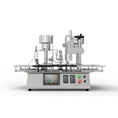
First off, let's talk about what a monoblock filler is. A monoblock filler, also known as a Monoblock Machine, is a type of filling equipment that combines multiple functions into a single unit. This usually includes functions like cleaning, filling, and capping. It's a popular choice for many industries because it saves space, reduces the need for multiple machines, and can increase efficiency.
Now, when it comes to pressure requirements, there are a few key factors to consider. The pressure in a monoblock filler is crucial because it affects how the product is filled into the containers. If the pressure is too low, the filling process may be slow, and the containers may not be filled to the correct level. On the other hand, if the pressure is too high, it can cause spillage, splashing, and even damage to the containers or the machine itself.
Types of Pressure in a Monoblock Filler
There are mainly two types of pressure that we need to look at in a monoblock filler: filling pressure and backpressure.
Filling Pressure
Filling pressure is the force that pushes the product from the storage tank into the containers. The ideal filling pressure depends on several factors, such as the viscosity of the product, the size and shape of the containers, and the filling speed.
For low - viscosity products like water or eye drops, a relatively low filling pressure is usually sufficient. These products flow easily, so they don't require a lot of force to be transferred into the containers. For example, an Eye Drop Filling Machine typically operates at a lower filling pressure because eye drops are very thin and need to be filled precisely.
On the other hand, high - viscosity products like honey or cream require a higher filling pressure. These products are thicker and more resistant to flow, so more force is needed to push them into the containers. The pressure needs to be carefully adjusted to ensure that the filling is consistent and that the containers are filled to the right level.
Backpressure
Backpressure is the pressure that builds up in the filling system when the containers are being filled. It helps to control the flow of the product and prevent over - filling. Backpressure is especially important when filling carbonated beverages or products that are sensitive to air exposure.
When filling carbonated drinks, the backpressure needs to be carefully regulated to maintain the carbonation level in the beverage. If the backpressure is too low, the carbon dioxide will escape from the drink, causing it to go flat. If the backpressure is too high, it can cause the containers to burst or the filling process to become unstable.
Factors Affecting Pressure Requirements
Product Characteristics
As mentioned earlier, the viscosity of the product is a major factor in determining the pressure requirements. But there are other product characteristics to consider as well. For example, if the product contains particles or solids, the pressure may need to be adjusted to ensure that the particles are evenly distributed during the filling process.
The density of the product also plays a role. Heavier products may require more pressure to be filled, especially if they are being filled into small or narrow - necked containers.


Container Design
The size, shape, and material of the containers can have a significant impact on the pressure requirements. Smaller containers may require higher pressure to fill quickly, while larger containers may need a more consistent and lower - pressure filling process to avoid spillage.
The shape of the container, especially the neck diameter, can affect the flow of the product. Containers with narrow necks may need higher pressure to overcome the resistance to flow, while containers with wide necks may allow for a lower - pressure filling.
The material of the container is also important. For example, glass containers can withstand higher pressures compared to plastic containers, which may deform or break under high pressure.
Filling Speed
The speed at which the monoblock filler operates can also influence the pressure requirements. Faster filling speeds generally require higher pressures to ensure that the product is filled into the containers in a timely manner. However, increasing the pressure too much to achieve high - speed filling can lead to problems like splashing and inconsistent filling.
Measuring and Controlling Pressure
To ensure that the pressure in a monoblock filler is within the correct range, we use pressure sensors and controllers. Pressure sensors are installed at various points in the filling system to measure the pressure. These sensors send signals to the controller, which then adjusts the pressure as needed.
Modern monoblock fillers are often equipped with advanced control systems that can automatically adjust the pressure based on the product, container, and filling speed. This allows for more precise and consistent filling, reducing the risk of errors and improving the overall quality of the filling process.
Importance of Proper Pressure Settings
Proper pressure settings are essential for the efficient and reliable operation of a monoblock filler. When the pressure is set correctly, the filling process is smooth, and the containers are filled accurately. This not only improves the quality of the final product but also reduces waste and increases productivity.
In addition, maintaining the correct pressure helps to extend the lifespan of the monoblock filler. Excessive pressure can cause wear and tear on the machine's components, leading to breakdowns and costly repairs. By keeping the pressure within the recommended range, we can ensure that the machine operates smoothly for a long time.
Conclusion
So, there you have it - a breakdown of the pressure requirements for a Monoblock Filler. As you can see, it's a complex topic that involves considering multiple factors such as product characteristics, container design, and filling speed.
If you're in the market for a monoblock filler or have any questions about pressure requirements for your specific application, don't hesitate to reach out. Our team of experts is here to help you find the right solution for your business. Whether you're filling eye drops, carbonated beverages, or high - viscosity creams, we can ensure that your monoblock filler is set up to perform at its best.
Let's have a chat and see how we can work together to meet your filling needs!
References
- Packaging Machinery Manufacturers Institute (PMMI). "Guidelines for Filling Equipment Pressure Settings."
- Journal of Food Engineering. "Effect of Pressure on Filling Processes in the Food Industry."