


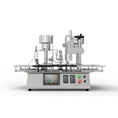
In the pharmaceutical and biotech industries, the long - term reliability of vial fillers is of utmost importance. As a China vial filler supplier, I understand the challenges and requirements that come with ensuring these machines operate consistently and accurately over an extended period. This blog will delve into the key aspects of guaranteeing the long - term reliability of China vial fillers.
1. High - Quality Design and Manufacturing
The foundation of long - term reliability starts with high - quality design and manufacturing. Our vial fillers are engineered with precision, using advanced CAD/CAM technology to create optimized mechanical and electrical systems. We select premium materials that can withstand the rigors of continuous operation. For example, the contact parts of the Vial Filling Machine are made of stainless steel, which is resistant to corrosion and easy to clean, ensuring the safety and quality of the filled products.


During the manufacturing process, strict quality control measures are implemented at every stage. From raw material inspection to final assembly and testing, each step is carefully monitored to meet international standards. Our production facilities are equipped with state - of - the - art machinery and equipment, enabling us to produce vial fillers with high precision and consistency.
2. Regular Maintenance and Servicing
Regular maintenance is essential for the long - term reliability of vial fillers. We provide detailed maintenance manuals to our customers, guiding them on how to perform routine checks and maintenance tasks. These tasks include cleaning the machine, lubricating moving parts, and inspecting electrical connections.
In addition to routine maintenance, scheduled servicing is also crucial. Our team of experienced technicians can provide on - site servicing at regular intervals. They will conduct a comprehensive inspection of the vial filler, replace worn - out parts, and perform necessary adjustments to ensure optimal performance. For example, the seals and gaskets in the filling system need to be replaced periodically to prevent leakage and ensure accurate filling volumes.
3. Software and Control System Optimization
The software and control system of a vial filler play a vital role in its reliability. Our vial fillers are equipped with advanced software that allows for precise control of the filling process. The software can be easily programmed to adjust filling volumes, filling speeds, and other parameters according to the specific requirements of different products.
We continuously optimize our software to improve its stability and functionality. Regular software updates are provided to our customers, which can enhance the performance of the vial filler, fix bugs, and add new features. For example, the latest software version may include improved error - handling capabilities, which can detect and alert operators in case of any malfunctions during the filling process.
4. Operator Training
Well - trained operators are key to ensuring the long - term reliability of vial fillers. We offer comprehensive operator training programs to our customers. These programs cover all aspects of the vial filler, including its operation, maintenance, and troubleshooting.
During the training, operators will learn how to properly start and stop the machine, load and unload vials, and perform basic maintenance tasks. They will also be trained on how to identify and solve common problems that may occur during the filling process. By having well - trained operators, the risk of human - error - induced malfunctions can be significantly reduced.
5. Compatibility with Other Equipment
In a production line, vial fillers often need to work in conjunction with other equipment, such as Capping Machine and labeling machines. Ensuring compatibility between the vial filler and other equipment is crucial for the overall reliability of the production line.
We design our vial fillers to be highly compatible with a wide range of capping and labeling machines. Our technical team can provide guidance on how to integrate the vial filler into an existing production line or design a new production line that meets the specific requirements of our customers. For example, the speed and synchronization between the vial filler and the Capping Machine need to be carefully coordinated to ensure smooth operation.
6. Quality Assurance and Testing
Before a vial filler is shipped to the customer, it undergoes a series of rigorous quality assurance and testing procedures. These tests include performance testing, accuracy testing, and reliability testing.
Performance testing ensures that the vial filler can operate at the specified filling speed and volume accuracy. Accuracy testing verifies that the filling volumes are within the acceptable tolerance range. Reliability testing involves running the vial filler continuously for an extended period to simulate real - world operating conditions and identify any potential issues.
7. Customer Support and Feedback
We believe that excellent customer support is essential for ensuring the long - term reliability of our vial fillers. Our customer support team is available 24/7 to answer any questions or resolve any issues that our customers may encounter.
We also encourage our customers to provide feedback on the performance of our vial fillers. This feedback helps us to identify areas for improvement and make necessary adjustments to our products and services. By continuously listening to our customers, we can ensure that our vial fillers meet their evolving needs and expectations.
Conclusion
Ensuring the long - term reliability of China vial fillers requires a comprehensive approach that encompasses high - quality design and manufacturing, regular maintenance and servicing, software and control system optimization, operator training, compatibility with other equipment, quality assurance and testing, and excellent customer support. As a China vial filler supplier, we are committed to providing our customers with reliable and high - performance vial fillers.
If you are interested in our vial fillers or have any questions about ensuring their long - term reliability, please feel free to contact us for further discussion and procurement negotiation. We look forward to working with you to meet your production needs.
References
- Pharmaceutical Engineering Handbook.
- Best Practices in Vial Filling and Capping Technology.
- Industry Standards for Vial Filling Equipment.