


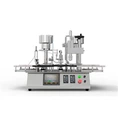
Hey there! As a supplier of Ampoule filling and sealing machines, I often get asked about the cost of these nifty pieces of equipment. It's a question that doesn't have a one - size - fits - all answer, so let's dive in and break down the factors that influence the price.
First off, the capacity of the machine plays a huge role. If you're a small - scale operation, say a boutique pharmacy or a research lab doing small batch production, you might be looking at a lower - capacity Ampoule Filler. These machines can handle anywhere from a few dozen to a couple of hundred ampoules per hour. They're generally more affordable, usually starting at around $5,000 to $10,000. They're compact, easy to operate, and don't require a massive amount of space or complex setup.
On the other hand, if you're a large - scale pharmaceutical manufacturer churning out thousands of ampoules every day, you'll need a high - capacity machine. These bad boys can fill and seal thousands of ampoules per hour. The price for these high - end Ampoule Machine can go well into the six - figure range, sometimes reaching $100,000 or more. They're packed with advanced features like automated feeding systems, precise filling mechanisms, and high - speed sealing units.


Another factor that affects the cost is the level of automation. Manual or semi - automated machines are cheaper. A manual machine requires an operator to load the ampoules, start the filling process, and seal the ampoules manually. These are great for small operations with a limited budget and a lower production volume. They can cost anywhere from $2,000 to $5,000.
Semi - automated machines have some automated functions, like the filling process might be automated, but the loading and unloading of ampoules still need some human intervention. They're a step up in terms of efficiency and cost, usually ranging from $5,000 to $20,000.
Fully automated machines, however, are the cream of the crop. They can handle the entire process from ampoule loading, filling, and sealing to quality control and packaging with minimal human involvement. These machines are more expensive due to their advanced technology and higher efficiency. You're looking at a price tag of $20,000 and upwards, depending on the capacity and additional features.
The type of filling technology also matters. There are different filling methods, such as volumetric filling and peristaltic filling. Volumetric filling machines are more common and are generally more affordable. They work by measuring a specific volume of liquid and then filling the ampoules accordingly. A basic volumetric Ampoule Filling Machine can cost around $3,000 to $8,000.
Peristaltic filling machines, on the other hand, use a peristaltic pump to transfer the liquid. They're more precise, especially when dealing with viscous or sensitive liquids. This precision comes at a cost, and peristaltic filling machines can be 20% to 50% more expensive than volumetric ones, depending on the model and capacity.
The build quality and materials used in the machine also impact the price. Machines made with high - quality stainless steel and durable components are more expensive but offer better longevity and reliability. Cheaper machines might use lower - grade materials, which could lead to more frequent breakdowns and maintenance costs in the long run.
Additional features can also add to the cost. For example, some machines come with integrated quality control systems that can detect and reject faulty ampoules. Others might have a user - friendly touchscreen interface for easy operation and monitoring. These extra features can increase the price by a few thousand dollars, but they can also improve the overall efficiency and quality of your production.
When it comes to brand and reputation, well - known brands in the industry usually charge a premium for their products. They've built a reputation for quality, reliability, and good customer support. However, there are also some lesser - known brands that offer great value for money. It's important to do your research and read reviews from other users before making a decision.
Now, let's talk about the cost of ownership. The purchase price is just the tip of the iceberg. You also need to consider the cost of maintenance, spare parts, and training. Maintenance costs can vary depending on the complexity of the machine. High - end machines might require specialized technicians for maintenance, which can be costly. Spare parts for some machines can also be expensive, especially if they're imported from overseas. And don't forget about the cost of training your staff to operate the machine safely and efficiently.
So, as you can see, the cost of an ampoule filling and sealing machine can vary widely depending on a number of factors. It's important to assess your production needs, budget, and long - term goals before making a purchase. If you're still not sure which machine is right for you or want a more accurate quote, I'd be more than happy to help. Just reach out to me, and we can have a chat about your specific requirements. Whether you're a small startup or a large corporation, I'm confident we can find the perfect ampoule filling and sealing machine for your business. Let's get your production up and running smoothly!
References
- Industry reports on pharmaceutical manufacturing equipment
- Interviews with industry experts
- Product catalogs from ampoule filling and sealing machine manufacturers