


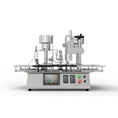
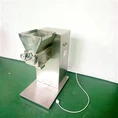
A planetary mixing machine is a versatile and powerful piece of equipment widely used in various industries, including food, pharmaceuticals, cosmetics, and chemical manufacturing. As a leading supplier of mixing machines, I am excited to share with you how these remarkable machines work and why they are an essential investment for your business.
Basic Structure of a Planetary Mixing Machine
Before delving into the working principle, let's first understand the basic components of a planetary mixing machine. A typical planetary mixer consists of a mixing bowl, a mixing tool (such as a beater, whisk, or paddle), a motor, a gearbox, and a control panel.
The mixing bowl is where the ingredients are placed for mixing. It is usually made of stainless steel or other food - grade materials to ensure hygiene and durability. The mixing tool is attached to a shaft that rotates and moves within the bowl. The motor provides the power needed to drive the mixing process, and the gearbox is responsible for transmitting the power from the motor to the mixing tool, controlling its speed and movement. The control panel allows the operator to set the mixing time, speed, and other parameters according to the specific requirements of the mixing task.
Working Principle of Planetary Movement
The key feature of a planetary mixing machine is its unique planetary movement. The term "planetary" comes from the way the mixing tool moves, which is similar to the movement of planets around the sun. In a planetary mixer, the mixing tool not only rotates on its own axis (self - rotation) but also revolves around the center of the mixing bowl (revolution).
This dual - motion design ensures thorough and efficient mixing. As the mixing tool rotates on its axis, it creates a high - speed shearing force that breaks down and disperses the ingredients. At the same time, as it revolves around the center of the bowl, it covers the entire area of the bowl, ensuring that all ingredients are evenly mixed. The combination of self - rotation and revolution allows the planetary mixer to achieve a more uniform and consistent mixture compared to other types of mixers.
The Mixing Process
The mixing process in a planetary mixing machine can be divided into several stages:
Loading
First, the operator loads the ingredients into the mixing bowl. The type and quantity of ingredients depend on the specific product being manufactured. For example, in the food industry, ingredients could include flour, sugar, eggs, and butter; in the pharmaceutical industry, it could be powders, granules, and various active ingredients.
Initial Mixing
Once the ingredients are loaded, the operator starts the mixer. At the beginning of the mixing process, the self - rotation and revolution of the mixing tool work together to break up any large clumps or aggregates in the ingredients. The high - speed rotation of the tool creates a turbulent flow within the bowl, which helps to disperse the ingredients and start the mixing process.
Homogenization
As the mixing continues, the planetary movement ensures that all parts of the mixture are continuously exposed to the shearing and folding action of the mixing tool. This helps to further break down the particles, reduce particle size, and distribute the ingredients evenly throughout the mixture. The goal of this stage is to achieve a homogeneous mixture where all components are uniformly distributed.
Final Mixing
In the final stage of the mixing process, the speed and duration of the mixing are adjusted according to the desired consistency of the mixture. For some products, a longer mixing time may be required to ensure complete homogenization, while for others, a shorter time may be sufficient. The operator can monitor the mixing process through the control panel and make adjustments as needed.
Applications in Different Industries
Planetary mixing machines are highly versatile and can be used in a wide range of industries:
Food Industry
In the food industry, planetary mixers are used for making bread, cakes, pastries, ice cream, and various sauces. They can handle different types of ingredients, from dry powders to wet doughs, and can achieve the desired texture and consistency for different food products. For example, when making bread dough, the planetary mixer can knead the dough thoroughly, developing the gluten structure and ensuring a soft and elastic texture.
Pharmaceutical Industry
In the pharmaceutical industry, planetary mixers are used for blending active pharmaceutical ingredients (APIs) with excipients to produce tablets, capsules, and other dosage forms. The uniform mixing provided by the planetary mixer is crucial for ensuring the accurate dosage and quality of pharmaceutical products. You can find more information about our pharmaceutical mixing solutions on our Mixing Machine page.
Cosmetics Industry
In the cosmetics industry, planetary mixers are used for manufacturing creams, lotions, makeup, and other beauty products. They can mix different types of oils, emulsifiers, and powders to create a smooth and stable product. The precise mixing control of the planetary mixer helps to maintain the quality and appearance of cosmetics.
Chemical Industry
In the chemical industry, planetary mixers are used for mixing various chemicals, such as adhesives, paints, and polymers. They can handle high - viscosity materials and ensure a uniform dispersion of additives and fillers. Our Industrial Mixers are specifically designed to meet the demanding requirements of the chemical industry.
Advantages of Planetary Mixing Machines
There are several advantages of using planetary mixing machines:
Thorough Mixing
The planetary movement ensures that all ingredients are evenly mixed, resulting in a more consistent and homogeneous product. This is especially important for industries where product quality and uniformity are critical, such as the pharmaceutical and food industries.


High Efficiency
The dual - motion design allows the planetary mixer to mix ingredients more quickly compared to other types of mixers. This can increase productivity and reduce production time, leading to cost savings for your business.
Versatility
Planetary mixers can be equipped with different types of mixing tools, such as beaters, whisks, and paddles, to suit different mixing tasks. They can also handle a wide range of viscosities, from thin liquids to thick pastes.
Easy to Clean
Most planetary mixers are designed with easy - to - clean features. The mixing bowl and mixing tools can be easily removed and cleaned, ensuring good hygiene and preventing cross - contamination between different batches.
Related Equipment in the Mixing Process
In addition to planetary mixing machines, other equipment may be used in the mixing process. For example, a Pulverizer can be used to grind large particles into smaller ones before mixing. This can improve the mixing efficiency and ensure a more uniform mixture. Industrial mixers can also be used in combination with planetary mixers for large - scale production or for more complex mixing tasks.
Conclusion
Planetary mixing machines are an essential piece of equipment for many industries. Their unique planetary movement design allows for thorough, efficient, and versatile mixing, making them a popular choice for businesses looking to improve product quality and productivity.
If you are interested in learning more about our planetary mixing machines or other mixing solutions, please feel free to contact us. Our team of experts is ready to assist you in selecting the right equipment for your specific needs and providing you with professional advice and support. We look forward to the opportunity to work with you and help you achieve your production goals.
References
- "Mixing Technology Handbook" by Paul E. Stokes
- "Industrial Mixing: Science and Practice" by Edward L. Paul, Victor A. Atiemo - Obeng, and Suzanne M. Kresta