


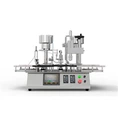
Peristaltic vial fillers are a cornerstone in the pharmaceutical, cosmetic, and food industries, offering a reliable and precise method for filling vials with various liquids. As a vial filler supplier, I am excited to delve into the inner workings of these remarkable machines and explain how they operate to meet the diverse needs of our clients.
Understanding the Basics of Peristalsis
Before we explore the peristaltic vial filler itself, it's essential to understand the principle of peristalsis. Peristalsis is a natural process that occurs in the human body, particularly in the digestive system, where muscles contract and relax in a coordinated wave-like motion to move substances through a tube. In a peristaltic vial filler, this same principle is harnessed to pump liquid from a reservoir into vials.
The heart of a peristaltic pump is a flexible tube, often made of silicone or other compatible materials, that is placed inside a circular housing. A series of rollers or shoes press against the tube, squeezing it and creating a vacuum that draws liquid into the tube. As the rollers or shoes move along the tube, they force the liquid forward, creating a continuous flow.
The Components of a Peristaltic Vial Filler
A peristaltic vial filler consists of several key components that work together to ensure accurate and efficient filling. These components include:
- Peristaltic Pump: As mentioned earlier, the peristaltic pump is responsible for creating the flow of liquid. It is typically driven by a motor that controls the speed and direction of the rollers or shoes.
- Liquid Reservoir: The liquid reservoir holds the product to be filled. It can be a simple container or a more complex system with features such as agitation to ensure the product remains homogeneous.
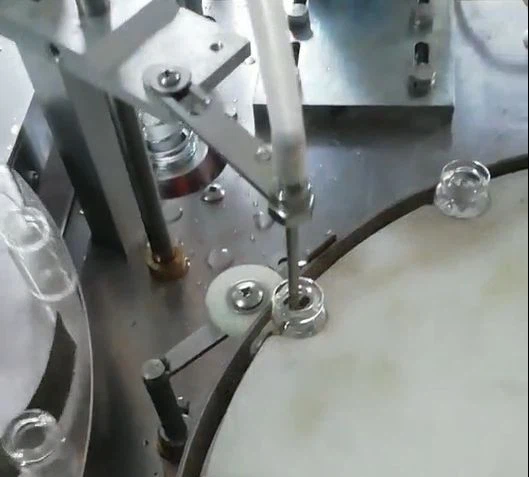
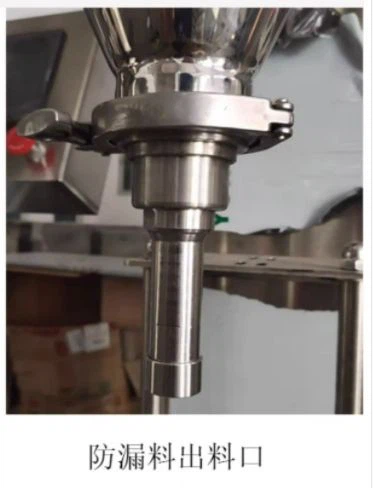
- Filling Nozzles: The filling nozzles are the points where the liquid is dispensed into the vials. They are designed to provide a precise and consistent flow of liquid, and they can be adjusted to accommodate different vial sizes and filling volumes.
- Conveyor System: The conveyor system transports the vials through the filling process. It can be a simple belt conveyor or a more sophisticated system with features such as indexing to ensure the vials are properly positioned for filling.
- Control Panel: The control panel allows the operator to set and adjust the filling parameters, such as the filling volume, speed, and number of cycles. It also provides real-time monitoring and feedback on the filling process.
The Filling Process
The filling process of a peristaltic vial filler can be broken down into several steps:
- Vial Loading: The vials are loaded onto the conveyor system and transported to the filling station.
- Priming: Before filling, the peristaltic pump is primed to ensure that the tube is filled with liquid and there are no air bubbles. This is typically done by running the pump in reverse for a short period.
- Filling: Once the vials are in position, the filling nozzles are lowered into the vials, and the peristaltic pump is activated. The liquid is pumped from the reservoir through the tube and into the vials at a controlled rate.
- Dosing: The filling volume is determined by the number of rotations of the peristaltic pump. The control panel allows the operator to set the desired filling volume, and the pump will automatically stop once the specified volume has been dispensed.
- Nozzle Retraction: After filling, the filling nozzles are raised out of the vials to prevent dripping.
- Vial Ejection: The filled vials are then transported to the next stage of the process, such as capping or labeling.
Advantages of Peristaltic Vial Fillers
Peristaltic vial fillers offer several advantages over other types of filling machines, including:
- Accuracy: Peristaltic pumps provide a high level of accuracy and repeatability, ensuring that each vial is filled with the exact same volume of liquid.
- Versatility: Peristaltic vial fillers can handle a wide range of liquids, including viscous fluids, suspensions, and foaming products.
- Gentle Handling: The peristaltic pumping action is gentle on the product, minimizing the risk of damage or degradation.
- Easy Cleaning and Maintenance: The flexible tube in the peristaltic pump can be easily removed and replaced, making cleaning and maintenance quick and simple.
- Cost-Effective: Peristaltic vial fillers are generally more cost-effective than other types of filling machines, especially for small to medium production volumes.
Applications of Peristaltic Vial Fillers
Peristaltic vial fillers are used in a variety of industries, including:
- Pharmaceutical: In the pharmaceutical industry, peristaltic vial fillers are used to fill vials with medications, vaccines, and other injectable products. The high level of accuracy and sterility required in this industry makes peristaltic vial fillers an ideal choice.
- Cosmetic: In the cosmetic industry, peristaltic vial fillers are used to fill vials with creams, lotions, serums, and other beauty products. The gentle handling and versatility of these machines make them suitable for a wide range of products.
- Food and Beverage: In the food and beverage industry, peristaltic vial fillers are used to fill vials with juices, syrups, and other liquid products. The ability to handle viscous fluids and the high level of accuracy make these machines a popular choice in this industry.
- Biotech: In the biotech industry, peristaltic vial fillers are used to fill vials with cell cultures, reagents, and other biological products. The gentle handling and sterility of these machines are essential for maintaining the integrity of these products.
Conclusion
Peristaltic vial fillers are a reliable and efficient solution for filling vials with various liquids. Their ability to provide accurate and consistent filling, handle a wide range of products, and offer easy cleaning and maintenance make them a popular choice in many industries. As a vial filler supplier, we are committed to providing our clients with high-quality peristaltic vial fillers that meet their specific needs.
If you are interested in learning more about our Vial Filler, Vial Sealing Machine, or Vial Filling Machine, please contact us to discuss your requirements. Our team of experts will be happy to assist you in finding the right solution for your business.
References
- "Peristaltic Pump Technology: Principles and Applications." Pharmaceutical Technology, 2019.
- "Vial Filling and Capping Machines: A Comprehensive Guide." Packaging Digest, 2020.
- "The Advantages of Peristaltic Pumps in the Pharmaceutical Industry." BioPharm International, 2018.