


Can a vial filler be equipped with a capping system?
As a vial filler supplier, I often receive inquiries from customers about the possibility of equipping a vial filler with a capping system. This is a crucial question in the pharmaceutical, cosmetic, and other industries where vials are commonly used for product packaging. In this blog post, I will explore the feasibility, benefits, and considerations of integrating a capping system with a vial filler.
Feasibility of Equipping a Vial Filler with a Capping System
The short answer is yes, a vial filler can be equipped with a capping system. In fact, many modern vial filling machines are designed with the flexibility to incorporate a capping mechanism either as an integral part of the machine or as an add - on module. This integration is made possible by advancements in automation and mechanical engineering.
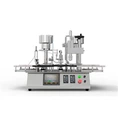
Most vial fillers operate on a conveyor system that moves vials through different stations for filling. A capping system can be easily added to this conveyor line. The vials are first filled at the filling station and then transported to the capping station. At the capping station, caps are picked up, placed on the vials, and then tightened to ensure a proper seal.
There are different types of capping systems available, such as screw capping, snap capping, and crimp capping. The choice of capping system depends on the type of vial and cap being used. For example, screw capping is suitable for plastic vials with screw - on caps, while crimp capping is commonly used for glass vials with metal caps in the pharmaceutical industry.
Benefits of Equipping a Vial Filler with a Capping System
1. Increased Efficiency
One of the primary benefits of integrating a capping system with a vial filler is increased efficiency. In a traditional setup, vials are filled on one machine and then transferred to a separate capping machine. This process involves additional handling and transportation of vials, which can be time - consuming and may increase the risk of product contamination. By combining the filling and capping processes in one machine, the overall production time is reduced, and the throughput is increased.
2. Space Saving
A combined vial filling and capping machine takes up less floor space compared to having two separate machines. This is especially important for small - to - medium - sized manufacturing facilities where space is often limited. With a single machine, the production area can be optimized, and the workflow can be streamlined.
3. Consistent Quality
When a vial filler is equipped with a capping system, the entire filling and capping process can be precisely controlled. This ensures consistent filling volumes and proper capping torque, resulting in a higher quality of the final product. In the pharmaceutical industry, where product quality and safety are of utmost importance, this consistency is crucial for meeting regulatory requirements.
4. Cost - Effectiveness
Although the initial investment in a combined vial filling and capping machine may be higher than purchasing separate machines, it can be more cost - effective in the long run. The reduced labor costs, lower maintenance requirements, and increased production efficiency all contribute to cost savings over time.
Considerations When Equipping a Vial Filler with a Capping System
1. Compatibility
Before integrating a capping system with a vial filler, it is essential to ensure compatibility between the two components. The capping system must be able to handle the size, shape, and material of the vials and caps being used. Additionally, the conveyor speed and the timing of the filling and capping processes need to be synchronized to ensure smooth operation.
2. Maintenance and Servicing
A combined vial filling and capping machine is a complex piece of equipment that requires regular maintenance and servicing. It is important to choose a machine that is easy to clean, has accessible parts, and comes with a reliable after - sales service. This will help minimize downtime and ensure the longevity of the machine.
3. Regulatory Compliance
In industries such as pharmaceuticals and food, regulatory compliance is a major concern. The combined vial filling and capping machine must meet all relevant industry standards and regulations, such as Good Manufacturing Practices (GMP). It is important to work with a supplier who has experience in providing compliant equipment and can offer support in obtaining the necessary certifications.
Our Offerings as a Vial Filler Supplier
As a vial filler supplier, we offer a range of vial filling machines that can be equipped with various capping systems. Our Vial Filling Machine is designed with high - precision filling technology to ensure accurate and consistent filling volumes. We also provide different types of capping systems, including Vial Capping Machine and Vial Sealing Machine, which can be customized to meet the specific needs of our customers.
Our machines are built with high - quality materials and advanced automation technology to ensure reliable and efficient operation. We also offer comprehensive after - sales service, including installation, training, and maintenance, to ensure that our customers get the most out of their investment.
Contact Us for Procurement and Consultation
If you are interested in equipping your vial filler with a capping system or have any questions about our products, we encourage you to contact us. Our team of experts is ready to provide you with detailed information, technical support, and customized solutions. Whether you are a small - scale producer or a large - scale manufacturer, we can help you find the right equipment to meet your production needs.


References
- Pharmaceutical Engineering Handbook, 2nd Edition
- Packaging Machinery Technology, 3rd Edition
- Good Manufacturing Practices Guidelines for the Pharmaceutical Industry