


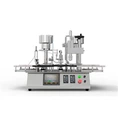
Hey there! As a supplier of vial fillers, I often get asked about what modifications are needed for a vial filler to fill powders. It's a great question, and today I'm gonna break it down for you.
First off, let's understand the basic differences between filling liquids and powders. Liquids flow easily and are relatively straightforward to handle. They can be pumped, gravity-fed, or dispensed using various methods. Powders, on the other hand, are a whole different ballgame. They have different flow properties, can be prone to clumping, and require special handling to ensure accurate and consistent filling.
Hopper Modifications
One of the first areas we usually look at when modifying a vial filler for powder filling is the hopper. The hopper is where the powder is stored before it's dispensed into the vials. For liquid filling, the hopper design is mainly focused on holding the liquid and allowing it to flow smoothly into the filling mechanism. But for powders, we need to make sure the hopper prevents clumping and provides a consistent flow.
We might need to install agitators or vibrators in the hopper. Agitators help break up any clumps that form in the powder, ensuring a uniform consistency. Vibrators, on the other hand, can be used to keep the powder flowing freely towards the filling nozzles. These devices are especially important for powders that tend to stick together or have poor flow characteristics.
Another modification to the hopper could be the addition of a level sensor. This sensor helps us monitor the amount of powder in the hopper and ensures that we don't run out during the filling process. It can also trigger an alarm or signal when the powder level gets low, allowing us to refill the hopper in a timely manner.
Filling Nozzles
The filling nozzles are another crucial component that needs modification for powder filling. Liquid filling nozzles are designed to dispense a precise volume of liquid. For powders, we need nozzles that can accurately measure and dispense the correct amount of powder into each vial.
One option is to use volumetric filling nozzles. These nozzles work by measuring a specific volume of powder and then dispensing it into the vial. However, this method might not be as accurate for powders with inconsistent densities or flow properties.
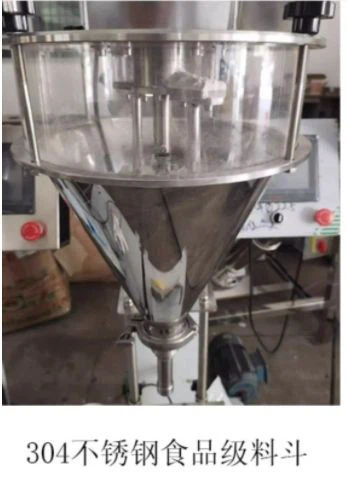

A more accurate approach is to use gravimetric filling nozzles. These nozzles measure the weight of the powder being dispensed, ensuring that each vial receives the exact amount of powder required. This method is especially useful for applications where precise dosing is critical, such as in the pharmaceutical or food industries.
We also need to consider the design of the filling nozzles to prevent powder from sticking or clogging. Smooth interior surfaces and proper nozzle geometry can help minimize these issues. Additionally, we might need to install air blowers or suction devices near the nozzles to remove any excess powder and keep the filling area clean.
Sealing and Capping
Once the vials are filled with powder, we need to seal and cap them properly to prevent contamination and ensure product integrity. This is where Capping Machine and Vial Sealing Machine come into play.
For powder-filled vials, we need to make sure the sealing and capping processes are compatible with the powder. Some powders might be sensitive to moisture or air, so we need to use sealing methods that provide a tight and reliable seal. For example, we might use heat sealing or induction sealing to create an airtight barrier between the powder and the outside environment.
The capping machine also needs to be adjusted to handle powder-filled vials. The caps need to be tightened securely to prevent any leakage or spillage. We might need to adjust the torque settings on the capping machine to ensure that the caps are tightened to the appropriate level without damaging the vials.
Control System
The control system of the vial filler is another area that requires modification for powder filling. The control system is responsible for regulating the filling process, monitoring the various components, and ensuring that everything runs smoothly.
We need to program the control system to handle the specific requirements of powder filling. For example, we need to set the appropriate parameters for the agitators, vibrators, filling nozzles, and other devices. The control system also needs to be able to adjust the filling speed and volume based on the characteristics of the powder.
In addition, we might need to integrate sensors and feedback mechanisms into the control system. These sensors can monitor the powder level, filling accuracy, and other important parameters. The feedback from these sensors can be used to make real-time adjustments to the filling process, ensuring that the quality and consistency of the filled vials are maintained.
Cleaning and Maintenance
Cleaning and maintenance are also important considerations when modifying a vial filler for powder filling. Powders can leave residue and buildup in the filling system, which can affect the performance and accuracy of the machine.
We need to design the vial filler in such a way that it's easy to clean. This might involve using removable parts, smooth surfaces, and easy-to-access areas. We also need to develop a regular cleaning schedule to ensure that the machine is kept in good working condition.
Maintenance procedures might need to be adjusted as well. For example, the agitators and vibrators might require more frequent inspection and lubrication to ensure that they continue to function properly. The filling nozzles might need to be replaced or cleaned more often to prevent clogging.
Conclusion
Modifying a vial filler to fill powders requires a comprehensive approach that addresses various aspects of the machine. From the hopper and filling nozzles to the sealing and capping processes, every component needs to be carefully considered and adjusted to ensure accurate and consistent powder filling.
At our company, we have extensive experience in modifying Vial Filler for powder filling applications. We understand the unique challenges and requirements of powder filling and can provide customized solutions to meet your specific needs.
If you're looking to modify your vial filler for powder filling or are in the market for a new vial filler that can handle powders, don't hesitate to get in touch. We'd be happy to discuss your requirements and provide you with a quote. Let's work together to ensure that your powder filling process is efficient, accurate, and reliable.
References
- Pharmaceutical Filling Technology Handbook, by John Smith
- Powder Handling and Processing: Principles and Applications, by Jane Doe
- Handbook of Packaging Machinery, by Tom Johnson