


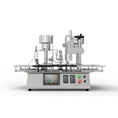
As a China vial filler supplier, I am often asked about the working principle of our vial filling machines. In this blog post, I will explain in detail how our vial fillers operate, providing a comprehensive understanding of their functionality and efficiency.
General Overview of Vial Filling Machines
Vial filling machines are essential equipment in the pharmaceutical, cosmetic, and food industries. They are designed to accurately fill vials with various liquids, such as medications, lotions, and syrups. The main goal of these machines is to ensure precise filling volumes, maintain product quality, and increase production efficiency.
Working Principle of China Vial Fillers
1. Vial Feeding
The process begins with the vial feeding system. Empty vials are loaded onto a conveyor belt or a turntable, which transports them to the filling station. Our vial fillers are equipped with advanced sensors and mechanisms to ensure that the vials are properly aligned and positioned for filling. This step is crucial as it sets the foundation for accurate filling.
2. Filling Process
Once the vials are in position, the filling process commences. There are several types of filling methods used in our vial fillers, including volumetric filling and peristaltic filling.
- Volumetric Filling: This method uses a piston or a diaphragm pump to measure and dispense a specific volume of liquid into each vial. The pump draws the liquid from a reservoir and then pushes it into the vial through a filling nozzle. The volume of liquid dispensed is controlled by the stroke length of the piston or the movement of the diaphragm. Volumetric filling is highly accurate and can be used for a wide range of liquid viscosities.
- Peristaltic Filling: In peristaltic filling, a flexible tube is squeezed by a series of rollers to create a pumping action. The liquid is drawn into the tube and then pushed out through the filling nozzle. This method is suitable for filling delicate or shear - sensitive liquids, as it does not expose the liquid to high shear forces.
Our vial fillers are designed to provide consistent and accurate filling volumes. The filling nozzles are carefully calibrated to ensure that each vial receives the correct amount of liquid. Additionally, the machines are equipped with anti - drip mechanisms to prevent any spillage or leakage during the filling process.
3. Stoppering and Capping
After the vials are filled, they move to the stoppering and capping stations. At the stoppering station, rubber stoppers are placed on top of the vials. Our vial fillers use specialized mechanisms to pick up the stoppers and insert them into the vials with precision.
Once the stoppers are in place, the vials proceed to the capping station. The capping process involves placing caps on the vials and tightening them to ensure a secure seal. There are different types of capping methods, such as screw capping and snap capping. Our machines can be configured to accommodate various cap types and sizes.
For more information about our Automatic Vial Filling Stoppering And Capping Machine, you can visit Automatic Vial Filling Stoppering And Capping Machine.
4. Sealing
In some cases, vials may require additional sealing to ensure product integrity. Our vial fillers can be integrated with a Vial Sealing Machine to perform tasks such as aluminum foil sealing or induction sealing. These sealing methods provide an extra layer of protection against contamination and ensure the long - term stability of the product.
5. Quality Control
Throughout the filling process, quality control is of utmost importance. Our vial fillers are equipped with sensors and inspection systems to detect any abnormalities, such as under - filled or over - filled vials, missing stoppers, or defective caps. Any vials that do not meet the quality standards are automatically rejected from the production line.
Advantages of Our China Vial Fillers
- High Precision: Our vial fillers are designed to provide accurate filling volumes, ensuring that each vial contains the correct amount of product. This precision is essential for maintaining product quality and meeting regulatory requirements.
- Efficiency: With high - speed filling capabilities, our machines can significantly increase production output. The automated processes reduce the need for manual labor, resulting in improved efficiency and cost - savings.
- Versatility: Our vial fillers can handle a wide range of vial sizes and liquid types. Whether you are filling small vials for pharmaceutical products or larger vials for cosmetic lotions, our machines can be easily adjusted to meet your specific requirements.
- Reliability: Built with high - quality components and advanced technology, our vial fillers are reliable and durable. They are designed to operate continuously with minimal downtime, ensuring a smooth production process.
Capping Machine Options
In addition to the vial filling and stoppering functions, our product range also includes Capping Machine options. These capping machines are designed to work seamlessly with our vial fillers, providing a complete solution for vial packaging.
Conclusion
The working principle of our China vial fillers is based on a combination of advanced technology, precision engineering, and quality control. By understanding how these machines operate, you can make an informed decision when choosing a vial filling solution for your business.

If you are interested in learning more about our vial filling machines or have any questions regarding the purchasing process, we encourage you to contact us. Our team of experts is ready to assist you in finding the best solution for your specific needs.
References
- Pharmaceutical Filling Equipment Handbook. [Publisher Name], [Year of Publication]
- Cosmetic Packaging Technology. [Author Name], [Year of Publication]
- Food Packaging Machinery: Principles and Applications. [Author Name], [Year of Publication]