


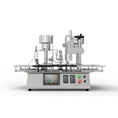
What is the weight of a monoblock machine? This is a question that many potential buyers and industry enthusiasts often ask. As a seasoned supplier of monoblock machines, I'm here to shed light on this topic and provide you with in - depth insights.
Understanding Monoblock Machines
Before delving into the weight aspect, it's crucial to understand what a monoblock machine is. A Monoblock Machine is an all - in - one packaging solution that combines multiple functions such as filling, capping, and labeling into a single unit. This integration not only saves floor space in a production facility but also enhances the efficiency of the packaging process.
Monoblock machines come in various types and sizes, each designed to meet specific production requirements. For example, the Eye Drop Filling Machine is a specialized type of monoblock machine used in the pharmaceutical industry to accurately fill eye drops into containers and then cap them securely. Another common type is the Monoblock Filler, which can handle a wide range of liquid products from beverages to cosmetics.
Factors Affecting the Weight of a Monoblock Machine
The weight of a monoblock machine is influenced by several factors. One of the primary factors is the size of the machine. Larger machines with a higher production capacity generally weigh more. This is because they require more substantial frames, larger filling and capping mechanisms, and more robust conveyor systems to handle a greater volume of products per minute.
The materials used in the construction of the machine also play a significant role. Machines made from high - quality stainless steel, which is commonly used in the food and pharmaceutical industries due to its corrosion - resistance and hygiene properties, tend to be heavier than those made from lighter materials. The choice of components such as motors, pumps, and valves can also add to the overall weight. High - performance motors and precision pumps are often heavier but offer better reliability and performance.
The complexity of the machine's functions is another determinant. A monoblock machine that combines multiple advanced functions like filling, capping, and labeling with high - precision control systems will be heavier than a basic machine with only a filling function. This is because the additional components and control systems needed to perform these functions add extra weight.
Typical Weight Ranges
The weight of monoblock machines can vary widely depending on the factors mentioned above. Small - scale monoblock machines, which are suitable for small - batch production or laboratory use, can weigh anywhere from 200 to 500 kilograms. These machines are often compact and designed for easy installation and operation in limited spaces.
Medium - sized monoblock machines, which are commonly used in medium - scale production facilities, typically weigh between 500 and 1500 kilograms. These machines offer a balance between production capacity and floor - space requirements. They can handle a moderate volume of products per hour and are often used in industries such as cosmetics, food, and beverages.
Large - scale monoblock machines, designed for high - volume production in large manufacturing plants, can weigh over 1500 kilograms, sometimes reaching up to several tons. These machines are built to withstand continuous operation and are equipped with heavy - duty components to ensure long - term reliability and high - speed production.
Importance of Knowing the Weight
Understanding the weight of a monoblock machine is essential for several reasons. Firstly, it helps in the planning of the production facility. The weight of the machine determines the type of floor it can be installed on. Heavy machines require a sturdy floor that can support their weight without causing structural damage. If the floor is not properly reinforced, it can lead to uneven settling of the machine, which may affect its performance and accuracy.
Secondly, the weight affects transportation and installation. Heavier machines require more powerful lifting equipment for installation and may incur higher transportation costs. Knowing the weight in advance allows for proper planning of the logistics, ensuring that the machine can be safely and efficiently transported to the production site and installed without any issues.


Customization and Weight
As a supplier, we understand that different customers have different requirements. We offer customization options for our monoblock machines, which can also affect the weight. For example, if a customer requests additional features such as a more advanced labeling system or a higher - capacity filling mechanism, the weight of the machine will increase accordingly. However, we work closely with our customers to balance their needs with the practical considerations of weight, ensuring that the customized machine meets their production requirements while still being manageable in terms of installation and operation.
Conclusion
In conclusion, the weight of a monoblock machine is a complex characteristic that is influenced by multiple factors such as size, materials, and functions. Knowing the weight is crucial for production facility planning, transportation, and installation. At our company, we strive to provide high - quality monoblock machines that meet the diverse needs of our customers. Whether you are looking for a small - scale machine for a startup or a large - scale machine for a well - established manufacturing plant, we have the expertise and resources to offer you the right solution.
If you are interested in purchasing a monoblock machine or have any questions regarding the weight, functionality, or customization options, please feel free to contact us. Our team of experts is ready to assist you in making the best decision for your production needs.
References
- Industry standards and guidelines for packaging machinery
- Manufacturing and engineering textbooks on machinery design and construction