


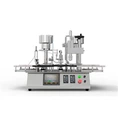
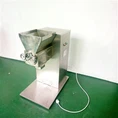
As a trusted supplier of China granulators, I am often asked about the speed range of these essential machines. Granulators play a crucial role in various industries, including pharmaceuticals, food processing, and plastics manufacturing. Understanding the speed range of granulators is vital for optimizing production processes and achieving the desired particle size and quality.
Fundamentals of Granulator Speed
The speed of a granulator refers to the rotational speed of its cutting blades or rotors. This speed is typically measured in revolutions per minute (RPM). The speed range of a granulator can vary significantly depending on several factors, including the type of granulator, the material being processed, and the desired output size.
Types of Granulators and Their Speed Ranges
1. Pharmaceutical Granulators
In the pharmaceutical industry, granulators are used to produce granules for tablets, capsules, and other dosage forms. Pharmaceutical granulators often require precise control over the granulation process to ensure the quality and consistency of the final product.
- High - Shear Granulators: These granulators typically operate at speeds ranging from 300 to 3000 RPM. High - shear granulators use a high - speed impeller to mix and granulate the powder materials. The high speed helps to break down the powder agglomerates and form uniform granules. For example, when producing pharmaceutical tablets, a high - shear granulator operating at around 1500 RPM can effectively mix the active pharmaceutical ingredient (API) with excipients and produce granules of the appropriate size and density.
- Fluid - Bed Granulators: Fluid - bed granulators work by suspending the powder particles in an upward - flowing stream of air and spraying a binder solution onto them. The speed of the air flow and the spray rate are critical factors in the granulation process. The rotational speed of the internal components, such as the agitators in some advanced fluid - bed granulators, can range from 50 to 500 RPM. This relatively lower speed is sufficient to ensure proper mixing and granule formation while maintaining the fluidization of the powder bed.
You can find more information about high - quality pharmaceutical granulators on our Granulators page.
2. Food Granulators
Food granulators are used to process various food materials, such as grains, spices, and sugar. The speed range of food granulators depends on the nature of the food product and the desired granule size.
- Impact Granulators: Impact granulators use high - speed rotating blades or hammers to break down the food materials. These granulators can operate at speeds between 1000 and 6000 RPM. For example, when granulating sugar for confectionery production, an impact granulator operating at a high speed of around 5000 RPM can quickly break the sugar crystals into fine granules.
- Roller Granulators: Roller granulators use two or more rotating rollers to compress and form granules from the food powder. The rotational speed of the rollers is usually in the range of 10 to 100 RPM. This slower speed allows for better control over the granulation process and helps to produce granules with a more uniform shape and size.
3. Plastic Granulators
Plastic granulators are essential for recycling and processing plastic materials. The speed range of plastic granulators is determined by the type of plastic, the size of the input material, and the desired output size.


- Single - Shaft Granulators: Single - shaft granulators typically operate at speeds ranging from 200 to 1500 RPM. These granulators use a single rotating shaft with cutting blades to shred the plastic materials. For example, when recycling small plastic parts, a single - shaft granulator operating at 800 RPM can efficiently reduce the plastic into small granules suitable for further processing.
- Two - Shaft Granulators: Two - shaft granulators have two counter - rotating shafts with intermeshing blades. They are designed to handle larger and more rigid plastic materials. The speed of the two - shaft granulators is generally lower, ranging from 30 to 300 RPM. The slower speed allows for more powerful cutting and reduces the risk of overheating the plastic during the granulation process.
Factors Affecting Granulator Speed
1. Material Properties
The physical and chemical properties of the material being processed have a significant impact on the granulator speed. Hard and brittle materials, such as some plastics and minerals, can be processed at higher speeds because they are more easily broken down. On the other hand, soft and sticky materials, like some food products and certain polymers, require lower speeds to prevent clogging and ensure proper granulation.
2. Desired Output Size
The desired size of the granules also influences the granulator speed. If a finer granule size is required, a higher speed may be necessary to break down the material into smaller particles. Conversely, for larger granules, a lower speed can be used to allow the particles to agglomerate and form larger structures.
3. Machine Design and Capacity
The design and capacity of the granulator also play a role in determining the appropriate speed range. Larger granulators with more powerful motors can generally operate at higher speeds and handle larger volumes of material. The internal configuration of the granulator, such as the number and shape of the cutting blades, also affects the speed at which the material can be processed efficiently.
Importance of Choosing the Right Speed
Selecting the appropriate speed for a granulator is crucial for several reasons:
1. Product Quality
The speed of the granulator directly affects the size, shape, and density of the granules. By choosing the right speed, manufacturers can ensure that the final product meets the required quality standards. For example, in the pharmaceutical industry, improper granulator speed can lead to variations in tablet weight and dissolution rate, which can affect the efficacy of the medication.
2. Production Efficiency
Operating the granulator at the optimal speed can improve production efficiency. A speed that is too low may result in longer processing times and lower throughput, while a speed that is too high can cause excessive wear and tear on the machine and may lead to poor quality granules.
3. Machine Longevity
Running the granulator at the recommended speed range helps to extend the lifespan of the machine. Excessive speed can cause premature wear of the cutting blades, bearings, and other components, leading to increased maintenance costs and downtime.
Complementary Equipment: Industrial Mixers
In many granulation processes, industrial mixers are used in conjunction with granulators to ensure proper mixing of the materials before granulation. Industrial mixers play a vital role in achieving a homogeneous mixture, which is essential for producing high - quality granules.
We offer a wide range of Industrial Mixers and Industrial Mixers that are designed to work seamlessly with our granulators. These mixers are available in different types and sizes to meet the specific needs of various industries.
Contact for Procurement and Consultation
If you are interested in learning more about our China granulators and their speed ranges, or if you have specific requirements for your granulation process, we invite you to contact us. Our team of experts is ready to provide you with detailed information, technical support, and customized solutions. Whether you are a small - scale producer or a large - scale industrial manufacturer, we can help you find the right granulator and mixer for your needs.
References
- Perry, R. H., & Green, D. W. (1997). Perry's Chemical Engineers' Handbook. McGraw - Hill.
- Pharmaceutical Engineering: An Introduction for Chemists and Chemical Engineers. (2006). Wiley - VCH.
- Plastics Recycling Handbook. (2012). Hanser Publishers.