


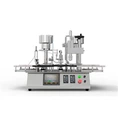
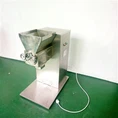
Hey there! As a supplier of granulators, I often get asked about the power rating of a typical granulator. It's a crucial question because the power rating can greatly impact the performance, efficiency, and suitability of a granulator for different applications. So, let's dive right in and explore this topic.
First off, what exactly is a granulator? Well, a granulator is a machine used to break down large pieces of material into smaller, more manageable granules. These machines are widely used in various industries, including pharmaceuticals, food processing, plastics, and recycling. Whether you're turning raw materials into granules for further processing or reducing waste into reusable particles, a granulator can be a valuable asset.
Now, let's talk about power ratings. The power rating of a granulator refers to the amount of electrical power it consumes or the mechanical power it generates to perform its function. It's usually measured in kilowatts (kW) or horsepower (hp). The power rating is determined by several factors, including the size of the granulator, the type of material it's designed to process, and the desired output capacity.
In general, smaller granulators used for laboratory or small-scale production typically have lower power ratings, ranging from around 0.5 kW to 5 kW. These machines are suitable for processing small amounts of material at a relatively slow pace. They're often used in research and development, pilot plants, or small businesses where space and power consumption are limited.
On the other hand, larger industrial granulators designed for high-volume production can have power ratings ranging from 5 kW to over 100 kW. These heavy-duty machines are capable of processing large quantities of material quickly and efficiently. They're commonly used in large manufacturing facilities, recycling plants, and industries that require continuous granulation of bulk materials.
The type of material being processed also plays a significant role in determining the power rating of a granulator. For example, granulating soft and brittle materials like plastics or food products generally requires less power compared to processing hard and tough materials like metals or ceramics. This is because softer materials are easier to break down, requiring less force and energy from the granulator.


Another factor to consider is the output capacity of the granulator. If you need to produce a large amount of granules in a short period of time, you'll likely need a granulator with a higher power rating. A more powerful granulator can handle larger feed sizes and process material at a faster rate, resulting in higher production volumes.
It's important to note that the power rating of a granulator is not the only factor to consider when choosing the right machine for your needs. Other factors such as the granulation method (e.g., cutting, crushing, grinding), the size and shape of the granules produced, the level of automation, and the maintenance requirements also need to be taken into account.
Now, let's take a look at some of the different types of granulators and their typical power ratings:
- Cutting Granulators: These granulators use rotating blades to cut the material into smaller pieces. They're commonly used for granulating plastics, rubber, and other flexible materials. The power rating of cutting granulators can vary depending on the size and capacity of the machine, but typically ranges from 1 kW to 50 kW.
- Crushing Granulators: Crushing granulators use a combination of pressure and impact to break down the material. They're often used for granulating hard and brittle materials like glass, ceramics, and metals. The power rating of crushing granulators can be higher than that of cutting granulators, ranging from 5 kW to over 100 kW.
- Grinding Granulators: Grinding granulators use abrasive surfaces to grind the material into fine particles. They're commonly used for producing fine powders or granules in the pharmaceutical, food, and chemical industries. The power rating of grinding granulators can vary depending on the type of grinding mechanism and the desired fineness of the granules, but typically ranges from 1 kW to 20 kW.
In addition to granulators, we also offer other types of pharmaceutical machinery, such as Pulverizer and Industrial Mixers. These machines can be used in conjunction with granulators to create a complete processing line for your specific application.
If you're in the market for a granulator or any other pharmaceutical machinery, we'd be happy to help you find the right solution for your needs. Our team of experts has years of experience in the industry and can provide you with personalized advice and support. We offer a wide range of granulators with different power ratings, sizes, and features to meet the diverse needs of our customers.
Whether you're a small business looking for a compact and affordable granulator or a large corporation in need of a high-capacity industrial machine, we have the right solution for you. We also offer installation, training, and maintenance services to ensure that your granulator operates smoothly and efficiently.
So, if you're interested in learning more about our granulators or other pharmaceutical machinery, please don't hesitate to contact us. We'd love to hear from you and discuss how we can help you achieve your granulation goals.
References:
- "Industrial Granulation Technology" by Pieter J. M. Janssens
- "Handbook of Pharmaceutical Granulation Technology" by Gillian M. Banker and Christopher T. Rhodes
- "Plastics Recycling: Products and Processes" by Andrew J. East and Stephen M. Salmans