


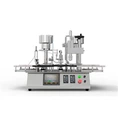
Hey there! I'm a supplier of China vial fillers, and today I wanna chat about something that's on a lot of folks' minds: What is the lifespan of a China vial filler?
Understanding Vial Fillers
First off, let's get a quick handle on what vial fillers are. These machines are super important in industries like pharmaceuticals, cosmetics, and food. They're designed to accurately fill vials with all sorts of liquids, from medications to perfumes.


As a China vial filler supplier, I know that these machines come in different shapes and sizes, with various features and levels of automation. Some are small, table - top models perfect for small - scale production, while others are large, fully automated systems for big - time manufacturing.
Factors Affecting the Lifespan
Now, when it comes to the lifespan of a China vial filler, there are a bunch of factors at play.
1. Build Quality
The quality of materials used in building the vial filler is a huge deal. High - quality components like stainless steel frames, precision - made pumps, and durable sensors are gonna last a long time. Chinese manufacturers, including those I work with, have really stepped up their game in terms of build quality. They use top - notch materials that can withstand the wear and tear of continuous operation.
2. Usage Frequency
How often you use the vial filler matters big time. If it's running 24/7 in a high - volume production facility, it's gonna face more stress compared to a machine that's used just a few hours a week. For example, in a large pharmaceutical plant where thousands of vials need to be filled every day, the vial filler is under constant pressure. On the other hand, a small - batch cosmetics producer might not put as much strain on the machine.
3. Maintenance
Regular maintenance is the key to a long - lasting vial filler. This includes things like cleaning the machine after each use to prevent the buildup of residue, lubricating moving parts, and replacing worn - out components in a timely manner. As a supplier, I always recommend my customers to follow the maintenance schedule provided by the manufacturer.
4. Operating Conditions
The environment in which the vial filler operates also affects its lifespan. If it's in a dusty, humid, or corrosive environment, it can cause damage to the machine's parts. For instance, in a food production facility where there might be a lot of moisture and food particles in the air, the machine needs to be protected properly.
Typical Lifespan
On average, a well - maintained China vial filler can last anywhere from 10 to 20 years. That's a pretty good run, right? Of course, this is just a ballpark figure.
In the first few years, the machine is in its prime. It's running smoothly, and you're not likely to encounter many major issues. But as it gets older, you might start to notice some minor glitches. Maybe a pump isn't working as efficiently as it used to, or a sensor needs to be replaced.
Around the 10 - year mark, some components might need more frequent replacement. However, with proper maintenance, the machine can still keep going strong. By the 15 - 20 - year mark, it might be time to start thinking about upgrading to a newer model, especially if you want to take advantage of the latest technology and features.
Related Machines
When you're looking at vial fillers, you might also be interested in related machines like Capping Machine and Stoppering Machine. These machines work hand - in - hand with vial fillers to complete the packaging process.
A Capping Machine is used to put caps on the filled vials, ensuring a tight seal. It's an essential part of the packaging line, and just like vial fillers, its lifespan depends on factors like build quality, usage, and maintenance.
The Stoppering Machine, on the other hand, is used to insert stoppers into the vials. It needs to be precise and reliable, especially in industries where product integrity is crucial, like pharmaceuticals.
Making the Most of Your Vial Filler
If you're a business owner looking to invest in a China vial filler, here are some tips to make sure you get the most out of it:
- Do Your Research: Before buying, look into different manufacturers and models. Read reviews, talk to other users, and compare features and prices.
- Get Training: Make sure your staff knows how to operate and maintain the machine properly. Many suppliers, including me, offer training programs.
- Plan for Maintenance: Set up a maintenance schedule and stick to it. This will save you a lot of headaches and money in the long run.
Why Choose a China Vial Filler?
There are several reasons why China vial fillers are a great choice. First of all, they offer excellent value for money. Chinese manufacturers are able to produce high - quality machines at a more affordable price compared to some Western counterparts.
Secondly, the technology in Chinese vial fillers has advanced significantly in recent years. They now offer features like high - speed filling, accurate dosing, and easy - to - use control systems.
Finally, as a supplier, I can provide you with great customer service. I'm always here to answer your questions, help with installation, and provide after - sales support.
Let's Talk
If you're interested in learning more about China vial fillers or are thinking about making a purchase, I'd love to chat with you. Whether you have questions about the lifespan, features, or pricing, I'm here to help. Contact me, and we can start a conversation about how a vial filler can meet your business needs.
References
- General knowledge about vial filler technology and manufacturing from industry experience.
- Discussions with manufacturers and users of vial fillers in the pharmaceutical, cosmetics, and food industries.