


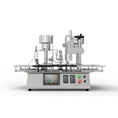
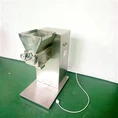
Hey there! As a supplier of mixing machines, I often get asked about the function of the agitator in these machines. So, I thought I'd take a few minutes to break it down for you.
What's an Agitator Anyway?
First off, let's talk about what an agitator is. In a mixing machine, the agitator is like the heart of the operation. It's the part that does the actual mixing. It's usually a mechanical device, often a shaft with blades or paddles attached, and it rotates inside the mixing chamber.
The Main Functions of an Agitator
1. Homogeneous Mixing
The primary function of an agitator is to create a homogeneous mixture. Whether you're mixing powders, liquids, or a combination of both, the goal is to make sure that every part of the mixture has the same composition. For example, in the pharmaceutical industry, when making tablets, you need to mix different active ingredients and excipients evenly. If the mixing isn't uniform, some tablets might have too much of one ingredient and too little of another, which can affect the effectiveness and safety of the medication. The agitator helps to break up clumps and distribute all the components evenly throughout the mixture.


2. Heat Transfer
Another important function is heat transfer. In some mixing processes, you might need to heat or cool the mixture. The agitator helps to move the material around, ensuring that the heat or cold is evenly distributed. For instance, in a chemical reaction that requires heating, the agitator keeps the reactants in contact with the heated walls of the mixing chamber, promoting a more efficient reaction. This can speed up the process and improve the quality of the final product.
3. Suspension of Solids
When you're mixing a liquid with solid particles, the agitator helps to keep the solids suspended. Without the agitator, the solids would eventually settle to the bottom of the container. This is crucial in industries like food and beverage, where you want to maintain a consistent texture in products like salad dressings or milkshakes. The agitator creates a flow pattern that keeps the solid particles in motion, preventing them from sinking and ensuring a uniform product.
4. Gas Dispersion
In some mixing applications, you might need to introduce a gas into the mixture. For example, in the fermentation process in the brewing industry, oxygen needs to be dispersed into the liquid to support the growth of yeast. The agitator helps to break up the gas into small bubbles and distribute them evenly throughout the liquid. This increases the surface area of the gas-liquid interface, promoting better mass transfer and more efficient reactions.
Types of Agitators and Their Functions
There are different types of agitators, and each has its own unique functions.
1. Propeller Agitators
Propeller agitators are commonly used for low-viscosity liquids. They are designed to create a high-velocity flow in the liquid, which helps with rapid mixing and heat transfer. The propeller rotates at a high speed, creating a strong axial flow that moves the liquid from the top to the bottom of the mixing chamber and back again. This type of agitator is often used in applications where a large volume of liquid needs to be mixed quickly, such as in water treatment plants.
2. Paddle Agitators
Paddle agitators are suitable for medium-viscosity liquids and pastes. They have large, flat paddles that rotate slowly, creating a gentle mixing action. The paddles help to scrape the walls of the mixing chamber, preventing the material from sticking and ensuring that all parts of the mixture are well-mixed. Paddle agitators are commonly used in the food industry for mixing doughs, batters, and sauces.
3. Turbine Agitators
Turbine agitators are used for high-viscosity liquids and suspensions. They have multiple blades that create a radial flow pattern, which is effective for breaking up clumps and distributing solids evenly. Turbine agitators are often used in the chemical industry for mixing polymers, paints, and adhesives.
Why the Agitator Matters for Your Business
As a mixing machine supplier, I know how important the agitator is for your business. A well-designed agitator can improve the quality of your products, increase production efficiency, and reduce costs. For example, if you're using a mixing machine in a manufacturing process, a good agitator can ensure that your products meet the required specifications every time. This can lead to fewer rejects and higher customer satisfaction.
If you're in the market for a mixing machine, it's essential to choose one with the right agitator for your specific application. That's where we come in. We offer a wide range of mixing machines with different types of agitators to suit your needs. Whether you're looking for a Pulverizer for grinding materials before mixing, Mixing Equipment for blending different components, or Granulators for creating granules after mixing, we've got you covered.
How to Choose the Right Agitator
When choosing an agitator for your mixing machine, there are several factors to consider.
1. Viscosity of the Material
The viscosity of the material you're mixing is one of the most important factors. As I mentioned earlier, different types of agitators are suitable for different viscosities. For low-viscosity liquids, a propeller agitator might be the best choice, while for high-viscosity liquids, a turbine agitator would be more appropriate.
2. Mixing Objectives
Your mixing objectives also play a crucial role in choosing the right agitator. If your goal is to achieve a homogeneous mixture quickly, you might need an agitator with a high mixing intensity. On the other hand, if you're dealing with delicate materials that require a gentle mixing action, a paddle agitator might be a better option.
3. Size and Shape of the Mixing Chamber
The size and shape of the mixing chamber can also affect the choice of agitator. A larger mixing chamber might require a more powerful agitator to ensure that all parts of the mixture are well-mixed. The shape of the chamber can also influence the flow pattern created by the agitator, so it's important to choose an agitator that is compatible with the chamber design.
Conclusion
In conclusion, the agitator is a vital component of a mixing machine. It plays a crucial role in achieving a homogeneous mixture, transferring heat, suspending solids, and dispersing gases. As a mixing machine supplier, we understand the importance of having the right agitator for your specific application. If you're interested in learning more about our mixing machines or need help choosing the right agitator for your business, don't hesitate to reach out. We're here to help you find the perfect solution for your mixing needs. Let's start a conversation and see how we can work together to improve your production process.
References
- Perry, R. H., & Green, D. W. (1997). Perry's Chemical Engineers' Handbook. McGraw-Hill.
- Walas, S. M. (1990). Chemical Process Equipment: Selection and Design. Butterworth-Heinemann.