


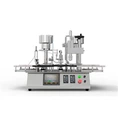
As a trusted labeling machine supplier, I've witnessed firsthand the growing concerns about label waste in the packaging industry. In today's environmentally conscious world, efficient waste management is not just a trend; it's a necessity. This blog will delve into how our labeling machines handle label waste, exploring the technologies, strategies, and best practices that minimize waste and enhance sustainability.
Understanding Label Waste
Before we discuss how our labeling machines tackle label waste, it's essential to understand what causes it. Label waste can occur due to various reasons, including misaligned labels, defective labels, incorrect settings, and production line disruptions. Even small inefficiencies in the labeling process can lead to significant waste over time, impacting both the environment and the bottom line.
Advanced Detection Systems
One of the key features of our labeling machines is their advanced detection systems. These systems are designed to identify and reject defective labels before they are applied to products. For example, optical sensors can detect labels with incorrect colors, missing print, or damaged edges. If a defective label is detected, the machine automatically diverts it to a waste bin, preventing it from being applied to a product. This not only reduces label waste but also ensures the quality and consistency of the labeled products.


Precise Label Placement
Another factor that contributes to label waste is misaligned labels. Our labeling machines are equipped with precision engineering and state-of-the-art controls to ensure accurate label placement. High-resolution cameras and sensors monitor the label application process in real-time, making adjustments as needed to ensure that each label is applied perfectly centered and straight. By minimizing misaligned labels, we significantly reduce the amount of wasted labels and improve the overall appearance of the labeled products.
Adjustable Settings
Flexibility is crucial when it comes to minimizing label waste. Our labeling machines offer a wide range of adjustable settings, allowing operators to customize the labeling process based on the specific requirements of each product. For example, operators can adjust the label speed, pressure, and position to optimize the labeling process and reduce waste. Additionally, our machines can be programmed to handle different label sizes and shapes, further increasing their versatility and efficiency.
Waste Reduction Strategies
In addition to the advanced technologies built into our labeling machines, we also offer a range of waste reduction strategies to help our customers minimize label waste. These strategies include:
- Label Design Optimization: Our team of experts can work with customers to optimize the design of their labels to reduce waste. This may involve adjusting the label size, shape, or layout to minimize the amount of material used.
- Production Planning: By carefully planning production runs and scheduling label orders, customers can reduce the amount of excess label inventory and minimize the risk of obsolete labels.
- Recycling Programs: We encourage our customers to implement recycling programs for their label waste. Our labeling machines can be configured to separate the backing paper from the labels, making it easier to recycle both materials.
Integration with Other Packaging Equipment
Our labeling machines are designed to integrate seamlessly with other packaging equipment, such as Blister Packaging Machine and Blister Packing Machine. By integrating our labeling machines with other packaging equipment, customers can create a more efficient and streamlined packaging process, reducing the overall amount of waste generated.
Case Studies
To illustrate the effectiveness of our labeling machines in handling label waste, let's take a look at a few case studies.
- Case Study 1: Food Manufacturer A food manufacturer was experiencing high levels of label waste due to misaligned labels and defective labels. After implementing our labeling machine with advanced detection systems and precise label placement technology, the manufacturer was able to reduce label waste by over 50%. This not only saved the company money on label costs but also improved the quality and consistency of their labeled products.
- Case Study 2: Pharmaceutical Company A pharmaceutical company was looking for a way to reduce label waste and improve the efficiency of their labeling process. By integrating our labeling machine with their existing packaging line and implementing our waste reduction strategies, the company was able to reduce label waste by over 30% and increase their production output by 20%.
Conclusion
In conclusion, our labeling machines are designed to handle label waste efficiently and effectively. With advanced detection systems, precise label placement technology, adjustable settings, and waste reduction strategies, our machines help our customers minimize label waste, improve the quality of their labeled products, and enhance their sustainability efforts. If you're interested in learning more about our Labeling Machine and how it can help you reduce label waste, please don't hesitate to contact us. We'd be happy to discuss your specific requirements and provide you with a customized solution.
References
- Packaging Machinery Manufacturers Institute (PMMI). (2023). Best Practices for Reducing Label Waste in Packaging.
- Smith, J. (2022). The Impact of Labeling Machine Technology on Label Waste Reduction. Journal of Packaging Technology, 45(2), 78-85.
- Johnson, A. (2021). Sustainable Labeling Solutions for the Packaging Industry. Packaging World, 38(6), 42-47.