


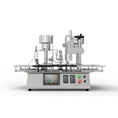
What is the filling efficiency of a rotary vial filler?
In the pharmaceutical, cosmetic, and other industries where precise liquid filling into vials is crucial, the rotary vial filler plays a vital role. As a vial filler supplier, I often encounter questions from customers about the filling efficiency of our rotary vial fillers. In this blog post, I will delve into what filling efficiency means, the factors that affect it, and how our products can optimize this important parameter.
Understanding Filling Efficiency
Filling efficiency can be defined as the ratio of the actual amount of liquid filled into the vials to the theoretical amount that should be filled, expressed as a percentage. A high - filling efficiency indicates that the vial filler is accurately dispensing the desired volume of liquid into each vial, minimizing waste and ensuring product consistency.
For example, if the theoretical volume to be filled into a vial is 10 ml, and on average, the vial filler dispenses 9.8 ml, the filling efficiency is (9.8 / 10) * 100 = 98%.


Factors Affecting Filling Efficiency
1. Machine Design and Precision
The design of the rotary vial filler is a fundamental factor. A well - engineered machine with high - precision components can ensure accurate filling. Our rotary vial fillers are designed with advanced technology, such as precision pumps and nozzles. The pumps are calibrated to deliver a consistent flow rate, and the nozzles are designed to minimize splashing and dripping, which can lead to inaccurate filling. For instance, our state - of - the - art peristaltic pumps can provide a highly accurate and repeatable flow, contributing to a high filling efficiency.
2. Vial Characteristics
The size, shape, and quality of the vials also impact filling efficiency. Irregularly shaped vials or vials with inconsistent internal diameters can make it difficult for the filler to dispense the correct volume. Our rotary vial fillers are equipped with adjustable mechanisms that can accommodate a wide range of vial sizes and shapes. We also recommend using high - quality vials with uniform dimensions to ensure optimal filling performance.
3. Liquid Properties
The viscosity, density, and surface tension of the liquid being filled are important considerations. High - viscosity liquids, such as syrups or creams, may require a different filling mechanism compared to low - viscosity liquids like water or alcohol. Our rotary vial fillers can be customized with different types of pumps and nozzles to handle various liquid properties. For high - viscosity liquids, we may use piston pumps that can generate enough pressure to push the liquid through the nozzles accurately.
4. Operating Speed
The speed at which the rotary vial filler operates can affect filling efficiency. While higher speeds can increase production output, they may also lead to a decrease in filling accuracy if the machine is not properly calibrated. Our machines are designed to maintain high filling efficiency even at high operating speeds. Through advanced control systems, we can adjust the filling parameters in real - time to ensure accurate filling regardless of the production speed.
Measuring and Improving Filling Efficiency
To measure the filling efficiency of our rotary vial fillers, we conduct regular quality control checks. We randomly select a sample of filled vials and measure the actual volume of liquid in each vial using calibrated measuring devices. By comparing the actual volumes with the target volumes, we can calculate the filling efficiency.
To improve filling efficiency, we continuously invest in research and development. We are constantly looking for ways to enhance the design of our machines, improve the precision of our components, and develop new technologies. For example, we are exploring the use of advanced sensors that can detect any deviations in the filling process and make automatic adjustments.
The Role of Complementary Machines
In a complete vial filling line, the rotary vial filler works in conjunction with other machines such as the Stoppering Machine and the Capping Machine. The efficiency of these complementary machines can also impact the overall performance of the filling line. A well - coordinated system ensures that the vials are filled, stoppered, and capped smoothly, without any delays or errors. Our Vial Filler is designed to integrate seamlessly with our stoppering and capping machines, providing a comprehensive solution for vial filling and packaging.
Conclusion
The filling efficiency of a rotary vial filler is a critical parameter that affects product quality, production output, and cost. As a vial filler supplier, we are committed to providing our customers with high - performance machines that offer excellent filling efficiency. Our rotary vial fillers are designed to overcome the challenges posed by various factors such as machine design, vial characteristics, liquid properties, and operating speed.
If you are in the market for a reliable and efficient vial filling solution, we invite you to contact us for a detailed discussion. Our team of experts can assess your specific requirements and recommend the most suitable machine for your production needs. Whether you are a small - scale manufacturer or a large - scale pharmaceutical company, we have the expertise and products to meet your expectations.
References
- Pharmaceutical Filling Technology Handbook, 3rd Edition.
- Journal of Pharmaceutical Sciences and Technology, various issues on vial filling technology.
- Cosmetic Packaging and Filling Industry Reports, highlighting the importance of filling efficiency.