


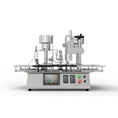
Hey there! I'm a supplier of ampoule sealers, and today I'm gonna break down how these nifty machines work. If you're in the market for an ampoule sealer, stick around, 'cause by the end of this post, you'll have a solid understanding of what goes on inside these devices.
The Basics of Ampoule Sealers
First things first, let's talk about what an ampoule sealer is. An ampoule is a small, sealed vial, usually made of glass, that's used to store things like medicines, vaccines, or other sensitive substances. An Ampoule Sealer is a machine designed to seal these ampoules securely, protecting the contents from contamination and ensuring their integrity.
The Components of an Ampoule Sealer
An ampoule sealer has several key components that work together to get the job done. Let's take a look at each one:
Heating Element
The heating element is the heart of the ampoule sealer. It's responsible for heating the neck of the ampoule to a temperature where the glass becomes soft and malleable. This is crucial because it allows the glass to be sealed properly. Different types of heating elements can be used, such as gas burners or electric heating coils. Gas burners are often preferred for their high heat output and quick heating times, while electric heating coils are more precise and easier to control.
Sealing Head
Once the glass is heated, the sealing head comes into play. The sealing head is designed to shape the softened glass and create a tight seal. It can be made of various materials, like metal or ceramic, and is usually shaped to fit the neck of the ampoule. The sealing head applies pressure to the heated glass, pinching it together to form a seal. Some sealing heads are designed to rotate, which helps to create a more even and consistent seal.
Conveyor System
In larger-scale operations, a conveyor system is used to move the ampoules through the sealing process. The conveyor system ensures that the ampoules are properly aligned and positioned under the heating element and sealing head. It also helps to increase the efficiency of the sealing process by allowing multiple ampoules to be sealed at the same time.
Control Panel
The control panel is where the operator can adjust the settings of the ampoule sealer. This includes things like the temperature of the heating element, the pressure applied by the sealing head, and the speed of the conveyor system. The control panel also provides feedback on the status of the machine, such as error messages or temperature readings.
The Sealing Process
Now that we know the components of an ampoule sealer, let's walk through the sealing process step by step:
Loading the Ampoules
The first step is to load the ampoules onto the conveyor system or into the holding mechanism of the sealer. The ampoules should be filled with the desired substance before they are loaded into the machine.
Heating the Ampoule Neck
Once the ampoules are in place, the heating element is activated. The heating element heats the neck of the ampoule to a specific temperature, usually around 700 - 900 degrees Celsius. This temperature is high enough to soften the glass but not so high that it causes the glass to melt or break.
Sealing the Ampoule
After the glass is heated, the sealing head moves into position and applies pressure to the softened glass. The pressure pinches the glass together, creating a seal. The sealing head may rotate or move in a specific pattern to ensure that the seal is even and consistent.
Cooling the Sealed Ampoule
Once the seal is formed, the ampoule needs to be cooled down quickly to set the seal. This can be done using a cooling system, such as a fan or a water bath. Cooling the ampoule rapidly helps to prevent the glass from cracking or breaking due to thermal stress.
Quality Control
After the ampoules are sealed and cooled, they go through a quality control process. This may include visual inspection to check for any defects in the seal, such as cracks or leaks. Some ampoule sealers also have built-in sensors that can detect leaks or other issues automatically.
Types of Ampoule Sealers
There are several types of ampoule sealers available on the market, each with its own advantages and disadvantages. Let's take a look at some of the most common types:
Manual Ampoule Sealers
Manual ampoule sealers are the simplest and most basic type of sealer. They are typically used for small-scale operations or for sealing a small number of ampoules. Manual ampoules sealers require the operator to manually load the ampoules, heat the glass, and apply the seal. While they are less expensive and easier to operate, they are also less efficient and may not provide as consistent of a seal as automated sealers.
Semi-Automatic Ampoule Sealers
Semi-automatic ampoule sealers are a step up from manual sealers. They have some automated features, such as a conveyor system or a programmable control panel, but still require some manual intervention. For example, the operator may need to load the ampoules onto the conveyor system or adjust the settings of the sealer. Semi-automatic ampoules sealers are more efficient than manual sealers and can provide a more consistent seal.
Fully Automatic Ampoule Sealers
Fully automatic ampoule sealers are the most advanced and efficient type of sealer. They are designed for large-scale operations and can seal hundreds or even thousands of ampoules per hour. Fully automatic ampoules sealers are fully automated, meaning that they can load the ampoules, heat the glass, apply the seal, and perform quality control checks without any manual intervention. While they are more expensive and require more maintenance, they offer the highest level of efficiency and consistency.
Why Choose Our Ampoule Sealers
As a supplier of ampoule sealers, we take pride in offering high-quality machines that are reliable, efficient, and easy to use. Here are some reasons why you should choose our ampoule sealers:
Quality and Durability
Our ampoule sealers are built to last. We use only the highest quality materials and components in our machines, ensuring that they can withstand the rigors of daily use. Our machines are also backed by a comprehensive warranty, giving you peace of mind knowing that you're making a smart investment.


Customization Options
We understand that every customer has different needs and requirements. That's why we offer a range of customization options for our ampoule sealers. Whether you need a specific type of heating element, a custom sealing head, or a conveyor system that can handle a particular size or shape of ampoule, we can work with you to create a solution that meets your needs.
Technical Support and Training
We don't just sell you a machine and walk away. We offer comprehensive technical support and training to ensure that you get the most out of your ampoule sealer. Our team of experts is available to answer any questions you may have and to provide assistance with installation, maintenance, and troubleshooting. We also offer on-site training to help you and your staff learn how to operate the machine safely and efficiently.
Conclusion
So, there you have it! That's how an ampoule sealer works. Whether you're a small pharmaceutical company or a large-scale manufacturer, an ampoule sealer is an essential piece of equipment for ensuring the quality and integrity of your products. If you're in the market for an ampoule sealer, we encourage you to check out our Ampoule Sealing Machine and Ampoule Machine options. We're confident that we can provide you with a high-quality, reliable, and efficient ampoule sealer that meets your needs.
If you have any questions or would like to discuss your specific requirements, please don't hesitate to reach out. We're here to help you find the perfect solution for your business.
References
- Pharmaceutical Packaging Technology Handbook, edited by Wilfried A. Jenke
- Glass Packaging: Science and Technology, by John C. Mauro and others