


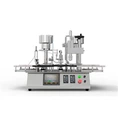
Hey there! As a supplier of capsule filler machines, I often get asked about the feeding system of a capsule filler. It's a crucial part of the whole operation, so I thought I'd break it down for you in this blog post.
First off, let's talk about what a capsule filler is. A Capsule Filler Machine is a device used to fill empty capsules with various substances, such as powders, granules, or pellets. It's widely used in the pharmaceutical, nutraceutical, and cosmetic industries.
The feeding system of a capsule filler is responsible for delivering the filling material to the capsules. There are different types of feeding systems, and the choice depends on the nature of the filling material and the production requirements.
Gravity Feeding System
One of the most common types is the gravity feeding system. This is a simple and cost - effective option. In a gravity feeding system, the filling material is stored in a hopper. Due to the force of gravity, the material flows down through a feed tube or chute into the dosing device of the capsule filler.
The advantage of the gravity feeding system is its simplicity. There are fewer moving parts, which means less maintenance and a lower chance of mechanical failure. It works well for free - flowing powders and granules. For example, if you're filling capsules with a fine, dry powder like a simple vitamin powder, a gravity feeding system can do the job efficiently.
However, it also has its limitations. If the filling material is sticky or has poor flow properties, it may not flow smoothly through the system. This can lead to inconsistent dosing and blockages in the feed tube. In such cases, additional measures like agitators or vibrators may be needed to help the material flow.
Auger Feeding System
Another popular type is the auger feeding system. An auger is a screw - like device that rotates inside a tube. The filling material is placed in a hopper above the auger. As the auger rotates, it moves the material along the tube and into the dosing chamber of the capsule filler.
The auger feeding system offers better control over the dosing process. By adjusting the speed of the auger rotation, you can accurately control the amount of material being fed into the capsules. This makes it suitable for a wider range of filling materials, including those with poor flow properties. For instance, if you're filling capsules with a semi - solid or a powder that tends to clump, an auger feeding system can handle it more effectively.
But it's a bit more complex than the gravity feeding system. There are more moving parts, which means more maintenance is required. The auger needs to be cleaned regularly to prevent cross - contamination between different batches of filling materials. Also, the auger can wear out over time, and replacement parts may be needed.
Piston Feeding System
The piston feeding system is commonly used for filling capsules with liquids or semi - solids. In this system, a piston moves back and forth inside a cylinder. The filling material is drawn into the cylinder when the piston retracts, and then it's pushed out into the capsules when the piston moves forward.
This system provides very accurate dosing, especially for liquids. It can handle a wide range of viscosities, from thin liquids like herbal extracts to thick pastes. For example, if you're filling capsules with a liquid dietary supplement or a thick cosmetic cream, a piston feeding system is a great choice.
However, like the auger feeding system, it's relatively complex. The pistons and cylinders need to be made of high - quality materials to prevent corrosion and ensure a long service life. Cleaning and sterilization are also crucial to maintain product quality, especially in the pharmaceutical industry.
Vacuum Feeding System
A vacuum feeding system is often used in combination with other feeding systems. It uses vacuum pressure to transfer the filling material from a storage container to the hopper of the capsule filler.
The main advantage of the vacuum feeding system is that it can handle materials in a closed environment. This is important for materials that are sensitive to air, moisture, or dust. For example, some pharmaceutical powders need to be protected from environmental contaminants during the filling process. A vacuum feeding system can help achieve this by creating a sealed transfer path.
It also allows for a more efficient transfer of materials over longer distances. You can place the storage container further away from the capsule filler and still have a smooth and reliable feeding process.
Now, let's talk about how these feeding systems interact with the rest of the Capsule Filling Machine. Once the filling material is delivered to the dosing device, the machine separates the capsule shells into two parts (the cap and the body). The dosing device then fills the capsule bodies with the correct amount of material, and finally, the caps are placed back on the bodies to seal the capsules.
After the capsules are filled, you may also need a Capsule Counter to count and package the finished capsules. A capsule counter can accurately count the number of capsules produced, which is important for quality control and packaging purposes.
In conclusion, choosing the right feeding system for your capsule filler depends on several factors. You need to consider the nature of the filling material, the required dosing accuracy, the production volume, and your budget. If you're new to the capsule filling business or looking to upgrade your existing equipment, it's important to do your research and consult with experts.


As a supplier of capsule fillers, we have a wide range of machines with different feeding systems to meet your specific needs. Whether you're a small - scale producer or a large - scale manufacturer, we can provide you with the right solution.
If you're interested in learning more about our capsule fillers or have any questions about the feeding systems, feel free to reach out. We're here to help you make the best choice for your business and ensure that your capsule filling process runs smoothly and efficiently.
References
- Pharmaceutical Manufacturing Handbook: Capsule Filling Technology
- Nutraceuticals Production and Quality Control Guide