


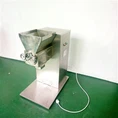
Hey there! As a supplier of ampoule fillers, I often get asked about the capacity of these machines. It's a crucial question because the capacity determines how much product you can fill into ampoules within a given time frame, which directly impacts your production efficiency and bottom line. So, let's dive right in and explore what the capacity of an ampoule filler really means.
Understanding Ampoule Filler Capacity
The capacity of an ampoule filler is typically measured in terms of the number of ampoules it can fill per minute (or per hour, depending on the scale of production). This number can vary widely based on several factors, including the type of ampoule filler, the size and shape of the ampoules, the viscosity of the product being filled, and the level of automation.
Types of Ampoule Fillers
There are different types of ampoule fillers available in the market, each with its own capacity range. Manual ampoule fillers are usually the most basic and have a relatively low capacity. They are suitable for small-scale production or for laboratories where only a few ampoules need to be filled at a time. These manual fillers might be able to fill around 10 - 20 ampoules per minute.
Semi - automatic ampoule fillers offer a step up in terms of capacity. They combine some automated functions with manual intervention. For example, the filling process might be automated, but the operator still needs to load and unload the ampoules. Semi - automatic fillers can typically fill between 30 - 60 ampoules per minute, depending on the operator's speed and the complexity of the filling task.
Fully automatic ampoule fillers are the workhorses of large - scale production. These machines can handle high - volume filling operations with minimal human intervention. They are designed to perform multiple tasks such as ampoule feeding, filling, and sometimes even sealing in a continuous and efficient manner. The capacity of fully automatic ampoule fillers can range from 60 ampoules per minute up to several hundred, depending on the specific model and configuration.
Ampoule Size and Shape
The size and shape of the ampoules also play a significant role in determining the filler's capacity. Smaller ampoules generally take less time to fill compared to larger ones. For instance, a machine filling 1 ml ampoules might be able to achieve a higher filling rate than the same machine filling 10 ml ampoules.
Irregularly shaped ampoules can also slow down the filling process. Machines need to be carefully calibrated to ensure accurate filling in non - standard shapes, which can reduce the overall filling speed. So, if you're using unique or custom - shaped ampoules, you might expect a lower capacity from your ampoule filler.
Product Viscosity
The viscosity of the product being filled is another important factor. Viscosity refers to the thickness or resistance to flow of a liquid. Low - viscosity products, like water or thin solutions, flow easily and can be filled quickly. As a result, ampoule fillers can achieve a higher capacity when filling low - viscosity products.
On the other hand, high - viscosity products, such as creams, gels, or thick syrups, flow more slowly. Filling these products requires more time and precision to ensure accurate dosing. This means that the capacity of the ampoule filler will be lower when dealing with high - viscosity substances.
Level of Automation
As mentioned earlier, the level of automation has a direct impact on capacity. Automated features such as automatic ampoule feeding, precise filling control, and rapid sealing can significantly increase the number of ampoules filled per minute. For example, a fully automated line with advanced sensors and control systems can adjust the filling process in real - time, optimizing the speed and accuracy of filling.
Factors Affecting Capacity in Real - World Scenarios
In real - world production environments, there are other factors that can affect the actual capacity of an ampoule filler. Maintenance and downtime are crucial considerations. Regular maintenance is necessary to keep the machine running smoothly, but it also means that the machine is not in production during the maintenance period.
Operator training is also important. A well - trained operator can ensure that the machine is used efficiently, minimizing errors and maximizing the filling speed. On the other hand, an inexperienced operator might make mistakes that slow down the production process.
Quality control checks are another factor. During production, it's essential to perform regular quality control checks to ensure that the filled ampoules meet the required standards. These checks can take time and reduce the overall capacity of the machine, but they are necessary to maintain product quality.


Our Ampoule Filler Offerings
At our company, we offer a wide range of ampoule fillers to meet different production needs. Our Ampoule Machine is a versatile option that can be customized for various ampoule sizes and product viscosities. Whether you need a small - scale manual filler or a high - capacity fully automatic system, we've got you covered.
Our Ampoule Filling Machine is designed with precision and efficiency in mind. It uses advanced technology to ensure accurate filling, even for high - viscosity products. And if you're looking for a complete solution that includes sealing, our Ampoule Sealing Machine can be integrated seamlessly with the filling machine to provide a fully automated production line.
How to Choose the Right Capacity
When choosing an ampoule filler, it's important to consider your current production requirements as well as your future growth plans. If you're just starting out with small - scale production, a manual or semi - automatic filler might be sufficient. But if you expect to expand your production volume in the future, it might be worth investing in a more high - capacity fully automatic machine right from the start.
You should also think about the types of products you'll be filling and the ampoule sizes you'll be using. This will help you determine the most suitable machine for your specific needs.
Conclusion
In conclusion, the capacity of an ampoule filler is influenced by many factors, including the type of machine, ampoule size and shape, product viscosity, and level of automation. Understanding these factors is crucial for choosing the right ampoule filler for your production needs.
If you're in the market for an ampoule filler and want to learn more about our products, we'd love to hear from you. Contact us to discuss your requirements and let's find the perfect solution for your production line. Whether you're a small laboratory or a large - scale pharmaceutical manufacturer, we have the expertise and the products to help you achieve your production goals.
References
- Pharmaceutical Manufacturing Handbook: Production and Processes. Edited by S. C. Gad.
- Handbook of Industrial and Systems Engineering. Edited by Gavriel Salvendy.