


What is the Capacity of a Typical Monoblock Filler?
As a supplier of monoblock fillers, I often get asked about the capacity of these machines. Understanding the capacity of a typical monoblock filler is crucial for businesses looking to optimize their production processes. In this blog post, I will delve into the factors that influence the capacity of a monoblock filler and provide insights into what you can expect from these versatile machines.
Understanding Monoblock Fillers
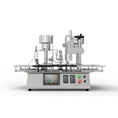
Before we discuss capacity, let's briefly review what a monoblock filler is. A Monoblock Filler is an all - in - one packaging machine that combines multiple functions such as cleaning, filling, and capping into a single unit. This integration streamlines the packaging process, reduces floor space requirements, and improves overall efficiency. Monoblock fillers are used in a wide range of industries, including food and beverage, pharmaceuticals, cosmetics, and household products.
Factors Affecting the Capacity of a Monoblock Filler
-
Machine Design and Configuration
The design of the monoblock filler plays a significant role in determining its capacity. Machines with more filling heads can fill multiple containers simultaneously, thereby increasing the overall output. For example, a monoblock filler with eight filling heads will generally have a higher capacity than one with four filling heads. Additionally, the speed at which the machine can transfer containers between different stations (cleaning, filling, capping) also affects capacity. Well - designed machines with efficient transfer systems can achieve higher production rates. -
Container Size and Shape
The size and shape of the containers being filled have a direct impact on the capacity of the monoblock filler. Larger containers require more time to fill, which can reduce the number of containers that can be filled per unit of time. Irregularly shaped containers may also pose challenges for the filling and capping processes, potentially slowing down the machine. For instance, filling a large - volume bottle will take longer than filling a small vial, and a square - shaped container might be more difficult to handle than a round one. -
Product Viscosity
The viscosity of the product being filled is another important factor. High - viscosity products, such as creams, gels, and thick syrups, flow more slowly than low - viscosity products like water or thin juices. As a result, filling high - viscosity products requires more time per container, reducing the overall capacity of the monoblock filler. Specialized filling nozzles and pumping systems may be needed to handle high - viscosity products efficiently. -
Operator Skill and Experience
The skill and experience of the machine operator can also influence the capacity of the monoblock filler. An experienced operator can optimize the machine settings, troubleshoot problems quickly, and ensure smooth operation. On the other hand, an inexperienced operator may make mistakes that lead to downtime or reduced production rates. Proper training and ongoing support are essential to ensure that operators can maximize the capacity of the monoblock filler.
Typical Capacity Ranges
The capacity of a typical monoblock filler can vary widely depending on the factors mentioned above. In general, for small - scale production, a monoblock filler might have a capacity of around 20 - 50 containers per minute. These machines are often used by small businesses or for filling specialty products.
For medium - scale production, the capacity can range from 50 - 200 containers per minute. These machines are suitable for a wide range of industries and can handle a variety of container sizes and products.
In large - scale industrial production, high - speed monoblock fillers can achieve capacities of 200 - 600 containers per minute or even higher. These machines are typically used by large manufacturers with high - volume production requirements.
Meeting Specific Capacity Requirements
At our company, we understand that every business has unique capacity requirements. That's why we offer a wide range of monoblock fillers with different configurations and capacities. Whether you are a small startup looking for a compact and affordable solution or a large corporation in need of a high - speed production line, we have the right machine for you.
We also provide customization services to ensure that our monoblock fillers can meet your specific needs. For example, if you need to fill a particular type of container or product, we can design and build a machine with the appropriate filling heads, nozzles, and transfer systems. Our team of engineers and technicians will work closely with you to understand your requirements and develop a solution that maximizes your production capacity.
Specialized Monoblock Fillers
In addition to standard monoblock fillers, we also offer specialized machines for specific applications. For example, our Eye Drop Filling Machine is designed to fill eye drops accurately and efficiently. These machines are equipped with precise filling systems to ensure the correct dosage of each drop, and they can handle small - volume containers with high precision.
We also have Monoblock Machine options that are suitable for other specialized applications, such as filling pharmaceuticals, cosmetics, and food products. These machines are designed to meet the strict quality and safety standards of these industries.
Conclusion
The capacity of a typical monoblock filler depends on several factors, including machine design, container size and shape, product viscosity, and operator skill. By understanding these factors, businesses can make informed decisions when choosing a monoblock filler for their production needs.
At our company, we are committed to providing high - quality monoblock fillers with a wide range of capacities. Whether you need a small - scale machine for a niche product or a large - scale production line for high - volume manufacturing, we have the expertise and resources to help you achieve your goals.


If you are interested in learning more about our monoblock fillers or would like to discuss your specific capacity requirements, please feel free to contact us. Our sales team will be happy to provide you with detailed information and assist you in finding the right solution for your business.
References
- Packaging Machinery Manufacturers Institute (PMMI). "Packaging Machinery Technology and Trends."
- Handbook of Packaging Technology. Second Edition. Edited by Wilmer A. Jenkins and James P. Harrington.