


Hey there! As a supplier of monoblock fillers, I often get asked about the automation level of these machines. So, I thought I'd write a blog post to shed some light on this topic.

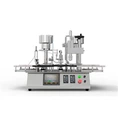
First off, let's talk about what a monoblock filler is. A Monoblock Filler is a type of packaging machine that combines multiple functions into a single unit. These functions typically include filling, capping, and sometimes labeling. It's a great solution for businesses that want to streamline their packaging process and increase efficiency.
Now, when it comes to the automation level of a monoblock filler, it can vary quite a bit. There are three main levels of automation: manual, semi - automatic, and fully automatic.
Manual Monoblock Fillers
Manual monoblock fillers are the most basic type. They require a fair amount of human intervention. For example, an operator has to place the containers on the filling platform one by one. They also need to start and stop the filling process manually. After filling, the operator has to take the filled containers off the machine and then place them under the capping mechanism. This type of machine is suitable for small - scale production or for products that have low production volumes. It's also a good option for businesses that are just starting out and have a limited budget. The advantage of a manual monoblock filler is its low cost. However, the downside is that it's labor - intensive and the production speed is relatively slow.

Semi - Automatic Monoblock Fillers
Semi - automatic monoblock fillers offer a step up in terms of automation. With a semi - automatic machine, some of the processes are automated, while others still require human input. For instance, the filling process might be automated. The machine can measure and dispense the correct amount of product into each container. But the operator still needs to place the empty containers on the conveyor and remove the filled ones. The capping process can also be semi - automated. The machine might position the caps on the containers, but the operator has to initiate the capping action.
Semi - automatic monoblock fillers are a popular choice for medium - sized businesses. They offer a good balance between cost and efficiency. They can increase production speed compared to manual machines, and they also reduce the amount of labor required. However, they still need an operator to oversee the process, which means there's still a human factor that can potentially affect the consistency of the packaging.
Fully Automatic Monoblock Fillers
Fully automatic monoblock fillers are the top - of - the - line option. These machines are designed to handle the entire packaging process with minimal human intervention. The empty containers are fed into the machine automatically, usually through a conveyor system. The filling, capping, and sometimes labeling processes are all carried out by the machine without any need for an operator to manually start or stop each step.
For example, our fully automatic Monoblock Machine can detect the presence of a container, measure the correct amount of product, fill the container, place the cap on it, and tighten the cap all in one continuous process. Some of these machines are even equipped with advanced sensors and control systems that can adjust the filling volume based on the weight of the container or the viscosity of the product.
Fully automatic monoblock fillers are ideal for large - scale production. They offer high production speeds and excellent consistency. They can also reduce labor costs significantly since they require fewer operators. However, they do come with a higher price tag. The initial investment is greater, and they also require more technical expertise for maintenance and operation.
Factors Affecting Automation Level
There are several factors that can affect the automation level of a monoblock filler. One of the main factors is the type of product being filled. For example, if you're filling a thick, viscous product like honey or toothpaste, you might need a more automated machine with a stronger pumping system to ensure accurate filling. On the other hand, if you're filling a thin liquid like water or eye drops, a less automated machine might be sufficient.
The Eye Drop Filling Machine is a great example. Eye drops are a very precise product, and the filling process needs to be extremely accurate. That's why many eye drop filling machines are fully automatic. They use advanced technology to measure and dispense the exact amount of liquid into each vial.
Another factor is the production volume. If you have a high production volume, a fully automatic monoblock filler is probably the way to go. It can handle large numbers of containers quickly and efficiently. But if your production volume is low, a manual or semi - automatic machine might be more cost - effective.
The size and shape of the containers also play a role. Irregularly shaped containers might require a more automated machine with specialized handling mechanisms to ensure proper filling and capping.
Benefits of Higher Automation Levels
Investing in a monoblock filler with a higher automation level can bring several benefits. First of all, it can increase productivity. Fully automatic machines can run continuously for long periods of time, producing a large number of filled and capped containers in a short amount of time. This can help businesses meet their production targets and keep up with customer demand.
Secondly, higher automation levels can improve the quality of the packaging. Automated machines are more consistent in their filling and capping processes. They can reduce the risk of errors such as over - filling or under - capping. This can lead to a better - looking product and fewer customer complaints.
Thirdly, automated machines can reduce labor costs. With a fully automatic monoblock filler, you need fewer operators to run the machine. This can save money on wages and training.
Making the Right Choice
So, how do you decide which automation level is right for your business? Well, it really depends on your specific needs and circumstances. You need to consider factors such as your production volume, the type of product you're filling, your budget, and the available space in your facility.
If you're just starting out or have a small - scale operation, a manual or semi - automatic monoblock filler might be the best option. They're more affordable and easier to operate. But if you have a large - scale production and need to increase efficiency and quality, a fully automatic machine is worth the investment.
If you're still not sure which type of monoblock filler is right for you, don't hesitate to reach out. We're here to help you make the right choice based on your unique requirements. Whether you need a machine for filling eye drops or other products, we can provide you with the best solution.
In conclusion, the automation level of a monoblock filler can vary from manual to fully automatic. Each level has its own advantages and disadvantages, and the right choice depends on your business needs. By understanding the different levels of automation and the factors that affect them, you can make an informed decision that will benefit your business in the long run.
If you're interested in learning more about our monoblock fillers or have any questions about the automation levels, feel free to contact us. We're happy to discuss your requirements and help you find the perfect machine for your production line.

References
- Packaging Machinery Manufacturers Institute (PMMI). (2023). Trends in Packaging Automation.
- Food and Beverage Packaging Technology Association. (2022). Monoblock Filling Systems: A Comprehensive Guide.