


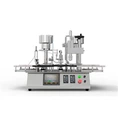
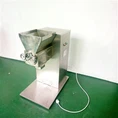
Alright, folks! As a supplier of Industrial Mixers, I often get asked about the power requirements for these industrial workhorses. So, I thought I'd sit down and write this blog to share some insights on this topic.
Understanding the Basics of Power in Industrial Mixers
First off, let's talk about why power matters. Industrial mixers are used in a whole bunch of industries, from food and beverage to pharmaceuticals and chemicals. They're designed to blend different materials together, whether it's mixing powders, liquids, or even a combination of both. And to do this effectively, they need the right amount of power.

Power in industrial mixers is measured in horsepower (hp) or kilowatts (kW). The power required depends on a few key factors. One of the major factors is the volume of the material you're mixing. If you're dealing with a small batch, say a few liters, you won't need as much power as you would for a large - scale operation where you're mixing hundreds or even thousands of liters.
Another important factor is the viscosity of the materials. Viscosity is basically how thick or resistant to flow a substance is. For example, water has a low viscosity, while honey has a high viscosity. Mixing a high - viscosity material like honey or thick paste requires more power because the mixer has to work harder to move and blend the material.
The speed at which you want the mixer to operate also affects the power requirements. If you need a high - speed mixing process, you'll generally need more power. This is because the motor has to spin the mixing blades or impellers faster, and that takes more energy.
Calculating Power Requirements
Now, let's get into how you can calculate the power requirements for an industrial mixer. There's no one - size - fits - all formula, but there are some general guidelines.
For simple liquid - liquid mixing, you can start with a basic equation that takes into account the volume of the liquid, the agitator type, and the desired mixing speed. However, for more complex mixtures involving solids or high - viscosity liquids, things get a bit more complicated.
Many manufacturers provide power charts and guidelines based on different mixer models and applications. These charts can give you a rough estimate of the power needed for a specific volume and type of material. A good rule of thumb is to start with a conservative estimate of power and then make adjustments based on your actual mixing requirements.
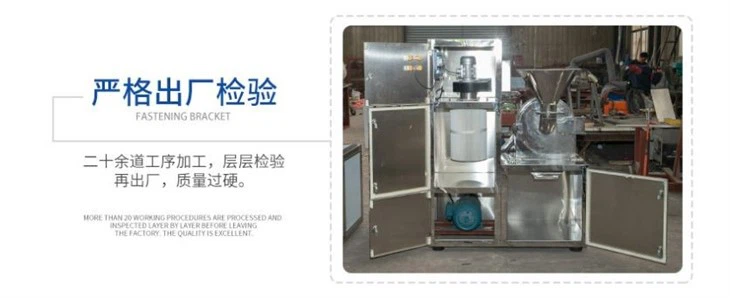
Let's say you're in the pharmaceutical industry and you're using a Pulverizer to break down solid materials before mixing them with liquids. The power requirements for the mixer will be affected by the fineness of the pulverized material. If the pulverized material is very fine, it might be easier to mix, and you might not need as much power. On the other hand, if the particles are larger, the mixer will have to work harder to disperse them evenly, which means more power.
Types of Industrial Mixers and Their Power Needs
There are different types of industrial mixers, and each has its own power requirements.
Propeller Mixers
Propeller mixers are commonly used for low - viscosity liquids. They're relatively simple in design and are often used in applications where a gentle mixing action is required. These mixers usually have lower power requirements compared to other types. For small - scale propeller mixers used in laboratories or small - batch production, you might only need a few hundred watts of power. However, for larger industrial - scale propeller mixers, the power can range from a couple of kilowatts to tens of kilowatts, depending on the size and the mixing speed.
Turbine Mixers
Turbine mixers are more powerful and are suitable for medium - to high - viscosity liquids. They have a more complex blade design that can generate a stronger mixing force. Turbine mixers typically require more power than propeller mixers. For a medium - sized turbine mixer used in a chemical plant, the power could be in the range of 5 - 20 kW. Larger industrial turbine mixers used in large - scale production facilities might need 50 kW or more.
Planetary Mixers
Planetary mixers are often used in the food and confectionery industries to mix thick doughs and batters. These mixers have a unique planetary motion that allows for thorough mixing. Due to the high - viscosity materials they handle and the complex motion, planetary mixers usually require a significant amount of power. A commercial - grade planetary mixer might need 3 - 7 kW of power, while larger industrial models can require even more.
Energy Efficiency Considerations
In today's world, energy efficiency is a big deal. Not only does it save on operating costs, but it's also better for the environment. As a supplier of industrial mixers, we're always looking for ways to improve the energy efficiency of our products.
One way to improve energy efficiency is through the design of the mixer. Using advanced impeller designs can reduce the amount of power needed to achieve the same level of mixing. For example, some impellers are designed to create a more efficient flow pattern, which means the mixer can do its job with less energy.
Another factor is the motor. Using high - efficiency motors can significantly reduce power consumption. These motors are designed to convert electrical energy into mechanical energy more effectively, which means less wasted energy.
Regular maintenance of the mixer is also important for energy efficiency. A well - maintained mixer will operate more smoothly and use less power. This includes things like keeping the bearings lubricated, checking the alignment of the impellers, and making sure the motor is in good working condition.
Making the Right Choice
When it comes to choosing an industrial mixer, it's crucial to consider the power requirements. You don't want to over - power the mixer because that will cost you more in energy and equipment costs. On the other hand, under - powering the mixer can lead to poor mixing results and longer mixing times.
If you're not sure about the power requirements for your specific application, it's a good idea to consult with a professional. As a supplier, we're here to help you figure out the best solution for your needs. We can provide you with detailed information about our Industrial Mixers and help you choose the right model based on your mixing volume, material viscosity, and other requirements.
Contact Us for More Information
If you're thinking about purchasing an industrial mixer or you have questions about power requirements or any other aspect of industrial mixers, don't hesitate to reach out. Whether you're a small - scale producer or a large - scale industrial operation, we've got the expertise and the products to meet your needs.
We're committed to providing high - quality industrial mixers that are not only powerful but also energy - efficient. Let's work together to find the perfect mixer for your business.
References
- "Handbook of Industrial Mixing: Science and Practice" by Edward L. Paul, Victor A. Atiemo - Obeng, and Suzanne M. Kresta
- "Mixing in the Process Industries" by J. Yianneskis, M. Davidson, and D. Green
So, that's it for this blog! I hope it's given you a better understanding of the power requirements for industrial mixers. If you have any more questions, feel free to leave a comment or get in touch.