


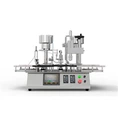
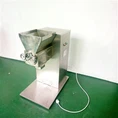
As a supplier of China granulators, I've witnessed firsthand the critical role that granulation accuracy plays in various industries, from pharmaceuticals to food processing. In this blog, I'll share some insights on how to improve the granulation accuracy of China granulators, drawing on my years of experience in the field.
Understanding the Basics of Granulation
Before delving into the strategies for improving granulation accuracy, it's essential to understand the basic principles of granulation. Granulation is the process of agglomerating fine powder particles into larger, more manageable granules. This process is crucial for improving the flowability, compressibility, and stability of powders, making them easier to handle and process.


There are two main types of granulation: wet granulation and dry granulation. Wet granulation involves adding a liquid binder to the powder to form granules, while dry granulation uses mechanical pressure to compact the powder into granules. Each method has its advantages and disadvantages, and the choice of granulation method depends on the specific requirements of the product.
Factors Affecting Granulation Accuracy
Several factors can affect the granulation accuracy of China granulators. These factors include:
- Raw Material Properties: The properties of the raw materials, such as particle size, shape, density, and moisture content, can significantly impact the granulation process. For example, powders with a wide particle size distribution may result in inconsistent granule sizes, while powders with high moisture content may cause sticking and clogging in the granulator.
- Binder Selection: The choice of binder is crucial for achieving accurate granulation. The binder should have good binding properties, be compatible with the raw materials, and have a suitable viscosity. Different binders may be required for different types of granulation processes, and the binder concentration should be carefully controlled to ensure consistent granule quality.
- Granulator Design and Operation: The design and operation of the granulator can also affect granulation accuracy. Factors such as the mixing speed, granulation time, and temperature can influence the formation and growth of granules. Additionally, the type of granulator, such as a high-shear granulator or a fluidized bed granulator, may be more suitable for certain applications.
- Process Control: Effective process control is essential for ensuring consistent granulation accuracy. This includes monitoring and adjusting the process parameters, such as the feed rate, binder addition rate, and temperature, to maintain optimal conditions for granulation. Regular calibration and maintenance of the granulator are also important to ensure its proper functioning.
Strategies for Improving Granulation Accuracy
Based on the factors mentioned above, here are some strategies for improving the granulation accuracy of China granulators:
- Optimize Raw Material Selection and Preparation: Carefully select the raw materials based on their properties and ensure they are properly prepared before granulation. This may involve sieving the powders to remove any large particles or agglomerates, adjusting the moisture content, and ensuring the powders are homogeneously mixed.
- Choose the Right Binder: Select a binder that is suitable for the specific granulation process and raw materials. Consider factors such as the binding strength, solubility, and compatibility with the raw materials. Conduct binder screening tests to determine the optimal binder type and concentration.
- Optimize Granulator Design and Operation: Choose a granulator that is appropriate for the specific application and ensure it is properly designed and operated. Consider factors such as the mixing intensity, granulation time, and temperature. Adjust the process parameters based on the characteristics of the raw materials and the desired granule properties.
- Implement Effective Process Control: Establish a comprehensive process control system to monitor and adjust the process parameters in real-time. Use sensors and automation technology to ensure consistent granulation accuracy. Regularly calibrate and maintain the granulator to prevent any issues that may affect the granulation process.
- Use Advanced Granulation Technologies: Consider using advanced granulation technologies, such as continuous granulation or twin-screw granulation, to improve granulation accuracy and efficiency. These technologies offer better control over the granulation process and can produce more consistent granules.
The Role of Industrial Mixers and Pulverizers
In addition to the strategies mentioned above, the use of industrial mixers and pulverizers can also play a crucial role in improving granulation accuracy. Industrial mixers are used to homogeneously mix the raw materials before granulation, ensuring a uniform distribution of the binder and other additives. This helps to improve the consistency of the granules and reduce the variability in granule size and quality. You can find more information about industrial mixers at Industrial Mixers.
Pulverizers, on the other hand, are used to reduce the particle size of the raw materials, making them more suitable for granulation. By reducing the particle size, the surface area of the powders increases, which improves the binding efficiency and the formation of granules. You can learn more about pulverizer machines at Pulverizer Machine and Pulverizer.
Conclusion
Improving the granulation accuracy of China granulators is a complex process that requires a comprehensive understanding of the granulation principles, the factors affecting granulation accuracy, and the strategies for optimizing the granulation process. By carefully selecting the raw materials, choosing the right binder, optimizing the granulator design and operation, implementing effective process control, and using advanced granulation technologies, it is possible to achieve high-quality granules with consistent size and properties.
If you're interested in learning more about our China granulators or have any questions about improving granulation accuracy, please feel free to contact us. We're here to help you find the best solutions for your granulation needs.
References
- [1] Pharmaceutical Granulation Technology, Second Edition, edited by Isaac Ghebre-Sellassie and Charles Martin.
- [2] Handbook of Powder Technology, Volume 7: Granulation, edited by T. Allen.
- [3] Granulation: Principles and Processes, by A. D. Salman, M. R. Hounslow, and C. S. Adetayo.