


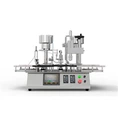
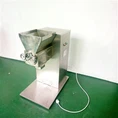
As a leading capsule filler supplier, I understand the critical importance of achieving high filling quality in the pharmaceutical, nutraceutical, and other related industries. A well - filled capsule not only ensures the accurate dosage of the active ingredients but also enhances the overall product quality and customer satisfaction. In this blog, I will share some effective strategies and best practices on how to improve the filling quality of a capsule filler.
1. Equipment Selection and Maintenance
- Choosing the Right Capsule Filler
When selecting a capsule filler, it is essential to consider the specific requirements of your production. Factors such as the type of capsules (hard or soft), the nature of the filling material (powder, liquid, pellet), production capacity, and filling accuracy need to be taken into account. For example, if you are dealing with soft capsules, a Soft Capsule Machine would be the appropriate choice. These machines are designed to handle the unique characteristics of soft gelatin capsules, including the encapsulation of liquids and semi - solids. - Regular Maintenance
Proper maintenance of the capsule filler is crucial for consistent filling quality. Regular cleaning of the machine components, such as the filling nozzles, dosing pumps, and hoppers, can prevent the accumulation of residues that may affect the filling accuracy. Lubrication of moving parts should be carried out according to the manufacturer's recommendations to ensure smooth operation. Additionally, periodic calibration of the machine is necessary to maintain the accuracy of the filling volume. For instance, the Capsule Counting Machine and Capsule Counter should also be calibrated regularly to ensure correct counting and packaging.
2. Filling Material Preparation
- Material Characteristics
The physical and chemical properties of the filling material have a significant impact on the filling quality. For powder fillings, factors such as particle size, density, flowability, and moisture content need to be carefully controlled. Fine powders may tend to agglomerate, which can lead to uneven filling. Therefore, proper sieving and blending processes can be employed to ensure a uniform particle size distribution. For liquid fillings, the viscosity, surface tension, and solubility of the liquid need to be considered. High - viscosity liquids may require special dosing systems to ensure accurate filling. - Pre - treatment of Filling Materials
Pre - treatment of the filling materials can improve their flowability and filling performance. For example, powder materials can be granulated to improve their flow characteristics. Granulation can reduce the tendency of powders to bridge or clog in the hopper and dosing system. In the case of liquid fillings, filtration can be used to remove any impurities that may affect the filling process or the quality of the final product.
3. Process Optimization
- Filling Speed and Accuracy
Finding the right balance between filling speed and accuracy is essential. Increasing the filling speed may reduce the production time, but it can also lead to a decrease in filling accuracy. Therefore, it is necessary to conduct experiments to determine the optimal filling speed for your specific capsule filler and filling material. This can be achieved by adjusting the speed of the dosing pumps, conveyor belts, and other relevant components. - Capsule Orientation and Alignment
Proper orientation and alignment of the capsules during the filling process are crucial for accurate filling. Capsules should be fed into the machine in a consistent manner to ensure that the filling nozzles can accurately dispense the material into the capsules. Any misalignment or improper orientation can result in uneven filling or spillage. Some advanced capsule fillers are equipped with sensors and control systems to detect and correct capsule orientation problems in real - time.
4. Quality Control
- In - process Inspection
In - process inspection is an important part of ensuring the filling quality. This can include visual inspection of the capsules during the filling process to detect any obvious defects such as incomplete filling, leakage, or capsule damage. Additionally, sampling and testing of the filled capsules at regular intervals can be carried out to measure the filling weight, volume, and content uniformity. For example, using a weighing scale to measure the weight of a sample of filled capsules can quickly identify any significant variations in the filling amount. - Final Product Testing
Final product testing is necessary to ensure that the filled capsules meet the required quality standards. This can include tests for content uniformity, dissolution rate, and stability. Content uniformity testing can verify that each capsule contains the correct amount of the active ingredient within the specified tolerance range. Dissolution rate testing can evaluate the release characteristics of the active ingredient from the capsule. Stability testing can determine the shelf - life of the filled capsules under different storage conditions.
5. Operator Training
- Proper Operation Skills
Well - trained operators are essential for achieving high filling quality. Operators should be familiar with the operation manual of the capsule filler and have a good understanding of the filling process. They should know how to adjust the machine settings, perform routine maintenance, and troubleshoot common problems. Training programs should cover topics such as machine operation, cleaning and sanitation, quality control, and safety procedures. - Continuous Learning and Improvement
The field of capsule filling technology is constantly evolving. Therefore, operators should be encouraged to participate in continuous learning and improvement activities. This can include attending industry seminars, workshops, and training courses to stay updated on the latest trends and technologies in capsule filling.
In conclusion, improving the filling quality of a capsule filler requires a comprehensive approach that includes equipment selection and maintenance, filling material preparation, process optimization, quality control, and operator training. By implementing these strategies, you can enhance the accuracy, consistency, and overall quality of your capsule filling process.
If you are interested in our capsule filling solutions or have any questions about improving the filling quality of your capsule filler, please feel free to contact us for further discussion and procurement negotiation. We are committed to providing you with the best products and services to meet your specific needs.


References
- Pharmaceutical Engineering Handbook, Third Edition
- Handbook of Encapsulation and Controlled Release
- Journal of Pharmaceutical Sciences and Technology