


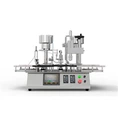
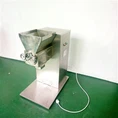
Selecting the right mixing machine is a crucial decision for businesses across various industries, from pharmaceuticals to food processing and chemical manufacturing. As a seasoned mixing machine supplier, I understand the complexities involved in this decision-making process. In this blog, I will share valuable insights to help you make an informed choice when it comes to choosing a mixing machine.
Understanding Your Mixing Requirements
The first step in choosing a mixing machine is to clearly understand your specific mixing requirements. This involves evaluating several key factors, including the type of materials you will be mixing, the desired output volume, the required mixing time, and the level of homogeneity needed in the final product.
Material Characteristics
Different materials have unique physical and chemical properties that can significantly impact the mixing process. For instance, some materials may be viscous, while others may be dry or powdery. Viscous materials require a mixing machine with high shear force to ensure proper blending, while dry or powdery materials may need a gentler mixing action to prevent dust generation.
Consider the particle size distribution of your materials as well. If your materials have a wide range of particle sizes, you may need a mixing machine that can effectively handle and disperse these particles to achieve a uniform mixture.
Output Volume
The output volume of your mixing process is another critical factor to consider. If you have a high-volume production requirement, you will need a mixing machine with a large capacity and a high throughput rate. On the other hand, if your production volume is relatively low, a smaller, more compact mixing machine may be sufficient.
Mixing Time
The required mixing time depends on the complexity of the mixing process and the characteristics of the materials being mixed. Some materials may require longer mixing times to achieve the desired level of homogeneity, while others can be mixed more quickly. You should choose a mixing machine that can meet your specific mixing time requirements without compromising on the quality of the final product.
Homogeneity
The level of homogeneity needed in the final product varies depending on the application. In some industries, such as pharmaceuticals, a high level of homogeneity is essential to ensure the effectiveness and safety of the product. In other industries, a lower level of homogeneity may be acceptable. You should choose a mixing machine that can achieve the desired level of homogeneity for your specific application.
Types of Mixing Machines
There are several types of mixing machines available on the market, each designed for specific mixing applications. Understanding the different types of mixing machines and their capabilities can help you choose the right one for your needs.
Ribbon Blenders
Ribbon blenders are one of the most commonly used types of mixing machines. They consist of a U-shaped trough with a rotating shaft and a series of helical ribbons attached to it. The ribbons move the materials in a horizontal direction, creating a gentle mixing action that is suitable for blending dry powders, granules, and other free-flowing materials. Ribbon blenders are often used in the food, chemical, and pharmaceutical industries.
Paddle Mixers
Paddle mixers feature a horizontal or vertical shaft with multiple paddles attached to it. The paddles move the materials in a complex pattern, creating a high degree of agitation and shear force. Paddle mixers are ideal for mixing viscous materials, pastes, and doughs. They are commonly used in the food, bakery, and confectionery industries.
Planetary Mixers
Planetary mixers are versatile mixing machines that can be used for a wide range of applications. They consist of a stationary bowl and a mixing head that rotates around the bowl in a planetary motion. The mixing head typically contains multiple mixing attachments, such as a paddle, a whisk, and a dough hook. Planetary mixers are suitable for mixing liquids, creams, batters, and doughs. They are commonly used in the food service, bakery, and confectionery industries.
High-Shear Mixers
High-shear mixers are designed to provide intense mixing and dispersion of materials. They use a high-speed rotating impeller or stator-rotor assembly to create a high shear force that breaks down agglomerates and disperses particles. High-shear mixers are ideal for mixing and emulsifying liquids, suspensions, and emulsions. They are commonly used in the pharmaceutical, chemical, and cosmetic industries.
Other Considerations
In addition to understanding your mixing requirements and the different types of mixing machines available, there are several other factors to consider when choosing a mixing machine.
Ease of Cleaning
Cleaning is an important aspect of maintaining the hygiene and efficiency of your mixing machine. You should choose a mixing machine that is easy to clean and disassemble. Look for machines with smooth surfaces, minimal crevices, and accessible parts. Some mixing machines are designed with a self-cleaning feature, which can significantly reduce the cleaning time and effort.
Maintenance Requirements
Regular maintenance is essential to ensure the long-term performance and reliability of your mixing machine. You should choose a mixing machine that has minimal maintenance requirements and is easy to service. Look for machines with high-quality components and a reliable warranty.


Safety Features
Safety is a top priority when working with mixing machines. You should choose a mixing machine that is equipped with adequate safety features, such as emergency stop buttons, safety guards, and overload protection. Make sure the machine complies with all relevant safety standards and regulations.
Cost
The cost of a mixing machine is an important consideration, especially for small and medium-sized businesses. You should choose a mixing machine that offers a good balance between performance, quality, and cost. Compare the prices of different models and brands, and consider the long-term operating costs, such as energy consumption and maintenance.
Conclusion
Choosing the right mixing machine is a complex decision that requires careful consideration of your specific mixing requirements, the different types of mixing machines available, and other factors such as ease of cleaning, maintenance requirements, safety features, and cost. As a mixing machine supplier, I am committed to helping you make the best choice for your business. If you have any questions or need further assistance, please do not hesitate to [contact us for procurement and negotiation]. We look forward to working with you to find the perfect mixing solution for your needs.
References
- [Author's Name]. (Year). [Title of the Book]. [Publisher].
- [Author's Name]. (Year). [Title of the Article]. [Journal Name], [Volume Number], [Page Numbers].
- [Website Name]. (Year). [Title of the Web Page]. Retrieved from [Website URL].