


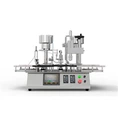
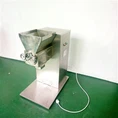
Hey there, folks! As a supplier of granulators, I've seen firsthand how these nifty machines can have a big impact on the particle shape of the granulated material. So, let's dive right into it and explore how a granulator affects the particle shape.
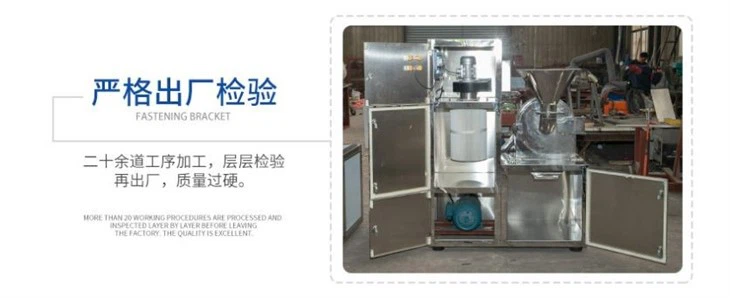

First off, let's understand what a granulator does. A granulator is a machine that turns raw materials into granules. These granules can be used in a whole bunch of industries, like pharmaceuticals, food, and plastics. The key thing is that the shape of these granules can really matter, depending on what they're going to be used for.
One of the main factors that affects particle shape is the type of granulation process. There are two main types: wet granulation and dry granulation.
In wet granulation, a liquid binder is added to the raw materials. This binder helps the particles stick together. The way the liquid is added and how it's mixed can have a huge effect on the particle shape. For example, if the liquid is sprayed evenly over the materials and the mixing is gentle, you're more likely to get spherical or near - spherical granules. Spherical particles are great because they flow well, which is super important in processes where the granules need to be moved around, like in automated filling machines. Industrial Mixers can play a crucial role in this process. They ensure that the binder is evenly distributed, which helps in achieving a more consistent particle shape.
On the other hand, if the mixing is too aggressive or the liquid is added in large amounts all at once, you might end up with irregularly shaped granules. These irregular particles can cause problems in some applications. For instance, in a tablet - making process, irregular granules might not compress evenly, leading to tablets with inconsistent quality.
Now, let's talk about dry granulation. In this process, there's no liquid binder. Instead, the raw materials are compressed into a sheet or slug, and then this is broken down into granules. The pressure applied during the compression step has a major influence on particle shape. If the pressure is too low, the granules might be loosely held together and have a more porous structure, with an irregular shape. But if the pressure is just right, you can get more compact and uniform granules.
Another important aspect is the design of the granulator itself. The size and shape of the screen or mesh through which the granules pass can affect their final shape. A smaller screen size can result in smaller and more uniform particles. For example, if you want very fine granules, you'd use a screen with small holes. The shape of the cutters or blades in the granulator also matters. Sharp, well - designed blades can cut the material cleanly, resulting in more regular - shaped particles.
The feed rate of the raw material into the granulator is yet another factor. If the feed rate is too high, the granulator might not be able to process the material properly. This can lead to uneven granulation and irregular particle shapes. For instance, larger chunks of unprocessed material might get mixed in with the granules, creating a non - uniform batch.
Let's take a look at some real - world examples. In the pharmaceutical industry, the particle shape of drug granules is critical. For drugs that are taken orally, spherical granules are often preferred because they can be easily filled into capsules or compressed into tablets. Consistent particle shape also ensures that the drug is released at the right rate in the body.
In the food industry, the particle shape of granulated products like sugar or salt can affect how they're used in recipes. For example, fine, uniform granules of sugar dissolve more quickly in liquids, which is great for baking and making drinks.
When it comes to the plastics industry, the shape of plastic granules can impact their processing. Spherical plastic granules are easier to melt and mold, which can lead to more efficient manufacturing processes.
Now, if you're in the market for a granulator, you might also be interested in other related machines. For example, Pulverizer Machine and Pulverizer can be used in the pre - processing of raw materials before granulation. These machines can break down large chunks of material into smaller pieces, which can then be more easily granulated.
As a granulator supplier, I know that choosing the right granulator for your specific needs is crucial. You need to consider factors like the type of material you're granulating, the desired particle shape and size, and your production volume. If you're not sure which granulator is right for you, don't worry! We're here to help. We can provide you with expert advice and guidance to make sure you get a machine that meets your requirements.
Whether you're a small - scale producer looking to improve your product quality or a large - scale manufacturer aiming for greater efficiency, we've got the right granulator for you. Our granulators are designed with the latest technology and high - quality materials to ensure reliable performance and consistent results.
If you're interested in learning more about our granulators or have any questions about how they can affect the particle shape of your granulated material, feel free to reach out. We're always happy to have a chat and discuss your specific needs. Let's work together to find the perfect granulation solution for your business.
References
- [List relevant industry books, research papers, or technical manuals here. For example: "Smith, J. (2020). Granulation Technology in the Pharmaceutical Industry. Publisher Name."]