


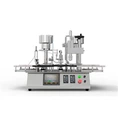
Hey there! As a supplier of capsule machines, I'm super excited to take you on a journey into how these nifty devices work. Capsule machines are pretty amazing pieces of tech that play a huge role in the pharmaceutical, nutraceutical, and even some food industries. So, let's dive right in!
The Basics of Capsule Machines
First off, there are different types of capsule machines, like the Capsule Filler, Soft Capsule Machine, and Capsule Filling Machine. Each has its own unique way of getting the job done, but they all share the common goal of filling capsules with the right amount of product.

How Capsules Are Made
Before we get into how the machines work, it's important to understand what capsules are. Capsules are typically made of gelatin or a vegetarian alternative like hydroxypropyl methylcellulose (HPMC). They come in two parts: the body and the cap. The body is the larger part that holds the product, and the cap fits over it to seal everything in.
The Capsule Filling Process
Let's start with the capsule filling process, which is a key function of many capsule machines. The first step is to separate the capsule bodies from the caps. This is usually done using a vacuum system or mechanical means. The machine aligns the capsules in a tray, with the bodies facing down and the caps facing up.
Once the capsules are separated, the filling mechanism comes into play. The product to be filled, whether it's a powder, liquid, or pellet, is loaded into a hopper. From there, it's dispensed into the capsule bodies in precise amounts. This is where the accuracy of the machine really matters. A good capsule machine will ensure that each capsule gets the exact same amount of product, which is crucial for things like medication dosages.
After the capsule bodies are filled, the caps are reattached. The machine uses a compression or locking mechanism to secure the caps onto the bodies, creating a sealed capsule. Some machines also have a polishing step to remove any excess powder or debris from the outside of the capsules.
Different Types of Capsule Machines and Their Working Principles
Capsule Filler
The Capsule Filler is a specialized machine designed to fill capsules with powder or granular products. It typically works by using a dosing disc or a piston system to measure and dispense the product into the capsule bodies.
The dosing disc method involves a rotating disc with holes that are sized to hold a specific amount of product. As the disc rotates, the holes pass under the hopper, where they are filled with product. When the holes align with the capsule bodies, the product is released into the capsules.
The piston system, on the other hand, uses a piston to push the product into the capsule bodies. The piston moves up and down in a cylinder, drawing in product from the hopper and then pushing it out into the capsules. This method is often more accurate and can handle a wider range of product viscosities.

Soft Capsule Machine
The Soft Capsule Machine is used to produce soft gelatin capsules, which are commonly used for liquid or semi-solid products like vitamins and herbal extracts. The process starts with the preparation of the gelatin solution, which is heated and mixed with plasticizers and other additives to make it pliable.
The machine then uses a rotary die system to form the capsules. Two continuous strips of gelatin are fed into the machine, and the product is injected between them at the same time. The rotary dies then cut and seal the gelatin strips around the product, forming individual soft capsules.
The soft capsules are then cooled and dried to harden the gelatin and ensure a tight seal. This process requires precise control of temperature, humidity, and pressure to produce high-quality capsules.
Capsule Filling Machine
The Capsule Filling Machine is a more general term that can refer to machines that fill both hard and soft capsules. These machines often have multiple stations for capsule separation, filling, and sealing, and they can be automated to handle high volumes of production.
The working principle of a capsule filling machine is similar to that of a capsule filler, but it may have additional features like automatic capsule feeding, rejection of defective capsules, and integration with other production equipment.

Factors Affecting the Performance of Capsule Machines
There are several factors that can affect the performance of capsule machines, including the type of product being filled, the capsule size and material, and the operating conditions of the machine.

Product Characteristics
The physical and chemical properties of the product being filled can have a big impact on the filling process. For example, powders with different particle sizes and densities may require different filling methods. Powders that are too fine or too sticky may cause clogging in the machine, while powders that are too coarse may not flow evenly into the capsules.
Liquids and semi-solids also have their own challenges. They need to be properly formulated to ensure that they can be easily dispensed and that they don't leak out of the capsules. The viscosity of the liquid is an important factor, as it affects the flow rate and the ability of the machine to measure and dispense the correct amount.
Capsule Size and Material
The size and material of the capsules can also affect the performance of the machine. Different capsule sizes require different filling mechanisms and settings. For example, larger capsules may need more product to be filled, and they may require a different type of dosing system.
The material of the capsules can also impact the filling process. Gelatin capsules are more flexible and easier to seal, but they may be affected by humidity and temperature. Vegetarian capsules made of HPMC are more stable, but they may require different handling and sealing techniques.
Operating Conditions
The operating conditions of the machine, such as temperature, humidity, and air pressure, can also affect its performance. High temperatures and humidity can cause the capsules to stick together or become deformed, while low temperatures can make the gelatin more brittle and difficult to seal.
Proper maintenance and calibration of the machine are also essential for optimal performance. Regular cleaning, lubrication, and inspection of the machine's components can help prevent breakdowns and ensure consistent filling accuracy.
Why Choose Our Capsule Machines
As a supplier of capsule machines, we take pride in offering high-quality, reliable machines that are designed to meet the needs of our customers. Our machines are built with the latest technology and are made from durable materials to ensure long-lasting performance.
We offer a wide range of capsule machines, including Capsule Filler, Soft Capsule Machine, and Capsule Filling Machine, to suit different production requirements. Whether you're a small-scale producer or a large pharmaceutical company, we have the right machine for you.
In addition to our high-quality machines, we also provide excellent customer service. Our team of experts is available to answer your questions, provide technical support, and help you choose the right machine for your needs. We also offer training and installation services to ensure that you can get the most out of your machine.
Contact Us for a Purchase Consultation
If you're interested in learning more about our capsule machines or if you're ready to make a purchase, we'd love to hear from you. Contact us today to discuss your requirements and get a free quote. Our team is standing by to help you take your production to the next level.
References
- Pharmaceutical Manufacturing Handbook: Production and Processes. Edited by S. C. Gad.
- Capsule Technology: Science and Technology. By John M. Ford and Mark T. Tuley.