


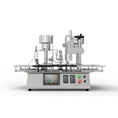
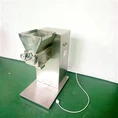
When it comes to mixing various substances, the age - old debate between industrial mixers and manual mixing has persisted. As a supplier of industrial mixers, I've witnessed firsthand the advantages and limitations of both methods, and I'm excited to share my insights on this topic.


1. Efficiency and Productivity
One of the most significant differences between industrial mixers and manual mixing lies in efficiency and productivity. Manual mixing is a labor - intensive process. Workers have to use basic tools like spoons, paddles, or whisks to blend materials. This process is slow, especially when dealing with large volumes. For example, in a bakery, if a baker has to mix a large batch of dough by hand, it can take hours. The baker has to continuously stir, fold, and knead the dough, which is physically exhausting and time - consuming.
On the other hand, industrial mixers are designed to handle large - scale mixing tasks quickly. They can mix hundreds or even thousands of liters of materials in a matter of minutes. Industrial mixers come in various types, such as ribbon mixers, paddle mixers, and planetary mixers, each tailored to specific mixing requirements. For instance, a ribbon mixer can efficiently blend dry powders in a short time, making it ideal for industries like chemical manufacturing. With an industrial mixer, a production facility can increase its output significantly, leading to higher revenues and a more competitive edge in the market.
2. Consistency and Quality
Consistency is crucial in many industries, such as food, pharmaceuticals, and cosmetics. Manual mixing often results in inconsistent mixtures. Human error can lead to uneven distribution of ingredients. In a manual mixing process, it's difficult to ensure that every part of the mixture has the same composition. For example, in a manual paint - mixing process, there might be areas where the color pigments are not fully dispersed, resulting in color variations in the final product.
Industrial mixers, however, are engineered to provide consistent results. They use precise mechanisms and advanced technology to ensure that ingredients are thoroughly and evenly mixed. The speed, rotation, and agitation of the mixer can be precisely controlled, which helps in achieving a uniform mixture every time. In the pharmaceutical industry, where the dosage and quality of drugs are of utmost importance, industrial mixers play a vital role. They ensure that each pill or capsule contains the correct amount of active ingredients, which is essential for the safety and efficacy of the medicine.
3. Safety
Safety is another area where industrial mixers have a clear advantage over manual mixing. Manual mixing often involves direct contact with potentially hazardous materials. In a chemical laboratory, for example, if a researcher is manually mixing corrosive chemicals, there is a high risk of spills and splashes, which can cause serious injuries. Workers may also be exposed to dust and fumes during manual mixing, which can lead to respiratory problems over time.
Industrial mixers are designed with safety features to minimize these risks. They are often enclosed systems, which prevent the release of dust and fumes into the environment. Additionally, many industrial mixers have safety interlocks that prevent the machine from operating when the access doors are open, reducing the risk of accidental contact with moving parts. Some industrial mixers are also equipped with sensors that can detect abnormal conditions and shut down the machine automatically, further enhancing safety in the workplace.
4. Cost - effectiveness
At first glance, the upfront cost of an industrial mixer may seem high. However, when considering the long - term costs, industrial mixers can be more cost - effective than manual mixing. Manual mixing requires a significant amount of labor, and as labor costs continue to rise in many regions, the cost of manual mixing can become prohibitive. Moreover, the inefficiencies associated with manual mixing, such as longer production times and inconsistent quality, can lead to increased costs in terms of wasted materials and lost opportunities.
Industrial mixers, once purchased, can operate with relatively low maintenance costs. They can also reduce labor requirements, as one machine can replace several workers. In the long run, the increased productivity and consistent quality achieved by industrial mixers can result in significant cost savings. For example, a food processing plant that switches from manual to industrial mixing can save on labor costs, reduce product waste, and increase its market share due to improved product quality.
5. Flexibility
Manual mixing offers a certain degree of flexibility. Workers can make on - the - spot adjustments to the mixing process based on their experience and judgment. They can easily change the mixing speed, add ingredients at different times, and adjust the mixing technique according to the specific requirements of the mixture. This flexibility can be beneficial in small - scale or artisanal production, where creativity and customization are important.
Industrial mixers also offer flexibility, but in a different way. Modern industrial mixers can be programmed to perform a variety of mixing tasks. They can be adjusted to different speeds, agitation levels, and mixing times, depending on the type of materials being mixed. For example, an industrial mixer in a cosmetic factory can be programmed to mix different formulations of creams and lotions, each with its own unique requirements. Additionally, industrial mixers can be integrated with other production equipment, such as Granulator Machine and Granulators, to create a seamless production line.
6. Environmental Impact
In today's world, environmental impact is an important consideration. Manual mixing often generates more waste, especially in the form of disposable mixing tools. These tools are used once and then discarded, contributing to landfill waste. Additionally, the inefficiencies of manual mixing can lead to over - consumption of raw materials, which is not sustainable.
Industrial mixers can be more environmentally friendly. They are designed to use raw materials more efficiently, reducing waste. Many industrial mixers also have energy - efficient motors, which consume less electricity compared to the energy required for manual labor. Some industrial mixers are also made from recyclable materials, further reducing their environmental footprint.
Conclusion
In conclusion, while manual mixing has its place in small - scale and artisanal production, industrial mixers offer numerous advantages in terms of efficiency, consistency, safety, cost - effectiveness, flexibility, and environmental impact. As a supplier of Industrial Mixer Machine, I believe that industrial mixers are the future of mixing in large - scale industries.
If you're interested in learning more about how industrial mixers can benefit your business or if you're looking to upgrade your mixing process, I encourage you to reach out. We can discuss your specific requirements and help you find the perfect industrial mixer for your needs. Whether you're in the food, pharmaceutical, chemical, or any other industry, our industrial mixers can provide you with the quality and performance you're looking for.
References
- "Mixing Technology Handbook" by Paul N. Chemela
- "Industrial Mixing: Science and Practice" by Edward L. Paul, Victor A. Atiemo - Obeng, and Suzanne M. Kresta
- Industry reports on mixing equipment and production efficiency.