


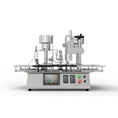
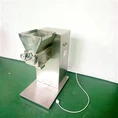
Hey there! As a supplier of granulators, I often get asked whether granulators require special installation conditions. Well, let's dive right into this topic and break it down for you.
First off, let's understand what a granulator is. A granulator is a machine used to turn materials into granules. These granules can be used in various industries, such as pharmaceuticals, food, and plastics. They play a crucial role in the production process, as they help in creating consistent and uniform-sized particles.
Now, back to the question: do granulators need special installation conditions? The short answer is yes, but it depends on several factors.
Space Requirements
One of the primary special installation conditions for granulators is the space. Granulators come in different sizes, from small table - top models to large industrial ones. Smaller granulators might not need a huge amount of space. You can place them on a sturdy workbench or a dedicated table in your workshop. But for larger industrial granulators, you'll need a spacious area.
These big guys need enough room for not only the machine itself but also for easy access to all its parts. Operators should be able to walk around the granulator to perform maintenance tasks, load materials, and unload the finished granules. Also, you need to consider the space for the conveyor belts or other feeding and discharging systems that might be connected to the granulator.
Electrical Requirements
Another important aspect is the electrical setup. Granulators are powered by electricity, and different models have different power requirements. Smaller granulators might run on a standard 110 - volt electrical outlet, which is commonly available in most households or small workshops. However, larger industrial granulators usually require a 220 - volt or even higher - voltage power supply.


You need to make sure that your electrical system can handle the load of the granulator. Overloading the electrical circuit can lead to power outages, damage to the machine, and even pose a fire hazard. It's always a good idea to have a professional electrician check your electrical system and install the appropriate wiring and switches for the granulator.
Ventilation
Ventilation is a must - have special installation condition for granulators. When the granulator is in operation, it can generate a lot of dust and heat. Dust can be a health hazard for the operators, and it can also accumulate on the machine's components, affecting its performance and lifespan.
Proper ventilation helps to remove the dust from the working area. You can install exhaust fans or a dust collection system. These systems should be powerful enough to capture the dust particles as soon as they are generated. Heat, on the other hand, can cause the machine to overheat, leading to mechanical failures. Good ventilation helps to dissipate the heat, keeping the granulator at a safe operating temperature.
Floor and Foundation
The floor where you install the granulator is also crucial. The floor should be level and strong enough to support the weight of the machine. Uneven floors can cause the granulator to vibrate excessively, which can damage the machine and affect its performance.
For larger granulators, you might need to build a special foundation. A foundation provides a stable base for the machine, reducing vibrations and ensuring smooth operation. The type of foundation depends on the size and weight of the granulator, as well as the nature of the floor in your facility.
Noise Considerations
Granulators can be quite noisy when they are running. If you install the granulator in an area where there are other people working or in a residential area, the noise can be a problem. You might need to take measures to reduce the noise level.
You can use sound - absorbing materials around the granulator, such as acoustic panels. Also, placing the granulator in a separate room or enclosure can help to contain the noise. This not only makes the working environment more comfortable for the operators but also complies with noise regulations in many areas.
Compatibility with Other Equipment
If you are using the granulator as part of a larger production line, you need to ensure its compatibility with other equipment. For example, if you have a Mixing Machine that feeds materials into the granulator, the feeding system should be properly aligned and calibrated.
Similarly, if you are using a Pulverizer or a Pulverizer before the granulation process, the output of the pulverizer should be suitable for the granulator. Incompatible equipment can lead to inefficiencies in the production process and even cause damage to the granulator.
Safety Measures
Safety is always a top priority when it comes to installing a granulator. You need to install safety guards around all the moving parts of the granulator, such as the blades, belts, and motors. These guards prevent operators from accidentally coming into contact with the moving parts, reducing the risk of injuries.
Also, you should have emergency stop buttons within easy reach of the operators. In case of an emergency, the operators can quickly stop the granulator to prevent further damage or injuries.
Maintenance Access
Lastly, you need to ensure easy access for maintenance. Granulators require regular maintenance, such as blade sharpening, belt replacement, and lubrication. You should install the granulator in a way that allows easy access to all the parts that need maintenance.
This means leaving enough space around the machine and ensuring that there are no obstacles blocking the access points. Regular maintenance is essential to keep the granulator running smoothly and to extend its lifespan.
So, as you can see, granulators do require special installation conditions. But don't worry! As a granulator supplier, I'm here to help you every step of the way. Whether you need advice on the installation process or you're looking for the right granulator for your specific needs, I can provide you with all the information and support you need.
If you're interested in purchasing a granulator or have any questions about the installation conditions, feel free to reach out. We can have a detailed discussion about your requirements and find the best solution for your business.
References
- "Industrial Granulation Technology" by Pieter J. Valko
- "Handbook of Pharmaceutical Granulation Technology" by Isaac Ghebre - Selassie