


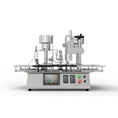
Can an ampoule machine be used for pharmaceutical intermediates ampoules?
As a leading supplier of ampoule machines, I often receive inquiries from customers in the pharmaceutical industry about the compatibility of our machines with pharmaceutical intermediates ampoules. This is a crucial question, considering the unique requirements and high - quality standards of pharmaceutical intermediates. In this blog, I will delve into the technical aspects, regulatory compliance, and practical considerations to address whether an ampoule machine can be used for pharmaceutical intermediates ampoules.
Technical Capabilities of Ampoule Machines
Ampoule machines, such as the ones we offer on our website [Ampoule Machine](/ampoule - filling - and - sealing - machine/ampoule - machine.html), are designed with precision and flexibility in mind. These machines are capable of performing multiple functions, including filling and sealing ampoules.
Filling Accuracy
The filling process in an ampoule machine is highly accurate. Our machines use advanced volumetric or gravimetric filling systems. For pharmaceutical intermediates, which often require precise dosing, these systems can ensure that each ampoule is filled with the exact amount of the intermediate. The volumetric filling system measures the volume of the liquid to be filled, while the gravimetric system measures the weight. Both methods can achieve a high degree of accuracy, typically within a tolerance of ±0.5% to ±1%.


Sealing Integrity
Sealing is another critical function of an ampoule machine. Our [Ampoule Sealer](/ampoule - filling - and - sealing - machine/ampoule - sealer.html) and [Ampoule Sealing Machine](/ampoule - filling - and - sealing - machine/ampoule - sealing - machine.html) are designed to create a hermetic seal on the ampoules. This is essential for pharmaceutical intermediates, as it prevents contamination, oxidation, and evaporation. The sealing process uses heat, usually from a flame or an induction heating system, to melt the glass of the ampoule neck and form a tight seal. Our machines are equipped with sensors and controls to ensure consistent and reliable sealing quality.
Compatibility with Pharmaceutical Intermediates
Material Compatibility
Pharmaceutical intermediates can have different chemical properties, such as acidity, alkalinity, and reactivity. Our ampoule machines are made from materials that are resistant to a wide range of chemicals. The contact parts of the machine, such as the filling nozzles and tubing, are typically made from stainless steel, PTFE (polytetrafluoroethylene), or other chemically inert materials. These materials can withstand the corrosive effects of many pharmaceutical intermediates, ensuring that the machine remains in good working condition and does not contaminate the product.
Sterility Requirements
Many pharmaceutical intermediates need to be stored and transported in a sterile environment. Our ampoule machines can be designed to meet strict sterility requirements. They can be equipped with features such as laminar flow hoods, sterilization systems, and cleanroom - compatible designs. The laminar flow hood provides a continuous flow of filtered air over the filling and sealing area, preventing the entry of airborne particles. The sterilization systems, such as UV sterilization or steam sterilization, can be used to disinfect the machine components before and during the production process.
Regulatory Compliance
Pharmaceutical Standards
The pharmaceutical industry is highly regulated, and the production of pharmaceutical intermediates in ampoules must comply with various standards and regulations. Our ampoule machines are designed and manufactured in accordance with international pharmaceutical standards, such as Good Manufacturing Practice (GMP). GMP ensures that the machines are designed, installed, and operated in a way that minimizes the risk of contamination and ensures product quality. Our machines are also subject to regular quality control checks and inspections to ensure compliance with these standards.
Documentation and Validation
In addition to meeting the physical requirements of the machines, regulatory compliance also involves documentation and validation. We provide comprehensive documentation for our ampoule machines, including user manuals, installation qualification (IQ), operational qualification (OQ), and performance qualification (PQ) protocols. These documents are essential for demonstrating that the machine meets the specified requirements and can be used in a regulated pharmaceutical environment. Our technical support team can also assist customers with the validation process to ensure that the machine is properly integrated into their production line.
Practical Considerations
Production Capacity
When considering using an ampoule machine for pharmaceutical intermediates, production capacity is an important factor. Our ampoule machines are available in different models with varying production capacities, ranging from small - scale laboratory machines to large - scale industrial machines. Customers need to assess their production volume requirements and choose a machine that can meet their needs. For example, if a customer has a high - volume production demand, they may opt for a fully automated machine with a high filling and sealing speed.
Maintenance and Support
Regular maintenance is essential for the reliable operation of an ampoule machine. We offer comprehensive maintenance services and support for our machines. Our technicians are trained to perform routine maintenance tasks, such as cleaning, lubrication, and calibration. We also provide spare parts and technical support to ensure that any issues can be quickly resolved. In addition, we offer training programs for our customers' operators to ensure that they can operate the machine safely and efficiently.
Cost - Effectiveness
Initial Investment
The initial investment in an ampoule machine can be significant. However, when considering the long - term benefits, such as improved product quality, increased production efficiency, and regulatory compliance, it can be a worthwhile investment. Our ampoule machines are priced competitively, and we offer different financing options to help customers manage their costs.
Operating Costs
The operating costs of an ampoule machine include energy consumption, raw materials, and maintenance. Our machines are designed to be energy - efficient, using advanced technologies to minimize power consumption. We also work closely with our customers to optimize the use of raw materials, such as glass ampoules and filling fluids, to reduce costs. In addition, our preventive maintenance programs can help reduce the frequency of breakdowns and costly repairs.
Conclusion
In conclusion, an ampoule machine can be used for pharmaceutical intermediates ampoules. Our ampoule machines have the technical capabilities, compatibility, and regulatory compliance to meet the requirements of the pharmaceutical industry. They offer precise filling, reliable sealing, material compatibility, and sterility assurance. Moreover, they are designed to comply with international pharmaceutical standards and can be customized to meet specific production needs.
If you are in the pharmaceutical industry and are looking for a reliable ampoule machine for your pharmaceutical intermediates, we would be delighted to discuss your requirements. Our team of experts can provide you with detailed information, product demonstrations, and customized solutions. Contact us today to start the conversation and explore how our ampoule machines can enhance your production process.
References
- "Good Manufacturing Practice Guide for Medicinal Products in the European Union". European Commission.
- "Pharmaceutical Engineering: Principles and Practices". Edited by Edward L. Muir and Charles F. Doherty.