


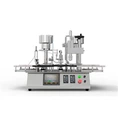
In the pharmaceutical industry, the importance of accurate and compliant labeling cannot be overstated. Labels on pharmaceutical products serve as a crucial source of information for patients, healthcare providers, and regulatory authorities. They convey vital details such as dosage instructions, active ingredients, expiration dates, and storage conditions. Given these stringent requirements, the question arises: Can a labeling machine be used for pharmaceutical products? As a labeling machine supplier, I am well - positioned to explore this topic in depth.
The Necessity of Labeling in the Pharmaceutical Industry
Pharmaceutical products are subject to strict regulations worldwide. These regulations aim to protect public health by ensuring that patients receive accurate information about the drugs they are taking. For example, in the United States, the Food and Drug Administration (FDA) has comprehensive guidelines regarding pharmaceutical labeling. Any deviation from these guidelines can lead to serious consequences, including product recalls, fines, and damage to a company's reputation.
Labels on pharmaceutical products must be clear, legible, and resistant to wear and tear. They need to adhere properly to different types of packaging, such as bottles, vials, blister packs, and ampoules. Moreover, they should be able to withstand various environmental conditions during storage and transportation.
Capabilities of Labeling Machines for Pharmaceutical Use
Modern labeling machines are designed with advanced technology that makes them highly suitable for pharmaceutical applications. These machines offer a range of features that meet the specific requirements of the pharmaceutical industry.
Precision and Accuracy
One of the key advantages of using a labeling machine is its ability to apply labels with high precision. Pharmaceutical labels often contain small text and detailed information, such as barcodes and serial numbers. Labeling machines can ensure that these labels are applied exactly in the right position, with consistent alignment and spacing. This precision is essential for maintaining the readability and integrity of the label information.
Speed and Efficiency
In the pharmaceutical industry, large - scale production is common. Labeling machines can operate at high speeds, significantly increasing the efficiency of the labeling process. They can apply labels to hundreds or even thousands of products per hour, depending on the model and configuration. This high - speed operation helps pharmaceutical manufacturers meet their production targets and reduce labor costs.
Compatibility with Different Packaging Materials
Pharmaceutical products come in a variety of packaging materials, including plastic, glass, and metal. Labeling machines are designed to be compatible with these different materials. They can use different types of labeling methods, such as pressure - sensitive labeling, wrap - around labeling, and shrink - sleeve labeling, depending on the packaging requirements. For example, pressure - sensitive labeling is commonly used for bottles and vials, while shrink - sleeve labeling is suitable for blister packs.
Compliance with Regulatory Standards
Reputable labeling machine manufacturers ensure that their machines comply with relevant regulatory standards in the pharmaceutical industry. This includes standards related to hygiene, safety, and data integrity. For instance, some labeling machines are designed with easy - to - clean surfaces and components to prevent cross - contamination. They also support the integration of serialization and track - and - trace systems, which are required by many regulatory authorities to combat counterfeiting and ensure product authenticity.
Challenges and Considerations
While labeling machines offer many benefits for pharmaceutical applications, there are also some challenges and considerations that need to be addressed.
Validation and Qualification
Before a labeling machine can be used in a pharmaceutical production environment, it must undergo validation and qualification processes. These processes ensure that the machine operates consistently and meets the predefined specifications. Validation involves testing the machine's performance under different operating conditions, while qualification verifies that the machine is installed correctly and operates as intended. This process can be time - consuming and requires strict documentation, but it is essential for regulatory compliance.
Label Design and Content Management
Pharmaceutical labels are subject to strict regulations regarding their design and content. Labeling machines need to be able to handle different label designs and ensure that the correct label version is applied to each product. This requires effective label design and content management systems. Pharmaceutical manufacturers need to work closely with their labeling machine suppliers to ensure that these systems are in place and integrated with the labeling machine.
Maintenance and Support
Like any other industrial equipment, labeling machines require regular maintenance to ensure optimal performance. In the pharmaceutical industry, where downtime can be costly, it is crucial to have a reliable maintenance and support system in place. Labeling machine suppliers should offer comprehensive maintenance services, including preventive maintenance, troubleshooting, and spare parts availability.
Case Studies
To illustrate the effectiveness of labeling machines in the pharmaceutical industry, let's look at some real - world case studies.
A large pharmaceutical company was facing challenges with its manual labeling process. The manual process was slow, prone to errors, and did not meet the increasing production demands. The company decided to invest in a high - speed labeling machine from our company. After implementing the labeling machine, the company saw a significant improvement in its labeling efficiency. The machine was able to apply labels accurately and at a much faster rate, reducing the production time by 30%. Moreover, the error rate decreased significantly, ensuring better compliance with regulatory requirements.
Another pharmaceutical startup was looking for a labeling solution for its new line of blister - packed products. They needed a labeling machine that could handle the unique shape and size of the blister packs. Our company provided them with a custom - designed labeling machine that was specifically configured for blister - pack labeling. The machine used a pressure - sensitive labeling method to apply labels to the blister packs with high precision. This solution helped the startup to launch its products quickly and efficiently, meeting the market demand.
Related Equipment in the Pharmaceutical Packaging Process
In addition to labeling machines, other equipment plays an important role in the pharmaceutical packaging process. One such piece of equipment is the Blister Packing Machine. Blister packing is a popular packaging method for pharmaceutical tablets and capsules. Blister packing machines create individual compartments for each product, providing protection and easy - to - use packaging.
Labeling machines can work in conjunction with blister packing machines to ensure a seamless packaging process. After the products are packed in blister packs, the labeling machine can apply labels to the blister packs, providing important information to the end - user.


Conclusion
In conclusion, labeling machines are highly suitable for pharmaceutical products. Their precision, speed, efficiency, and compatibility with different packaging materials make them an ideal choice for the pharmaceutical industry. While there are some challenges and considerations, such as validation and maintenance, these can be effectively managed with the right approach and support from the labeling machine supplier.
If you are a pharmaceutical manufacturer looking for a reliable labeling solution, I encourage you to explore our range of Labeling Machine and Labeling Machine products. Our team of experts can provide you with customized solutions that meet your specific requirements. Contact us today to discuss your needs and start the procurement process.
References
- Food and Drug Administration (FDA). "Guidance for Industry: Prescription Drug and Biological Product Labeling Content and Format."
- Pharmaceutical Packaging Forum. "Best Practices in Pharmaceutical Labeling."
- Packaging Machinery Manufacturers Institute (PMMI). "Trends in Pharmaceutical Packaging Equipment."