


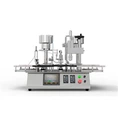
In today's world, environmental concerns are at the forefront of many industries. As a supplier of monoblock fillers, I often encounter questions about the environmental friendliness of these machines. In this blog post, I will explore the various aspects of monoblock fillers and their impact on the environment.
What is a Monoblock Filler?
Before delving into the environmental aspects, let's first understand what a monoblock filler is. A Monoblock Filler is an integrated system that combines multiple functions such as filling, capping, and labeling into a single machine. This design offers several advantages, including space - saving, increased efficiency, and reduced labor requirements. Monoblock fillers are widely used in industries such as food and beverage, pharmaceuticals, cosmetics, and chemicals for packaging various products.
Energy Efficiency
One of the key factors in determining the environmental friendliness of a machine is its energy consumption. Modern monoblock fillers are designed with energy - efficiency in mind. Many manufacturers, including our company, have incorporated advanced technologies to reduce power consumption. For example, the use of variable frequency drives (VFDs) allows the machine to adjust its motor speed according to the actual production requirements. This means that the machine does not consume excessive energy when operating at a lower production rate.
Moreover, the components of a monoblock filler are engineered to be more energy - efficient. The filling nozzles are designed to minimize waste and ensure accurate filling, which reduces the need for re - filling and thus saves energy. Additionally, the capping and labeling mechanisms are optimized to operate with minimal power consumption while maintaining high - quality performance.
Material Usage and Waste Reduction
Another important aspect of environmental friendliness is the use of materials and the generation of waste. Monoblock fillers are designed to be highly precise in their filling operations. This precision ensures that the correct amount of product is dispensed into each container, minimizing product waste. For instance, in the food and beverage industry, accurate filling means that there is less spillage and over - filling, which not only saves the product but also reduces the amount of cleaning and waste disposal required.
In terms of packaging materials, monoblock fillers can work with a variety of container types, including recyclable and biodegradable materials. This flexibility allows companies to choose more environmentally friendly packaging options. For example, many companies are now switching to glass or plastic containers that are easily recyclable. Our monoblock fillers can handle these types of containers without any issues, enabling our customers to make more sustainable packaging choices.


Furthermore, the integration of functions in a monoblock filler reduces the need for multiple machines and associated equipment. This results in less material being used in the overall production line. Fewer machines also mean less space is required for installation, which can contribute to a more efficient use of factory space and potentially reduce the overall environmental impact of the manufacturing facility.
Chemical and Water Usage
In some industries, such as the pharmaceutical and cosmetic industries, cleaning and sanitization of the filling equipment are crucial. Monoblock fillers are designed to use cleaning chemicals and water efficiently. Advanced cleaning systems are incorporated into the machines, which can clean the internal components thoroughly with a minimal amount of chemicals and water.
For example, some monoblock fillers are equipped with a clean - in - place (CIP) system. This system uses a closed - loop process to circulate cleaning solutions through the machine's pipes and nozzles, reducing the amount of water and chemicals needed for cleaning. The CIP system can also be programmed to use the optimal amount of cleaning agents based on the type of product and the level of contamination, further minimizing waste.
Comparison with Traditional Filling Systems
When comparing monoblock fillers with traditional filling systems, the environmental benefits become even more apparent. Traditional filling systems often consist of multiple separate machines for filling, capping, and labeling. These machines may be less energy - efficient as they operate independently and may not be optimized to work together. Additionally, the separate machines require more space and more complex installation, which can lead to higher energy consumption and increased use of materials.
In contrast, monoblock fillers offer a more streamlined and integrated solution. Their compact design and energy - efficient operation make them a more environmentally friendly choice. The precision filling and reduced waste generation also contribute to a lower environmental impact compared to traditional systems.
Potential Areas for Improvement
While monoblock fillers have many environmental advantages, there is always room for improvement. One area that could be further optimized is the use of renewable energy sources. Although the machines are energy - efficient, they still rely on grid - supplied electricity in most cases. In the future, we could explore the possibility of integrating solar panels or other renewable energy sources to power the monoblock fillers, reducing their carbon footprint even further.
Another area for improvement is the development of more advanced sensors and control systems. These systems could provide real - time data on energy consumption, product waste, and other environmental metrics. By having access to this data, manufacturers can make more informed decisions to further improve the environmental performance of the monoblock fillers.
Conclusion
In conclusion, monoblock fillers can be considered environmentally friendly machines. Their energy - efficient design, precision filling, waste reduction capabilities, and flexibility in working with sustainable packaging materials all contribute to a lower environmental impact. Compared to traditional filling systems, monoblock fillers offer significant advantages in terms of energy consumption, material usage, and waste generation.
However, as an industry, we need to continue to strive for improvement. By investing in research and development, we can further enhance the environmental performance of monoblock fillers.
If you are interested in learning more about our Monoblock Machine or Eye Drop Filling Machine and how they can meet your production needs while being environmentally friendly, please feel free to contact us. We are always ready to discuss your requirements and provide you with the best solutions.
References
- [List of industry - related research papers on filling machine efficiency and environmental impact]
- [Manufacturer's technical specifications for monoblock fillers]
- [Reports on sustainable packaging trends and their impact on filling equipment]