


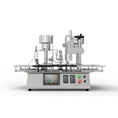
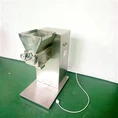
Hey there! I'm a supplier of granulators, and I often get asked whether granulators with a compact design are more expensive. It's a question that's on the minds of many potential buyers, so let's dig into this topic and find out the real deal.
First off, what exactly do we mean by a "compact design"? Well, a compact granulator is typically smaller in size compared to its traditional counterparts. It takes up less floor space in your factory or workspace, which can be a huge advantage, especially if you're operating in a limited area. You don't have to worry about rearranging large chunks of your facility just to fit in the granulator.
Now, when it comes to the cost, there are several factors to consider. Manufacturing a compact granulator often requires more advanced technology and precise engineering. The goal is to pack all the necessary functions into a smaller package without sacrificing performance. This means that the components used in compact granulators are often of higher quality and more precisely engineered. For example, the motor in a compact granulator needs to be powerful enough to process materials effectively despite its smaller size. These high - quality components can drive up the production cost, and that cost is usually passed on to the customer.
Another aspect is the innovation involved. Developing a compact design isn't just about shrinking the size. Engineers need to come up with new and creative ways to arrange the internal mechanisms so that the granulator works efficiently. This innovation often requires significant R & D investment. To recoup that investment, companies may charge a premium for compact granulators.
But it's not always the case that compact granulators are more expensive. In some situations, mass - production can drive down the cost. If a manufacturer has a large - scale production line for compact granulators, they can benefit from economies of scale. The more units they produce, the lower the cost per unit can be. This could potentially result in a price that's comparable to or even lower than traditional granulators.
Let's also talk about the long - term cost. Even if a compact granulator is initially more expensive, it could save you money in the long run. For instance, the reduced floor space requirements mean you can save on rent or other facility - related costs. Also, since they are often designed with energy - efficiency in mind, you'll likely see a reduction in your power bills over time.
When it comes to looking at the overall product range, we also have other related machines that might interest you. If you're involved in the pharmaceutical or other industries where mixing and crushing are important, you might want to check out Mixing Equipment and Mixing Machine. These can work in conjunction with granulators to improve your overall production process. And if you need to break down materials into finer particles, our Pulverizer might be a great addition to your equipment lineup.


So, to sum it up, while in many cases, granulators with a compact design can be more expensive due to advanced technology, high - quality components, and R & D innovation, it's not a hard and fast rule. Mass - production and long - term cost savings can also play a big role in the final price.
If you're thinking about purchasing a granulator, whether it's a compact one or a traditional model, I'd be more than happy to talk to you about your specific needs. Every business is different, and I can help you find the right granulator at the best price for your situation. Don't hesitate to reach out if you have any questions or want to start the buying process. I look forward to working with you to find the perfect solution for your granulating needs.
References
- Industry research on granulator manufacturing costs and pricing trends
- Data on the economies of scale in machinery production
- Studies on the long - term cost savings of compact industrial equipment